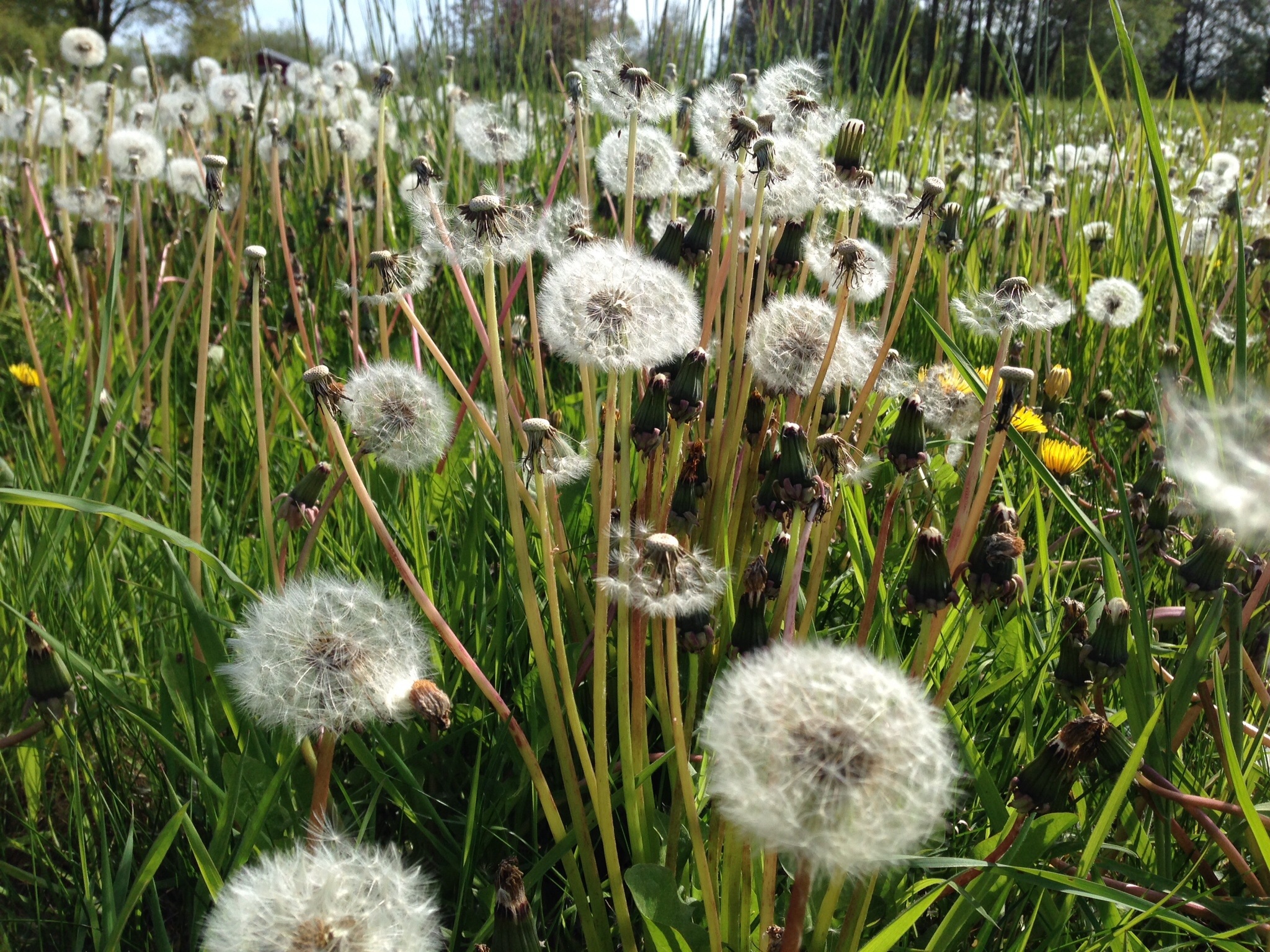
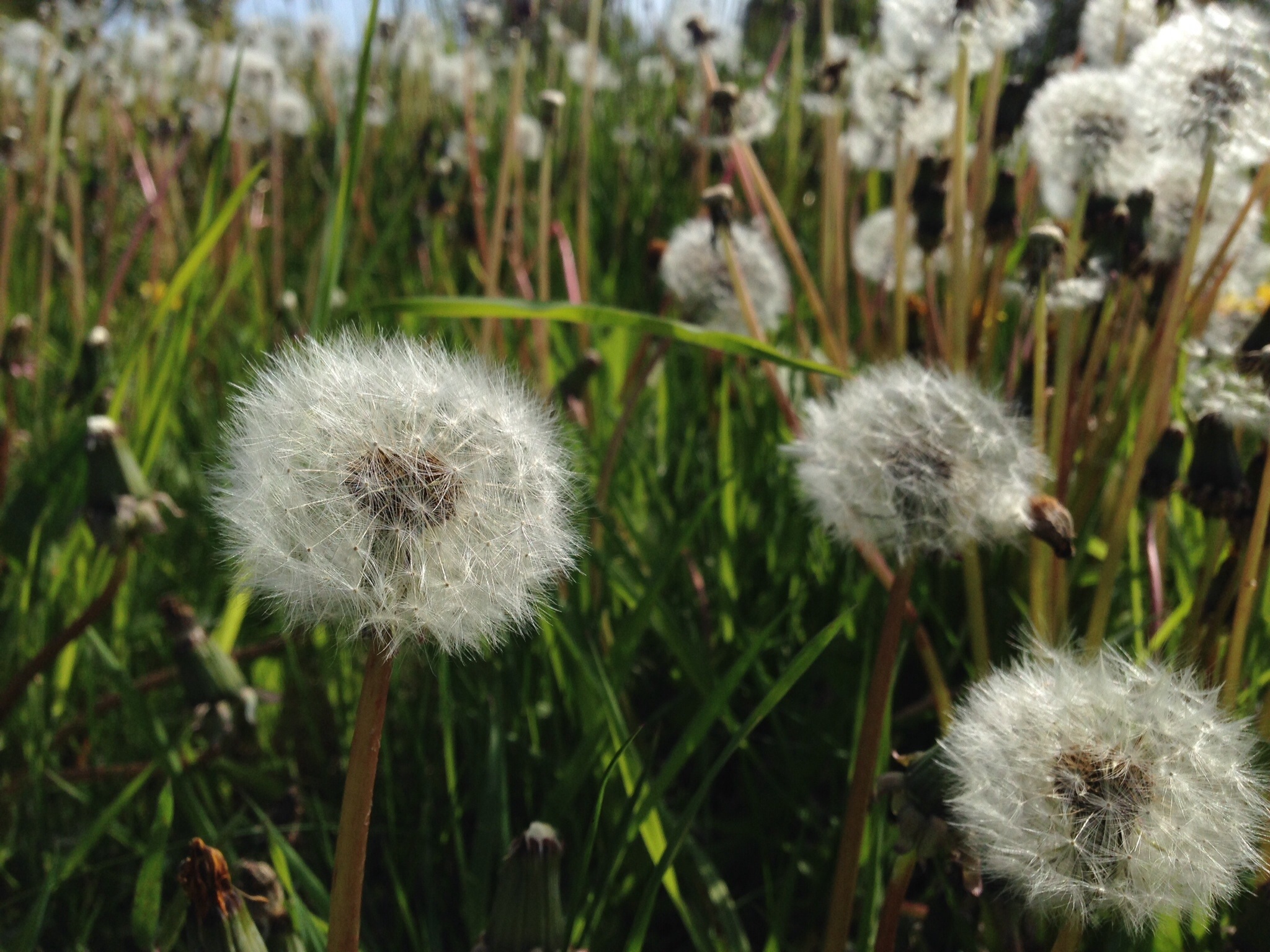
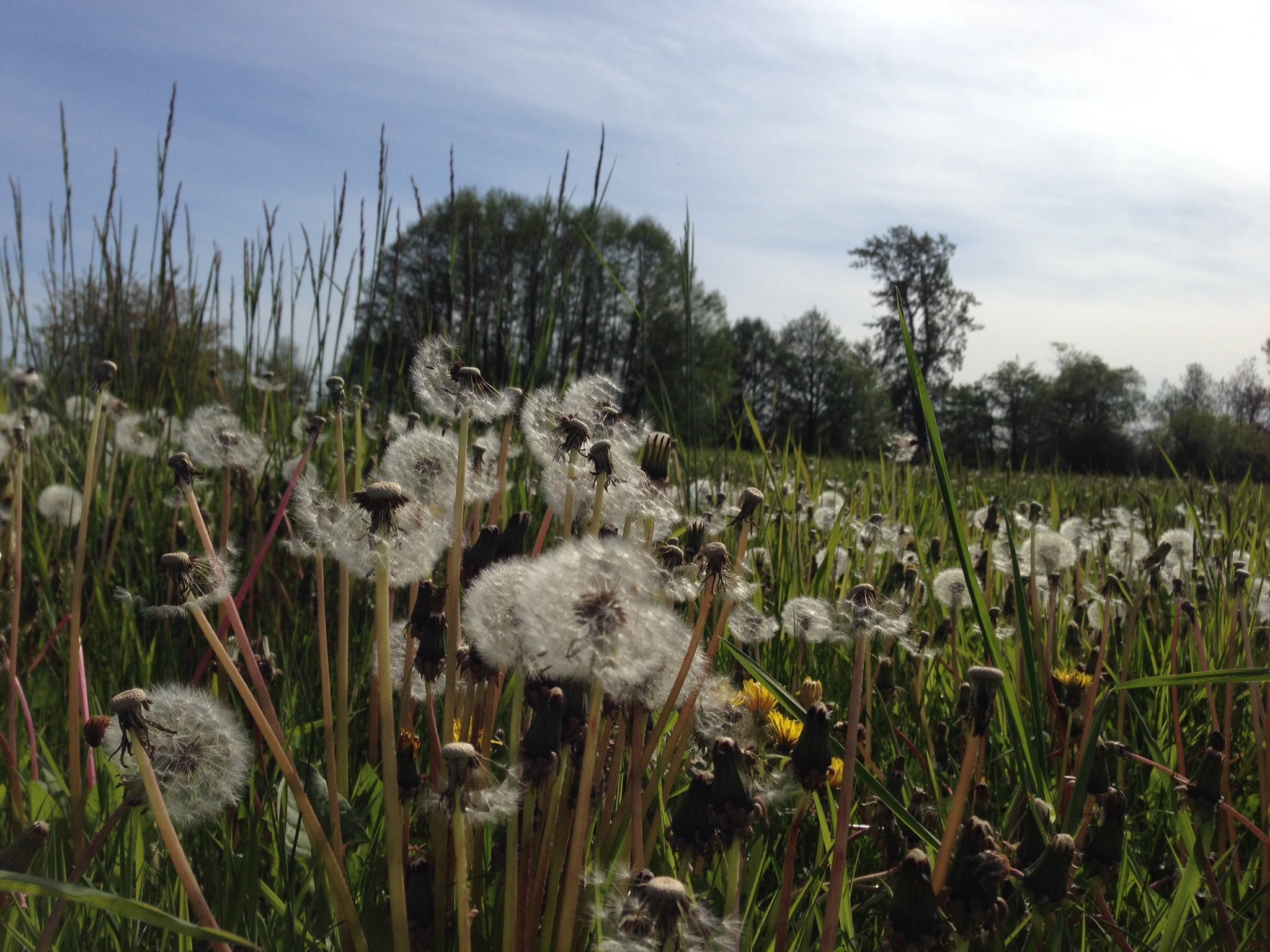
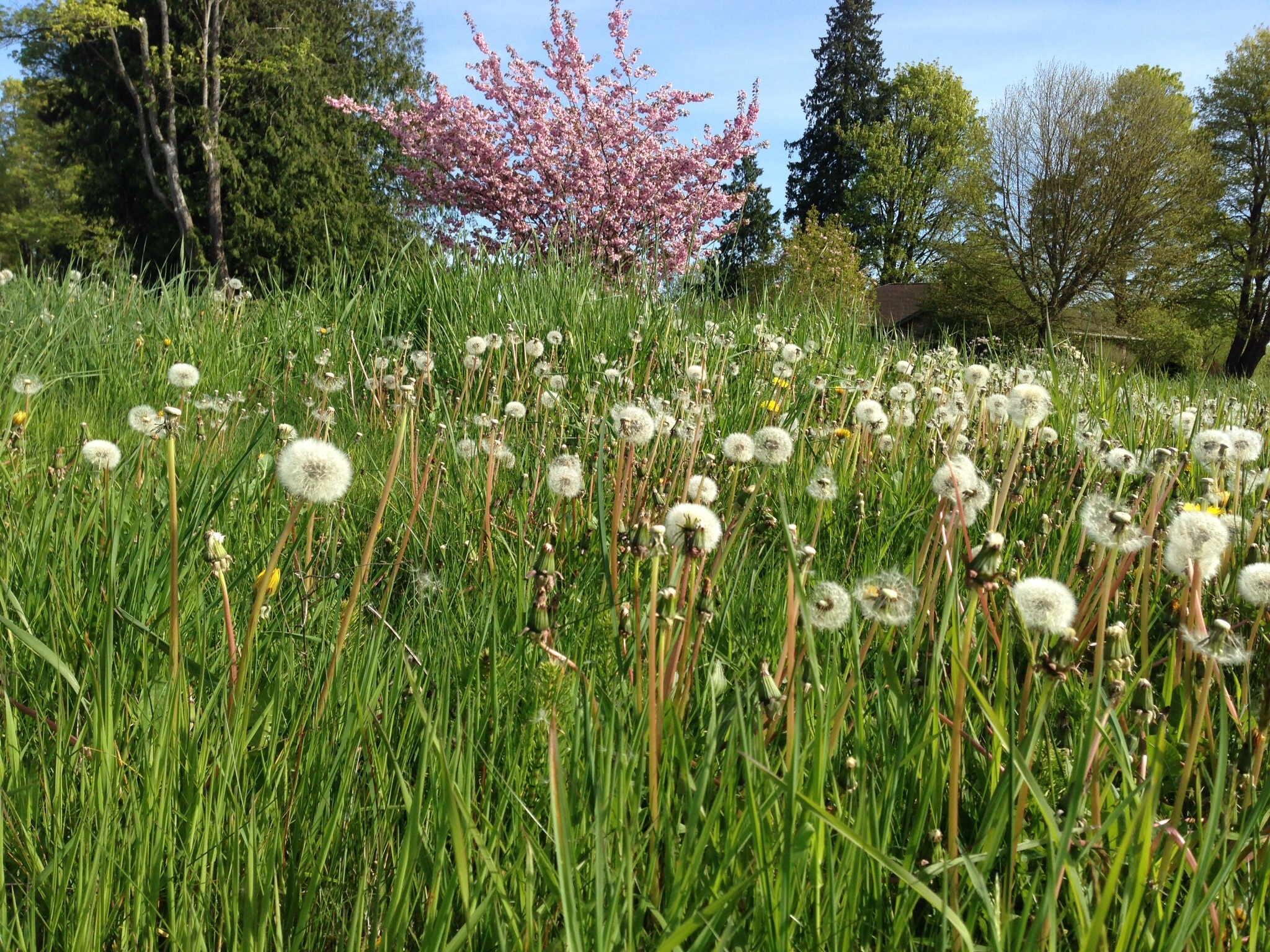
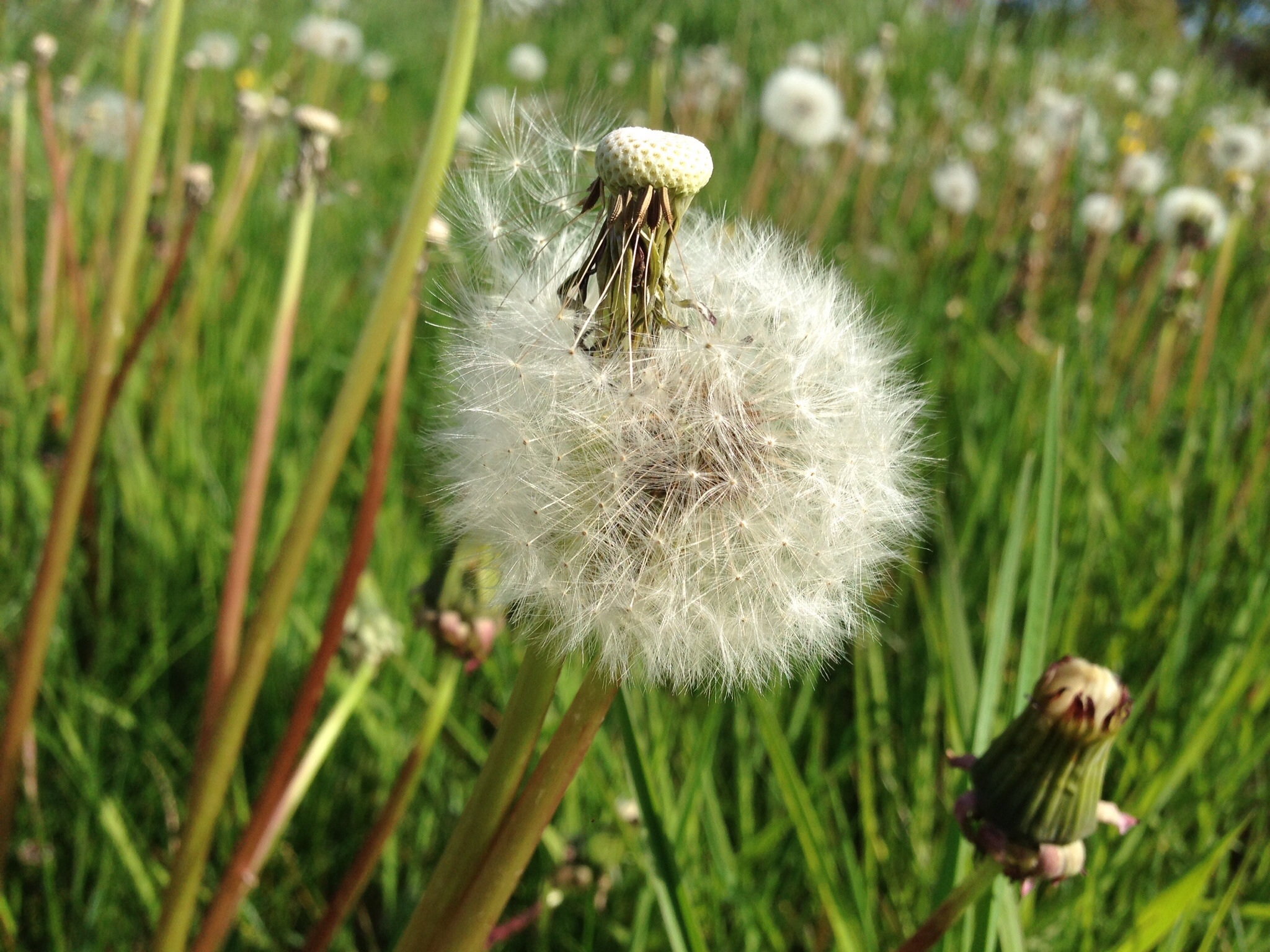
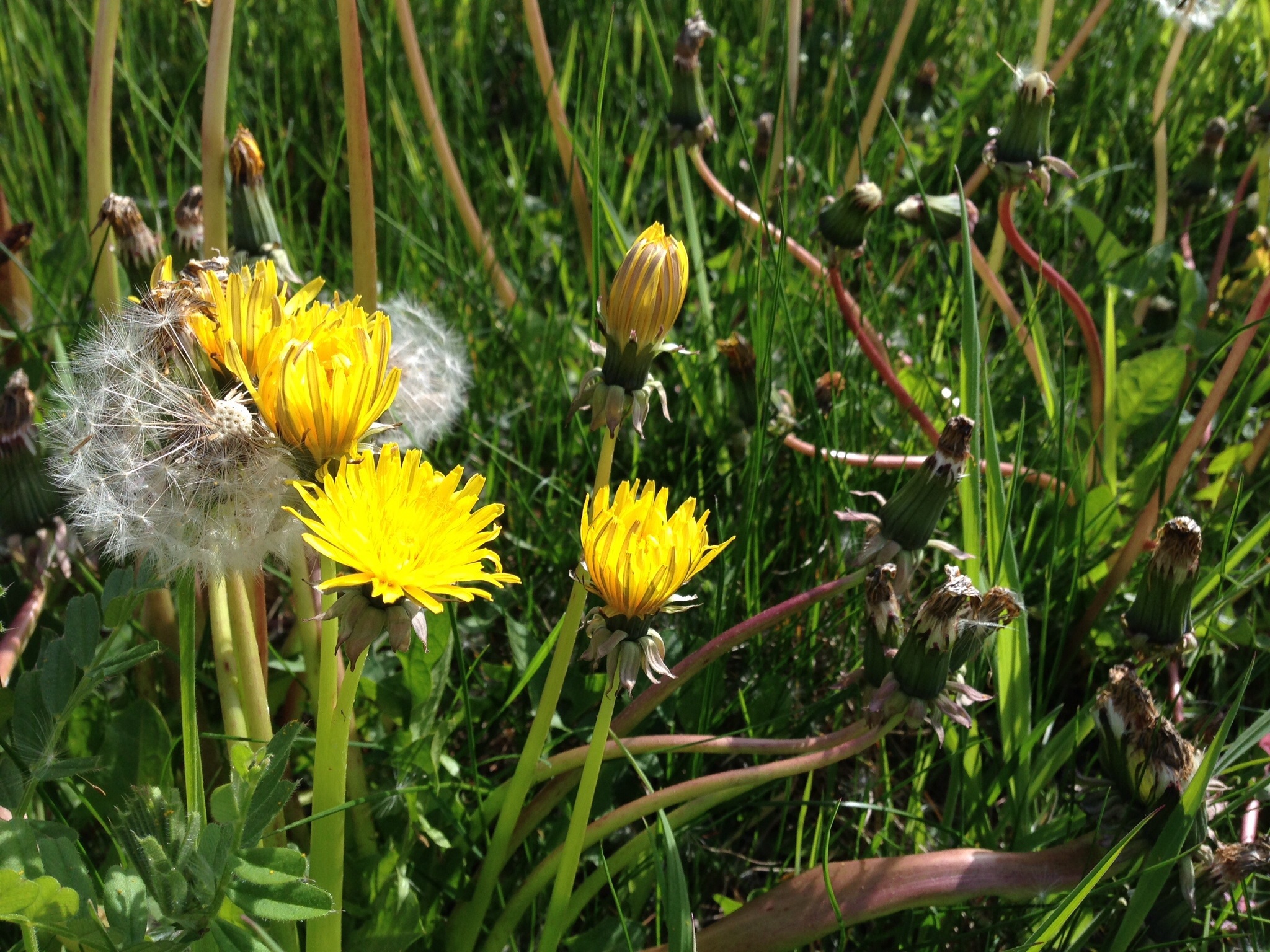
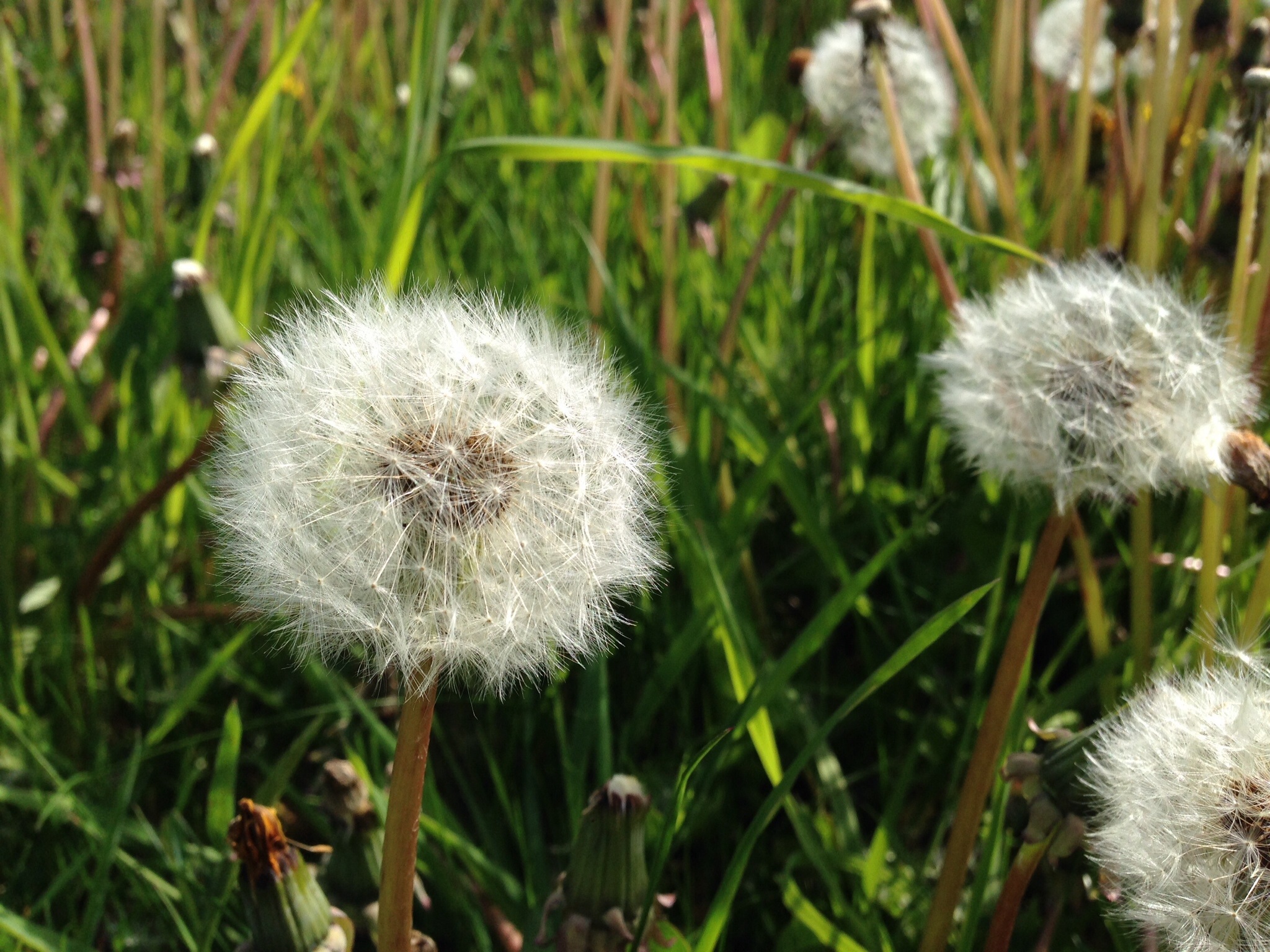
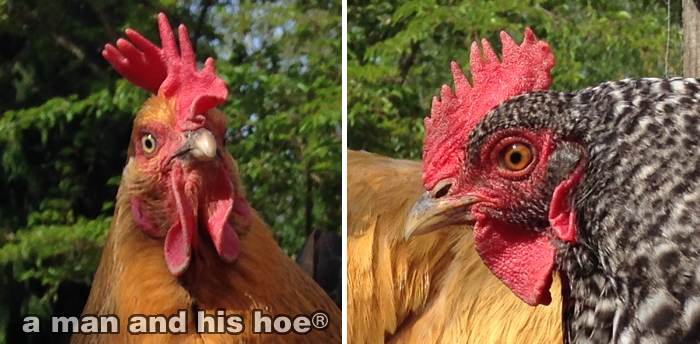
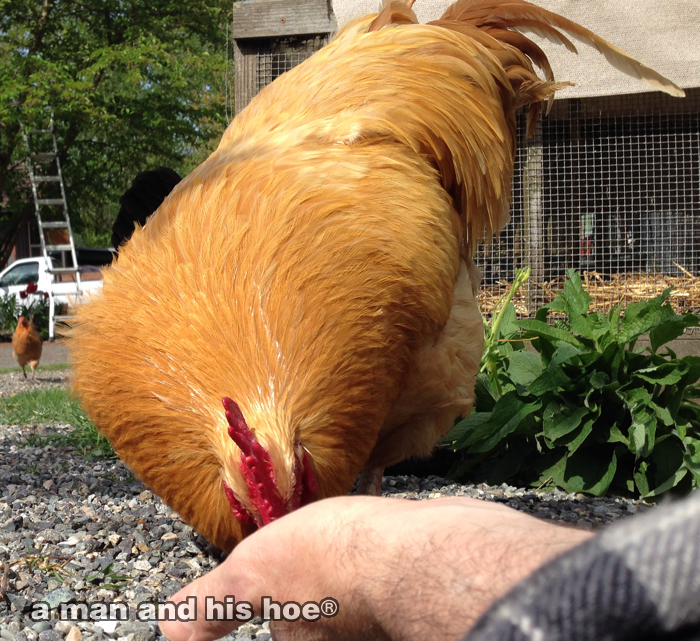
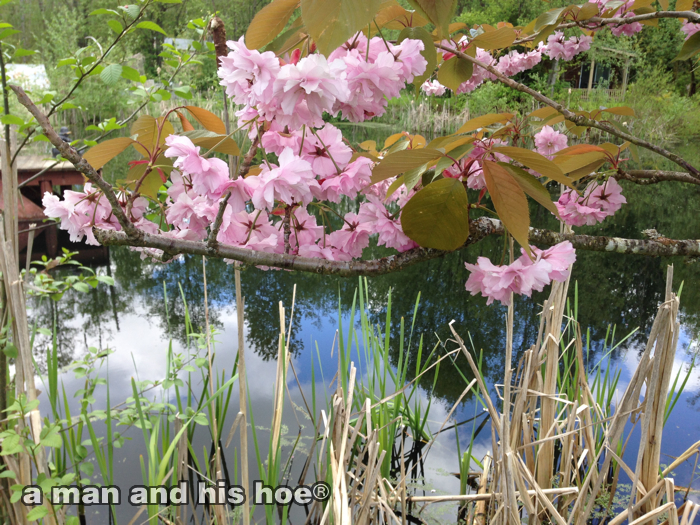
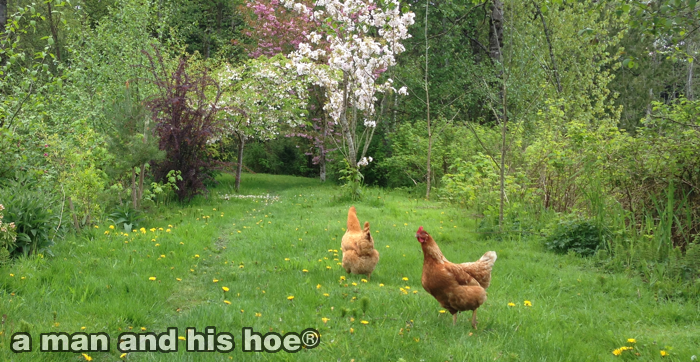
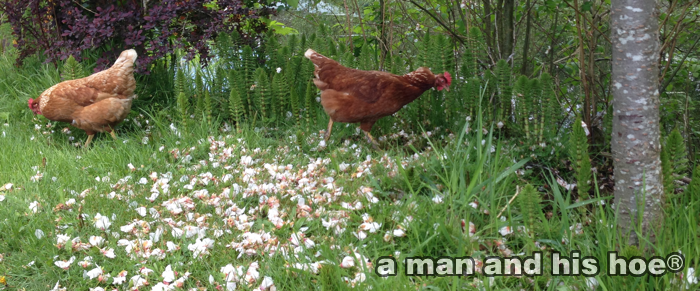
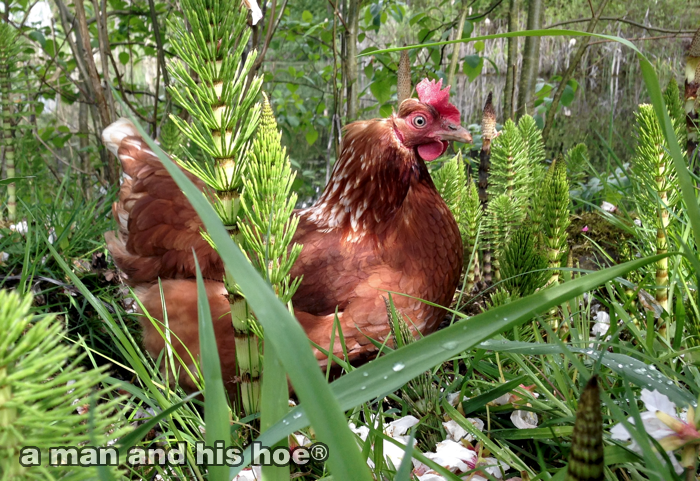
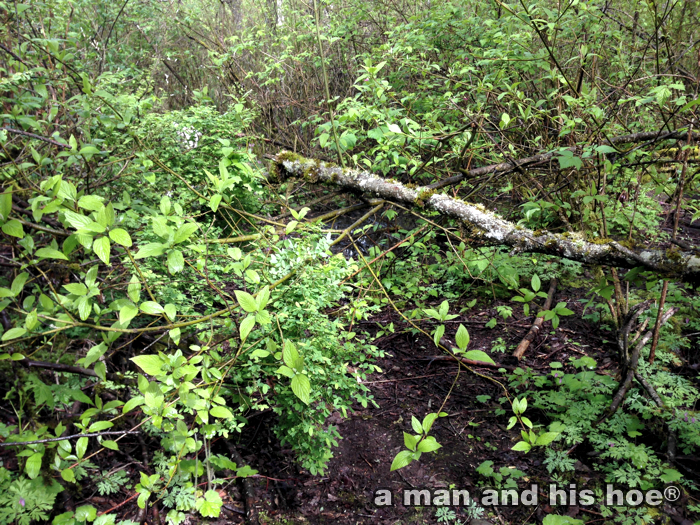
Today is the type of day chickens dream about. The weather is nice, and there are plenty of good things to eat around the pond. On days like this, they wander far. It’s not unusual to find a hen, hidden in thick grass, a long distance from any of the other chickens.


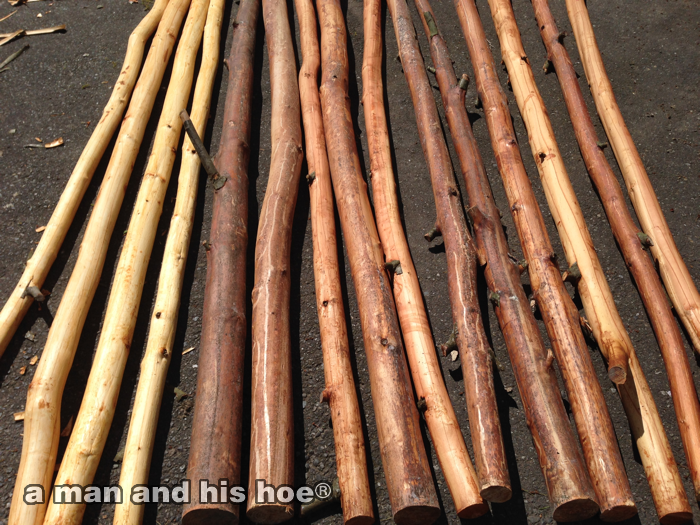
The first set of poles is done. The ones stripped last week are quite dark. Once the poles are up, they will make for a unique fence.


Author: theMan
-
Places Chickens Love to Roam
-
First Trillium
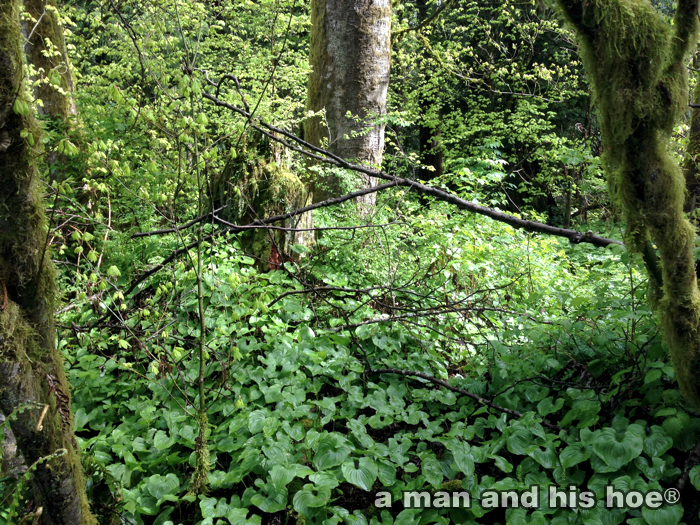
While clearing one of the forest trails, I saw two trilliums in bloom, the first of the year. It won’t be long before the forest floor is wall to wall trillium blossoms. It’s a luxury being able to leave the house and be in the forest in a few steps. In twenty years, this forest may be gone and this trail a parking lot of a mall. It seems impossible now, but every mall and strip mall within a hundred miles of here was at one time a thick forest where trilliums bloomed each April.
The next time you drive to a mall, park and step onto the asphalt, stop and imagine what used to be there: giant cedars, vine maples, alders, lush mosses, a doe with her fawn, fresh air. Could it possibly be that again?
Maybe when this lot is paved over, there will be plaque mentioning how in the past, a man raised chickens here, chickens who got to see trilliums blooming in the forest.
If you’ve never seen trilliums blooming in a forest, don’t wait. Venture into the woods. Find some trilliums and enjoy how peacefully they bob their graceful white or purple heads above their green skirts. Someday the forests may be gone and you will have missed your chance.


Where Chickens Like to Live -
Mothers making baby food – a pernicious trend?
Sometimes I wonder if some corporate executives ever stop to think what their words sound like. I was reading an article in the New York Times yesterday, As Parents Make Their Own Baby Food, Industry Tries to Adapt, by Stephanie Strom. Evidently sales of prepared baby food are falling because more parents are making their own baby food. Doesn’t that sound like a good thing? Instead of relying on the factory kitchens of large corporations, parents are making fresh food for their babies. Great! Right?
But it’s not a good thing if you are a corporation relying on sales of baby food for your profits. According to Jeff Boutelle, chief executive of Beech-Nut Nutrition (owned by Hero Group of Switzerland), mothers making their own baby food at home is a pernicious trend! This is the quote in the article:
“Underlying our problem, there was a silent, pernicious trend going on that no one was really paying much attention to,” he [Jeff Boutelle] said — mothers making their own food at home.
“Today, moms are 50 times more busy and don’t have the cooking skills that women did when we introduced baby food 80 years ago,” Mr. Boutelle said. “But the category is so bad that they’re going to the grocery and spending an afternoon boiling and cooking and filling jars and sealing them because they don’t like what’s on the shelf.”Well, hopefully this pernicious trend of parents making their babies’ food will continue, and as far as the women not having the cooking skills of moms from yesteryear, if that is the case, the solution is teaching those skills, not reducing them by offering even more processed foods.
pernicious – having a harmful effect, esp. in a gradual or subtle way: the pernicious influences of the mass media.
-
Blocking Traffic or Early-Onset Alzheimer’s?

I have yet to figure this one out. Cognac has taken to sitting in the doorway of the chicken yard. She likes to roost on the doorsill, facing the inside of the chicken yard, causing a chicken traffic jams. Is she craving attention? Or does she forget why she is going back into the chicken yard and is trying to recall the reason? Is this what early-onset Alzheimer’s looks like in chickens?

She and her sister, Hennessy, are three years old and still laying dark eggs. These are the eggs they laid yesterday. Quite a few of the chickens at a man and a hoe® are their offspring.


In a typical egg laying operation, three year old hens (156 weeks) don’t exist. Most hens are done with after either 70 weeks or between 100 and 130 weeks. Those that make it to 100-130 weeks, have gone through a forced molt, a rather gruesome practice. Dr. Temple Grandin and Catherine Johnson write in Animals Make Us Human: Creating the Best Life for Animals:Forced molting shortens the time the chickens spend replacing their feathers and gets them back into full production faster. To force-molt an egg-layer flock, farmers shorten the hens’ daylight hours to six to eight and starve them for ten to fourteen days. That makes the birds mold and shortens the molting period by eight weeks, but it is very cruel. The hens’ mortality rate doubles, they become aggressive, and they develop stereotyped pecking and pacing. They are probably suffering severe frustration of the SEEKING system and overactivation of RAGE.
The next time you buy eggs, take a moment to ask yourself if the hens which laid those eggs suffered a forced molt. If you don’t know, consider asking the poultry farm which produced your eggs if they force molt their hens. It’s your food. You have every right to know how it was made, after all, you are going to be putting it in your mouth.
- The Disposal of Spent Laying Hens – The Animal Welfare Foundation of Canada
- Commercial Egg Production and Processing – Purdue University
- Forced Molting – Wikipedia
- Forced Molt: Starving Hens For Profit – NW Edible
- HSI Lauds India Ban of Starvation Force Molting of Laying Hens – Humane Society International:India
- How to Read Egg Carton Labels – The Humane Society of the USA
-
What Has Caught Her Eye?
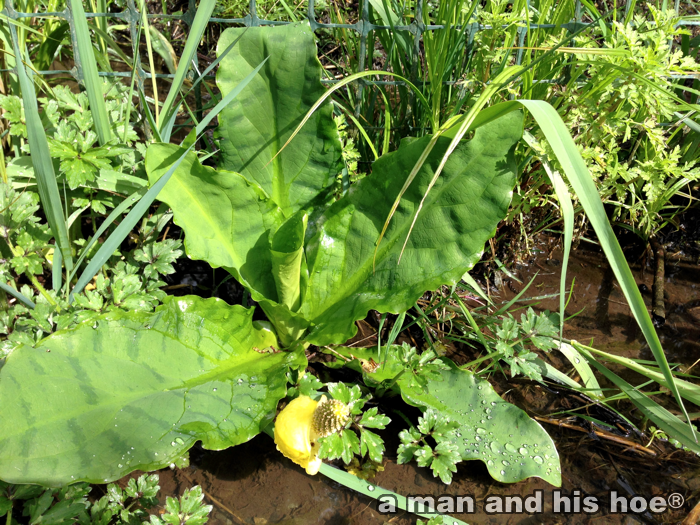
The chickens spend a lot of time in the woods. I can follow them and watch where they go, but what is it that they see with their amazing eyes? (see Disordered Hyperuniformity) Do they care about the tulips blooming at the edge of the woods? What about the bleeding hearts on the forest floor? Or the new fern leaves? The massive old tree trunks? The bark path? The skunk cabbage?
Or is everything just about what looks good to eat? The slightest movement of a bug. The new berries. The new shoots.
What has caught her eye? Does it make any difference if a laying hen spends hours foraging through a forest, or spends all day surrounded by tens of thousands of other hens in a laying house? The next time you buy an egg, stop and think what the hen who laid that egg saw that day.