Author: theMan

  • Vegetables Come from the Sky

    2051103E-leavesinthesky

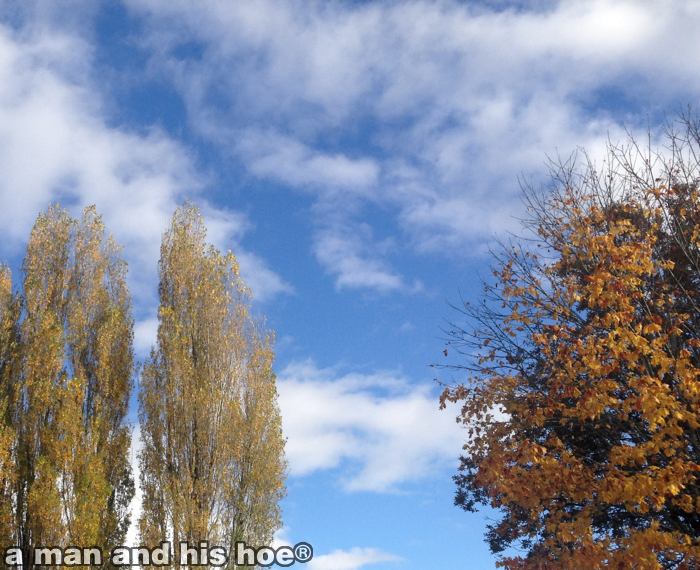
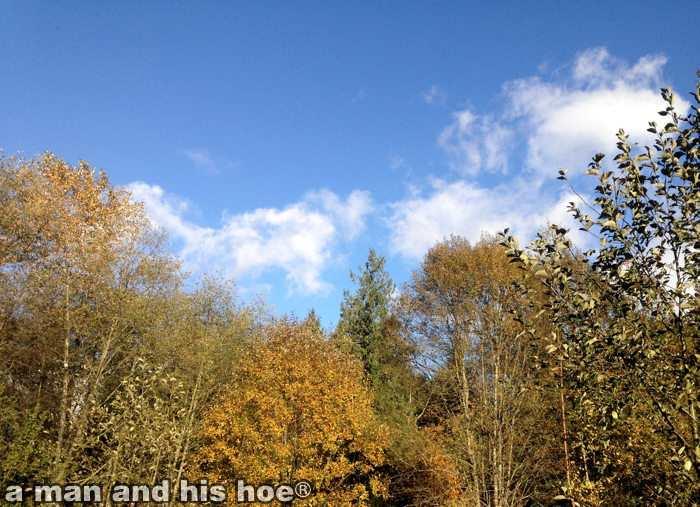
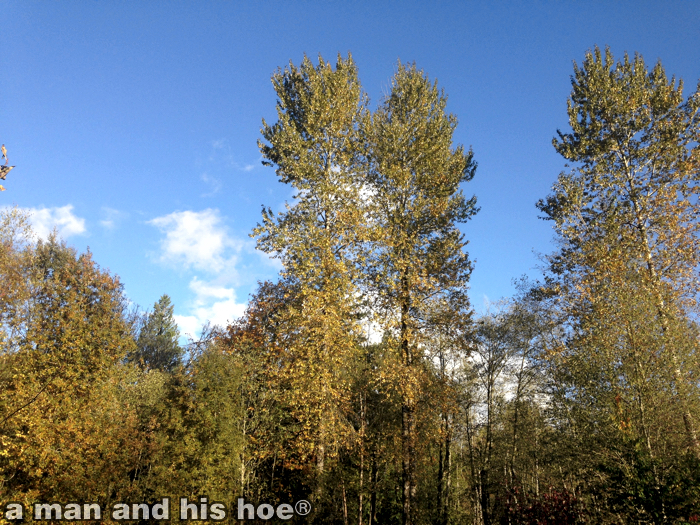
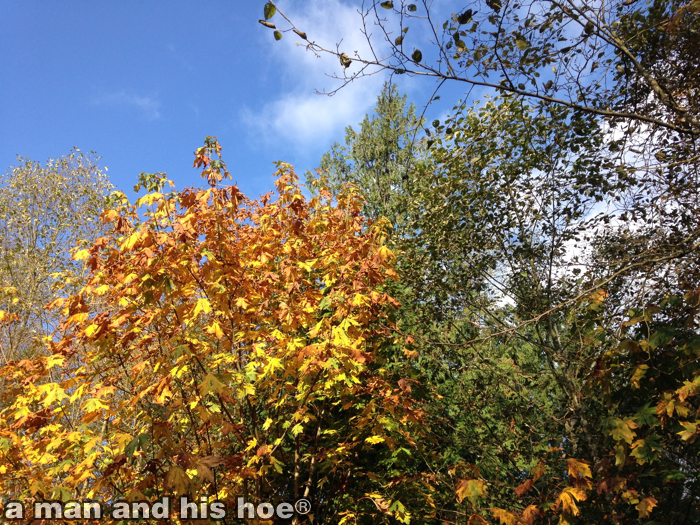
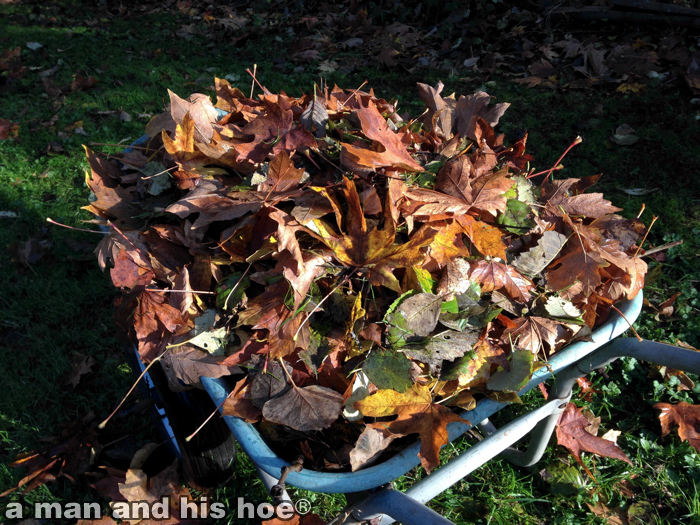
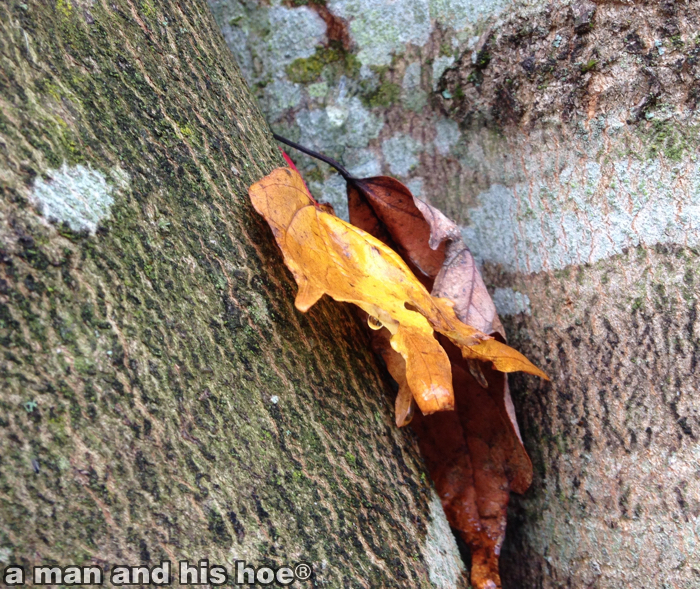
    Where do vegetables come from? They come from the sky, and this is how. Before you can plant a carrot or lettuce seed, you need living soil. Living soil starts up in the sky where the tips of the trees catch the wind and the rain. After soaking in the sun and drinking the rain all summer, the leaves come fluttering down to earth, where they end up in my wheelbarrow.
    2051103D-wheelbarrowofleaves

    Look at a wheelbarrow full of leaves and you’re looking at your future salad. Over the winter and into spring, bacteria and fungi and earthworms and a million other organisms will take this bounty that drifted out of the sky, and turn it into living soil which will grow your future salad.
    2051103A-leavesintree
    2051103B-trumpeterswans

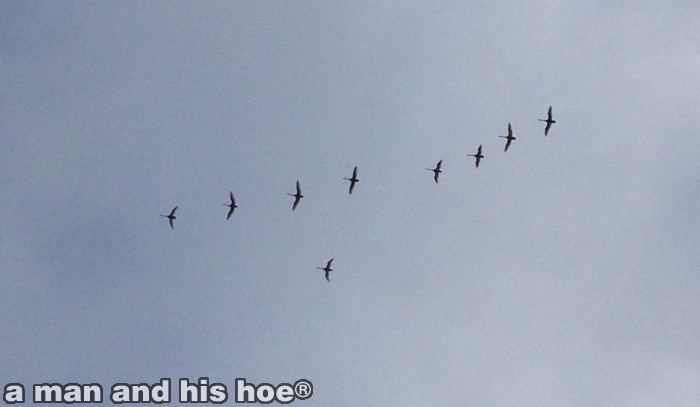
    Speaking of the sky, more than leaves live up there, so do the swans and snow geese. Working outdoors lets you hear and see the trumpeters when they fly overhead. At first you hear them honking. Half the time they go by behind the trees, out of view. It doesn’t matter. Even if you can’t see them, hearing them brings plenty of joy.

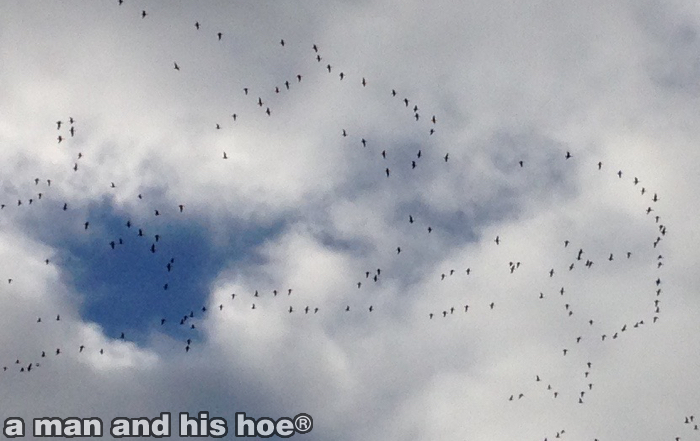
    When the snow geese go by, you can’t miss them. They love to party. They fly by in the hundreds and thousands, all of them talking at the same time.
    2051103C-snowgeese
    2051103F-tomatoes

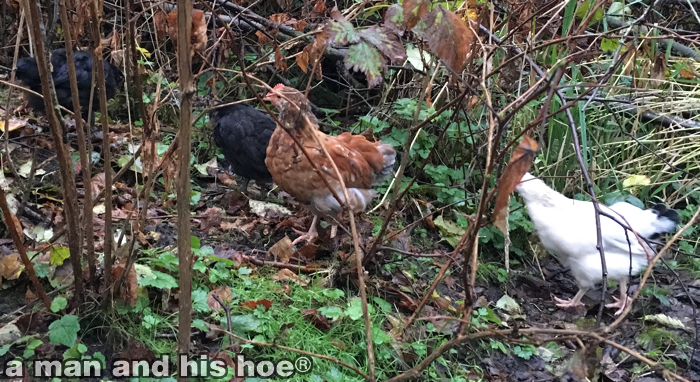
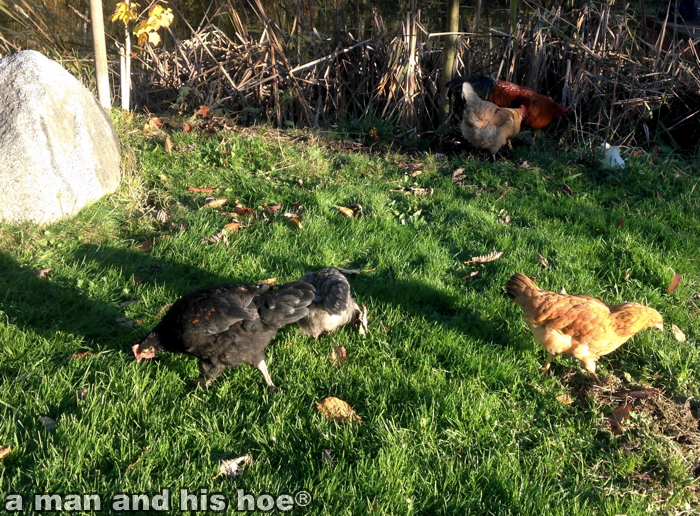
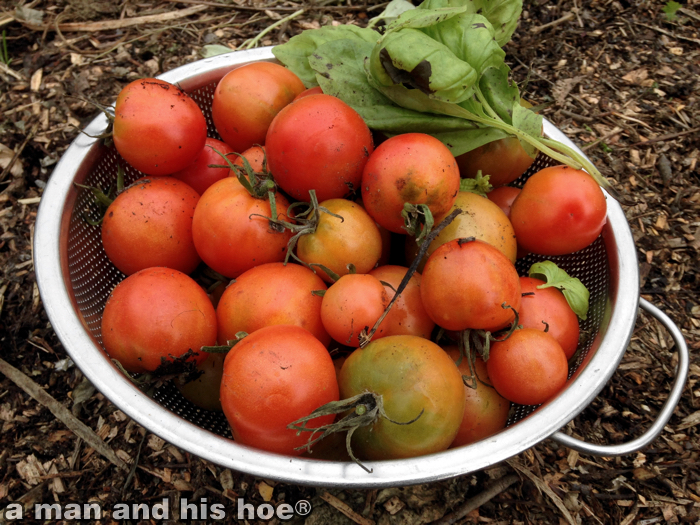
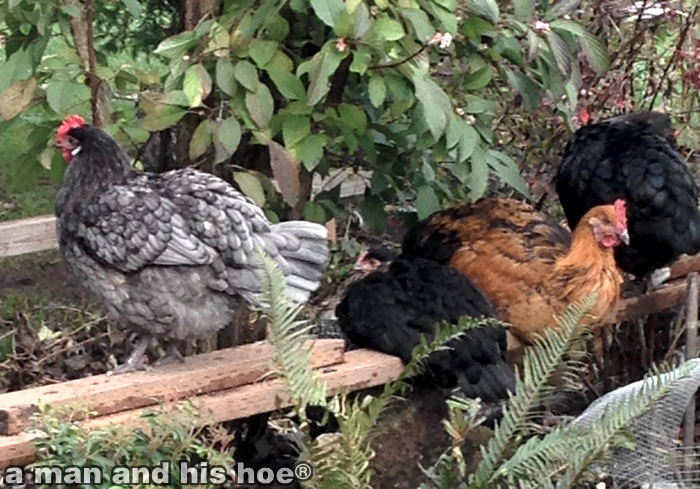
    I picked the last bowl of tomatoes today. It was time to toss the tomato plants in the compost and save a few tomatoes for the kitchen. The rest of the tomatoes I gave to the chickens. Next to worms and bugs, chickens love sweet, juicy produce like melons and bananas and grapes. They enjoy juicy tomatoes too.

    Two summers ago, these tomatoes were tree leaves high above the ground. Now they are inside a chicken, though not for long. They’ll get ground up, nutrients extracted, and the unused bits will soon pop out the chicken’s butt. Then it’s a sojourn into the soil before getting sucked up by tree roots and carried to the top of the trees to spend a summer in the sky again. Everything goes round and round and round.
    2051103G-chickensresting

  • Swans-here, Swans-there

    AuspiciousDayA

    Today was an auspicious day. The start of Swans-here. Hearing their distinct honking, we looked up into today’s blue sky and were dazzled by a flock of swans flying in off the bay. There are really only two seasons in the Skagit Valley, the time when the swans are here, known as Swans-here, and the time when the swans are away, called Swans-there. Where? Out there, where you can’t see them. All the other seasons are subsets of these two distinct times.

    Around when November begins, the swans start flying in from their summer homes in the far north. If you see them for the first time on November 1, it’s particularly auspicious. They leave in early April and once they are gone, we are in Swans-there. During Swans-there, the whole activity of the valley revolves around preparing for Swans-here, making sure that plenty of crops are grown and harvested so that when the swans arrive, there are acres of good stubble and potato buds for them to savor through the rainy winter. The belief is that if the swans leave satisfied, that year’s crops will be exceptional. If the swans leave discontented, it means we have to try harder. The world would come to an end if they decided not to come back. Then we’d be stuck in Swans-there forever.

    AuspiciousDayB
    AuspiciousDayC
    AuspiciousDayD

  • Flinstonian

    20151101A-Flinstonian

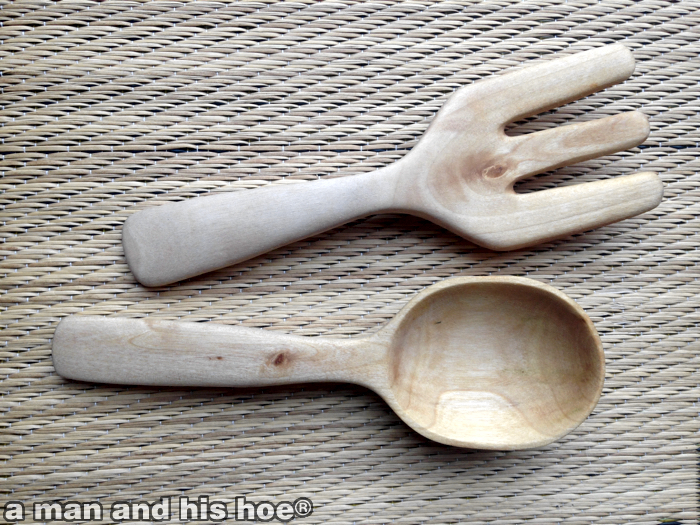
    I describe this salad fork and spoon set as Flinstonian. The woodcarver who made these, Allen Berry, sells his creations at Bow Little Market and the Mt. Vernon’s Farmer Market. He creates an assortment of boxes, spatulas, stirring spoons, salad forks and spoons, knitting needles, spindles, and other wood wonders. If you don’t live in the area, there must be an Allen Berry in your neighborhood who whittles wood into salad forks and spoons you can use.

    20151101B-WetLeaves
    20151101C-VineMaple

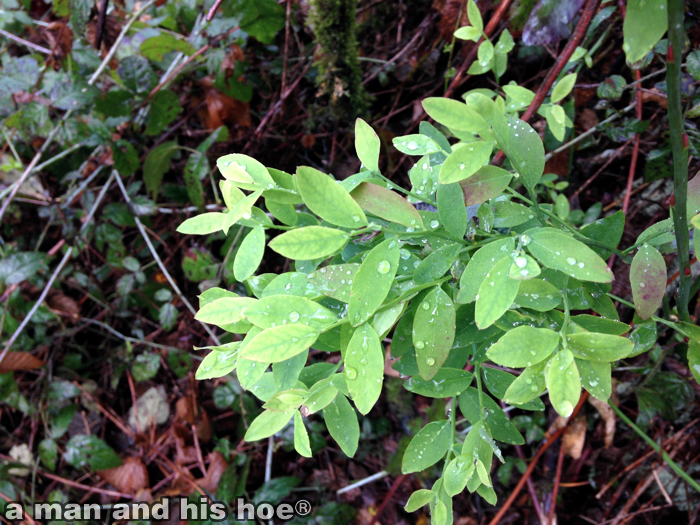
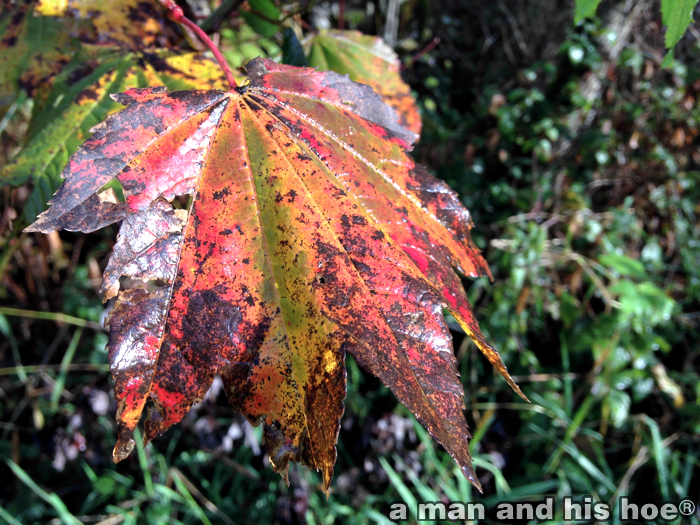
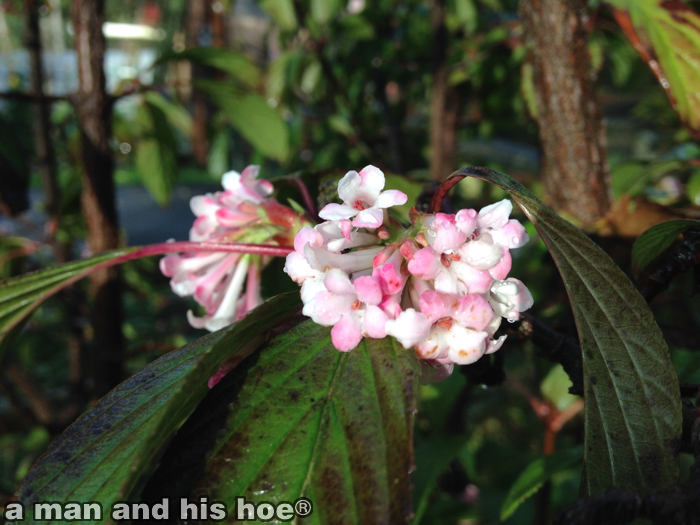
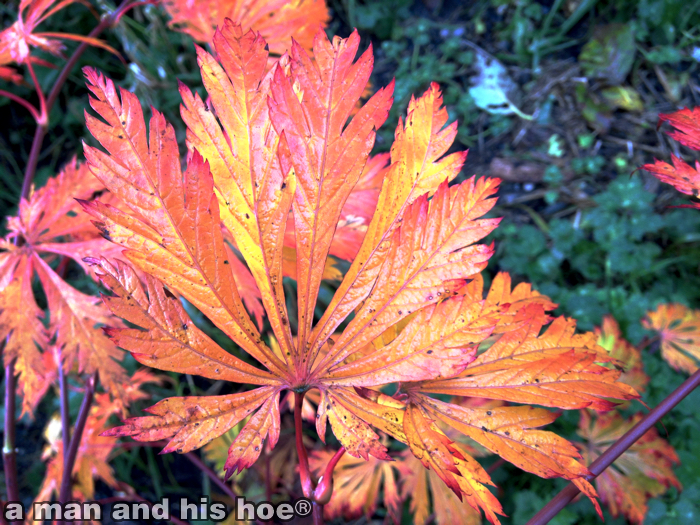
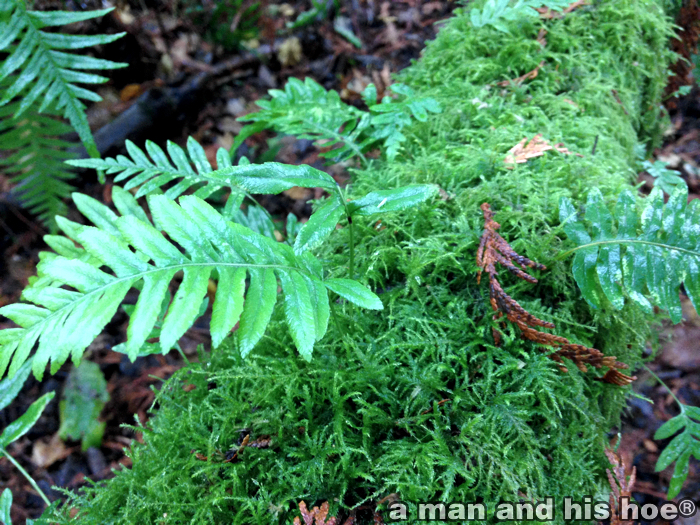
    November begins with rain, rain, rain, like it always does in this neck of the woods. Every thing is wet and lush. The rain intensifies the fall colors. They pop out when you walk through the woods.

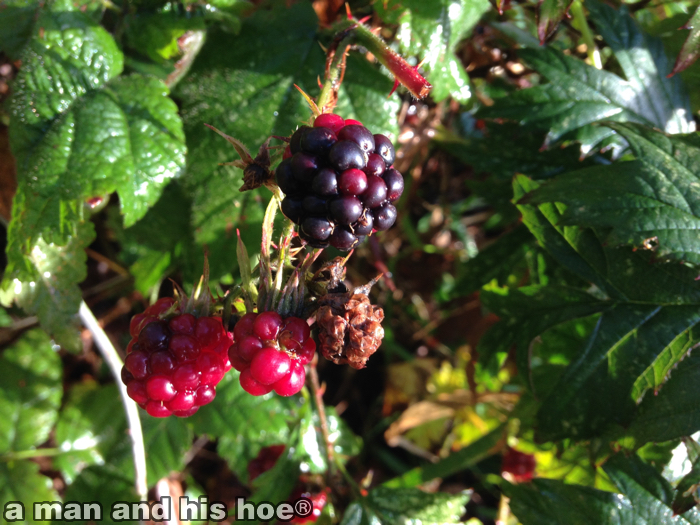
    20151101D-Berry
    20151101E-Flowers
    20151101F-JapaneseMaple
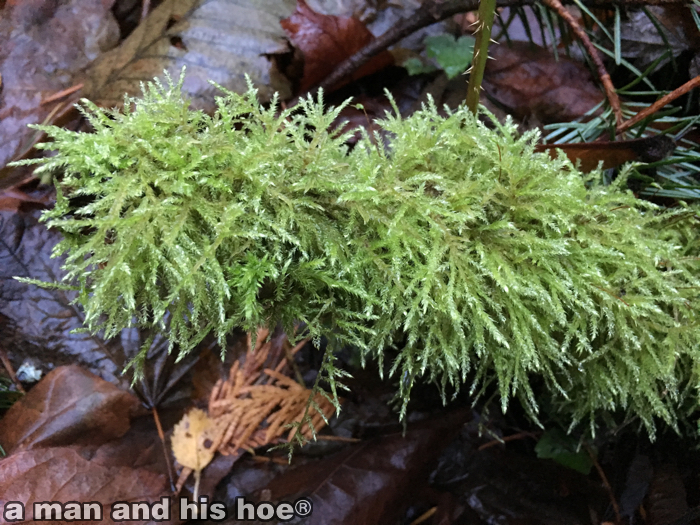
    20151101G-FernsAndMoss

  • Who Made My …?

    CherylHarrisonA

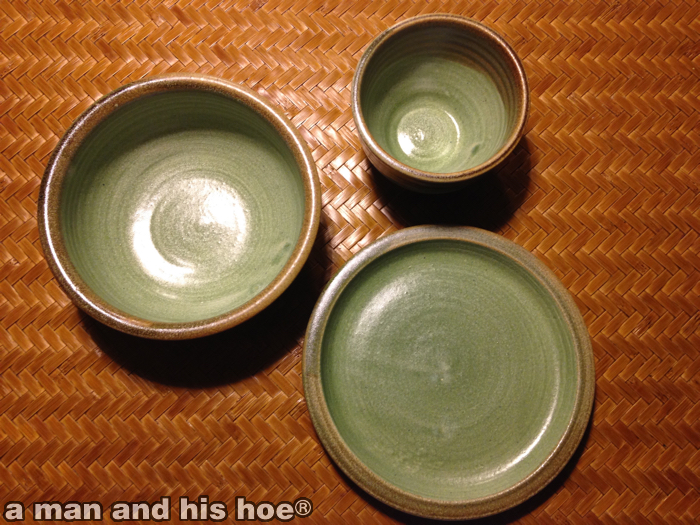
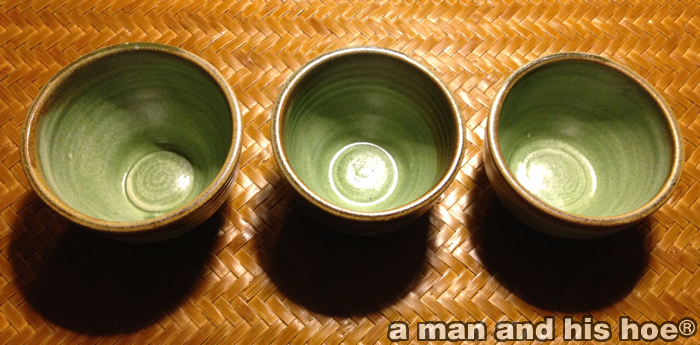
    It all started a few months ago when I purchased two teacups at my local Skagit Valley Food Co-op. I liked them so much that the next time I was at the co-op, I asked one of the staff if they had a way to contact the Cheryl Harrison whose signature was on the bottom of the teacups.

    “Yes, she works here,” they said. Wow! That surprised me. I found out which days and hours she worked, and I met her and asked if she made pottery on request. She did, and I took some pottery that I liked and gave her the sizes of the cups, plates, and bowls that I wanted.

    I picked them up this week. It’s a delight having handmade dishes and knowing the person who made them. Each cut, plate, and bowl is slightly different. It’s refreshing setting the table and having pieces with personality.

    It’s made me think how much we’ve lost with everything being mass produced, with everything being identical. A couple hundred years ago, you knew everyone who made your clothes, your dishes, your furniture. It was either yourself, or someone in your town. Today, most people have no personal connection with the people who made the things they use every day; their clothes, their shoes, their dishes, and the many other things they use.

    One thing I’ve learned being at Bow Little Market this summer, is that if I look around, there are people nearby who make many of the things I use every day. It’s nice having a bowl of warm soup and knowing the person who crafted your bowl, and when I’m tossing a salad, knowing the person who made my salad fork and spoon. And they aren’t people who live in some far distant town, state, or country. They live nearby.

    CherylHarrisonSignature
    CherylHarrisonB

  • Intentions

    20151028pumpkin

    My intention was to turn this pumpkin into several dishes: pumpkin pie, roast pumpkin, pumpkin miso-ni, etc. It’s decorating the gateway instead. Maybe after halloween I can cut it up and eat it.

    More pullets are laying now. For the first time in several months, there were more than a dozen eggs today. March and April are the peak of egg production for the flock here. By the end of June the count is noticeably lower, and it usually keeps going down until it picks up again after the New Year. This year, it is increasing early on account of new pullets wanting to lay eggs.

    Supposedly hens need 14 hours of daylight in order to lay eggs. My experience is that this isn’t always the case. We are down to 11 hours of visible daylight now and will be down to 9 hours in late December. Even in the darkest days of winter, there are some hens laying eggs. Egg laying is very strong by early March when there are just 12 hours of visible light, so the 14 hour “rule” isn’t something my chickens know about. I won’t tell them. They don’t need another thing to worry about. “Oh, dear, there are just 10 hours of daylight and yet I’m laying eggs. Maybe there is something wrong with me? Should I go to the vet?” No, they don’t need to know that rule.

    20151028eggs

    Each egg is so different. Rarely are there two eggs so similar they are hard to tell apart. Most eggs are distinct. Why do store eggs all look alike? Do they banish hens which have personality? What happens to those hens who lay eggs with a flare? I don’t want to think about it.

    20151028mint

    There is so much color this time of year. Mint never stops blooming once it starts. Maple leaves are turning a warm rust color. A row of freshly planted shallots and garlic turns into a quilt of many colors when I cover it with a thick layer of fall leaves.

    I saw an article about a sweet potato farm in Japan started several hundred years ago. An integral part of the farm was a deciduous forest next to the fields. Over the centuries the farmers have continuously raked fallen leaves out of the forest and spread them over the fields. The result is that the soil in the fields is soft and many feet deep, letting oxygen filter deep into the ground and maintain a healthy biology for the sweet potatoes to grow.

    In another row, a shallot planted several weeks ago is sprouting. Shallot sprouts are always fun to watch. Instead of a single stem poking up out of the ground like garlic, shallots send up whole hands of slender green fingers into the air.

    20151028maple
    20151028leafmulch
    20151028shallotsprout