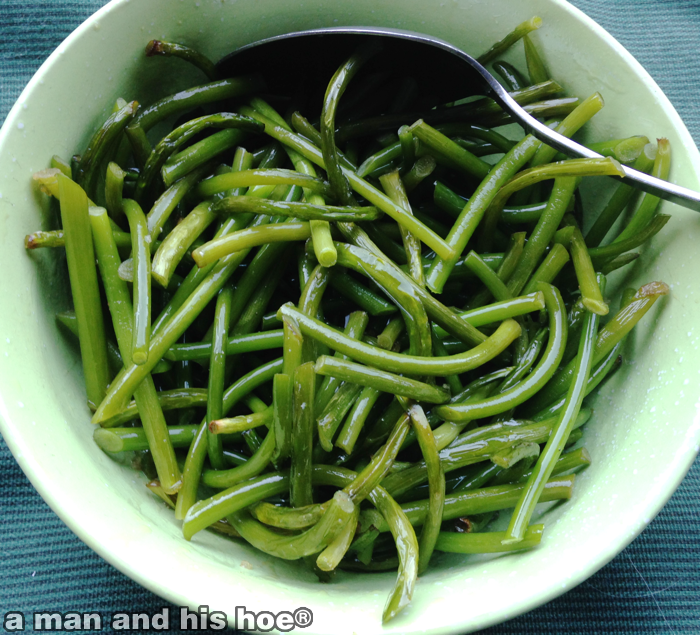
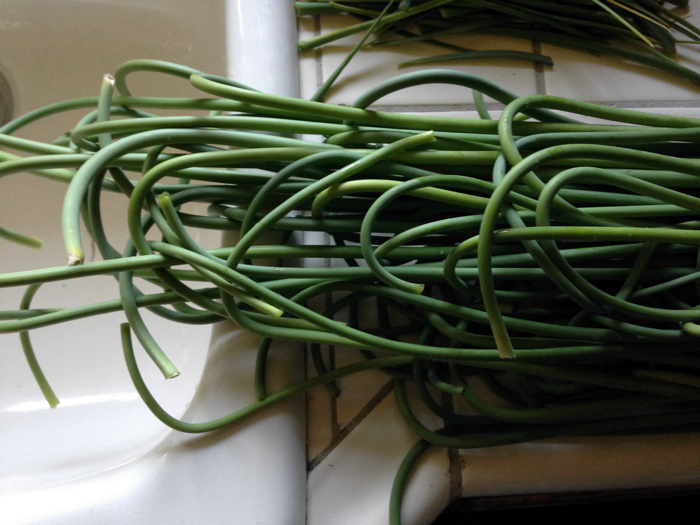
This is what the last of the garlic scapes became. You can cut the stems and use them like you would string beans. They taste like string beans cooked with some garlic. The garlic flavor is not strong.
every day is a good day
This is what the last of the garlic scapes became. You can cut the stems and use them like you would string beans. They taste like string beans cooked with some garlic. The garlic flavor is not strong.
Every few weeks another season draws to a close. Today is the end of Garlic Scape Season here. The season lasts from mid June to mid July. The year is packed with many seasons, some short, some long.
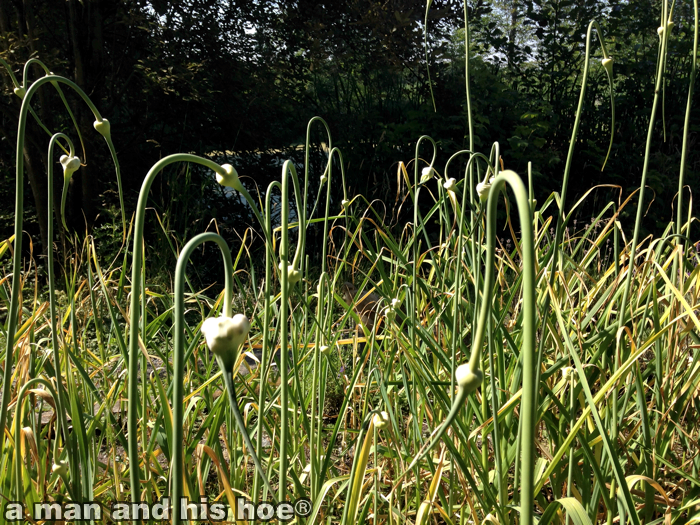
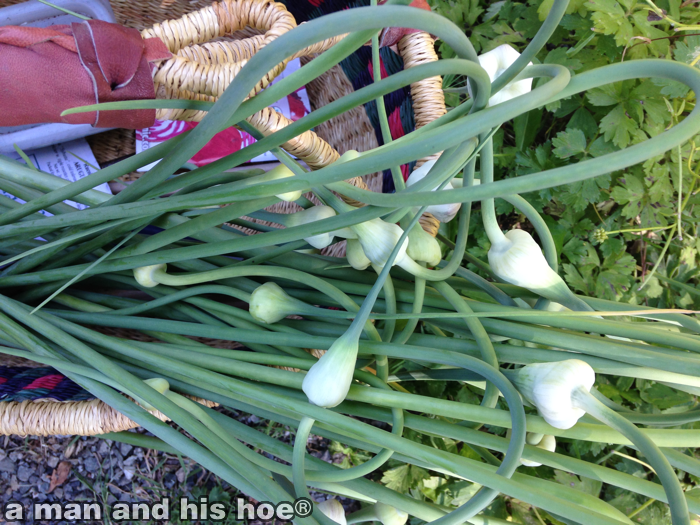
At the tail end of the season, the garlic flower bulbs are full. Finely chopped or crushed, they provide a nice garlic kick to dishes. I left some scapes to flower. The flower bulbs develop into clusters of tiny garlic bulbs which you can plant. It’s one way to propagate garlic. They tiny bulbs won’t grow into full-sized garlic the first year, but by the second year, you can harvest a nice crop.
There are still some tender parts left on the stems, though probably half of them are now too woody to eat. But something will eat them when they are tossed into the compost.
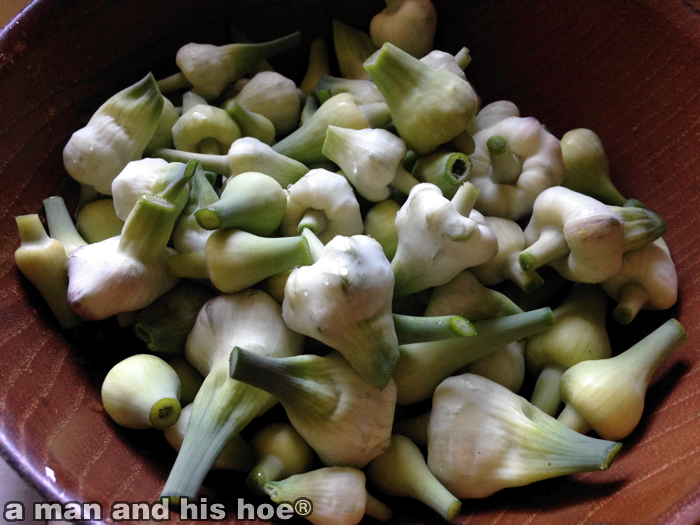
What I’ve learned from growing produce is that many of the best foods never make it onto the shelves of grocery stores. The grocers want finished produce, not all the transitory parts that you can enjoy while the plant grows. To truly enjoy the gamut of what vegetables really are, you need to have a patch of dirt and grow them, or be friends with someone who does. We miss a lot of what nature has to offer when we distance ourselves from the process of growing produce and leave it to the supermarket to supply us with it. Some things, money just can’t buy.
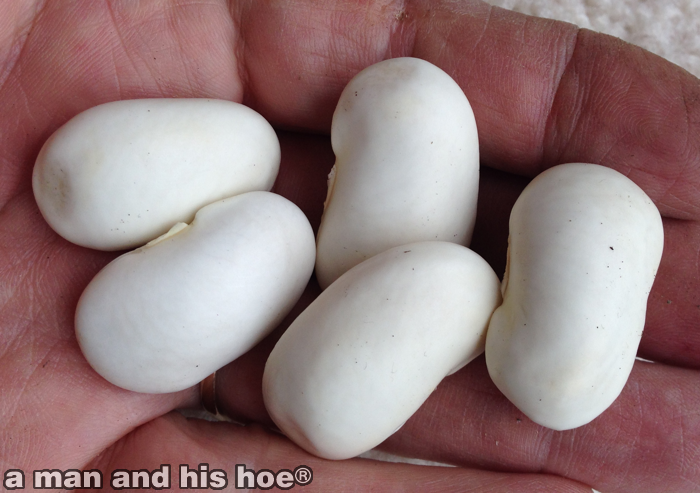
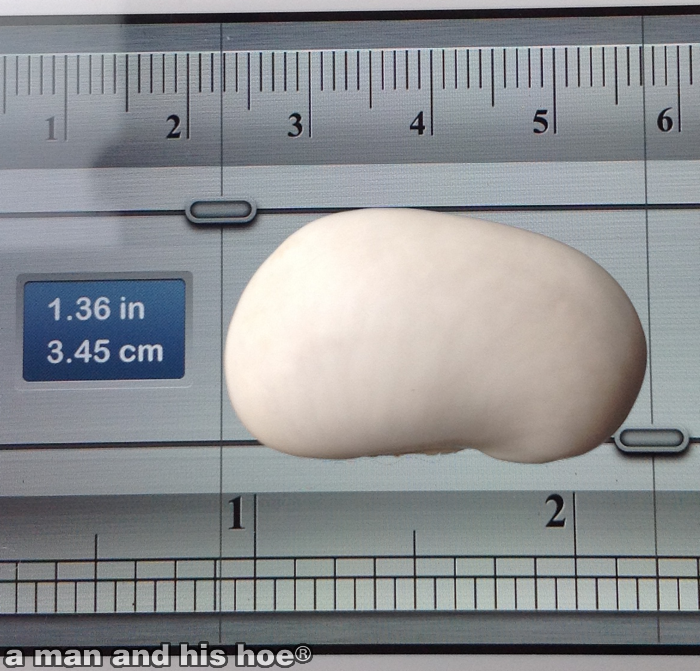
Few plants match beans for their growing power. These are White Flower Beans – 白花豆 – known for their beautiful white flowers when they bloom. They are huge, white beans, more than an inch long. They do well in cooler climates so they are a good match for a man and his hoe®.
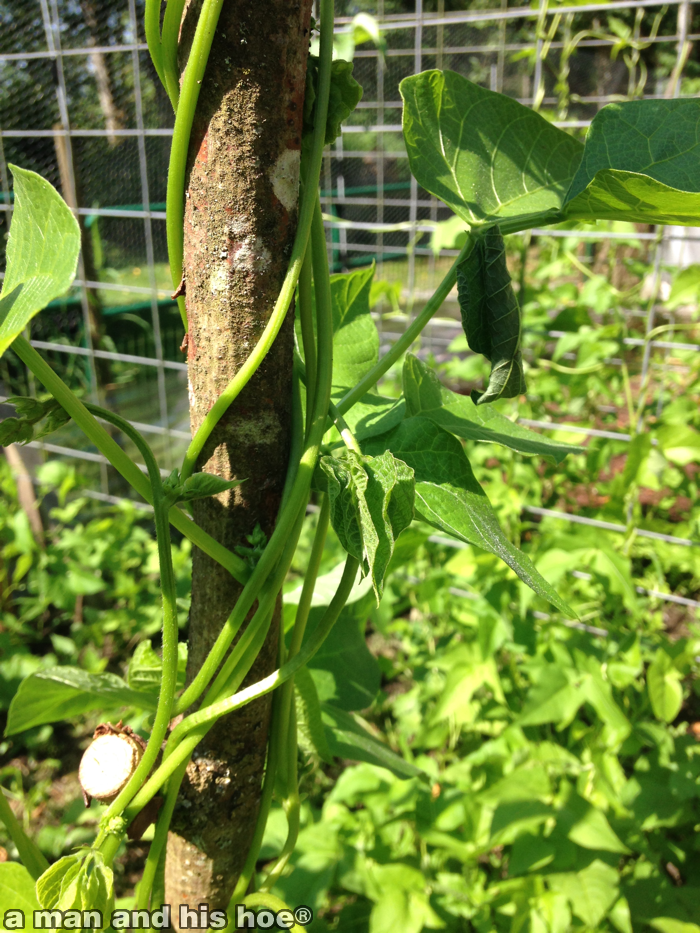
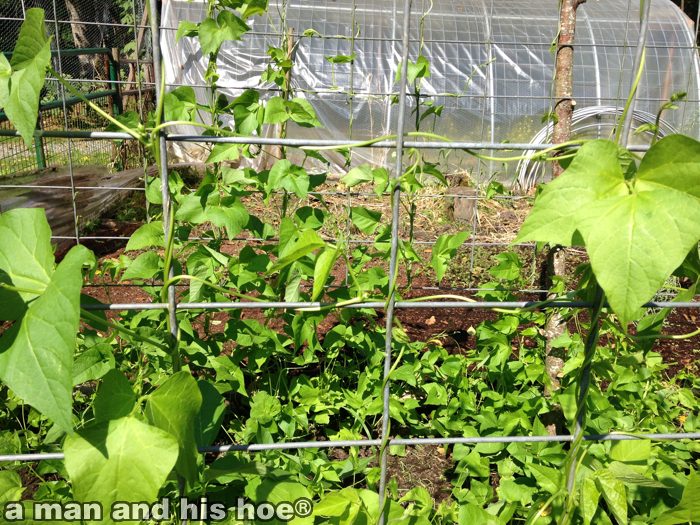
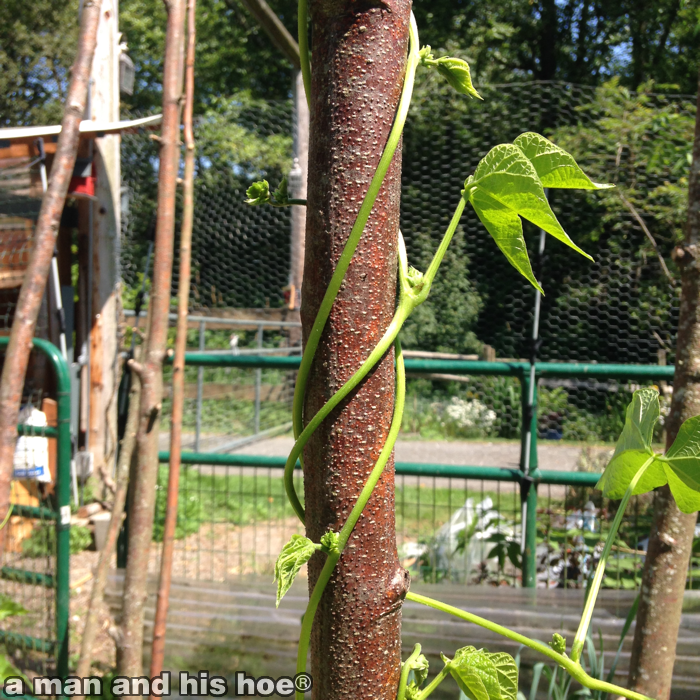
I have them growing on poles as well as welded wire fence panels which I’ve attached to poles. With the welded wire panels, I can train the vines to grow horizontally as well as vertically, making a wall of beans. In a few more weeks, they will be in full bloom. Harvest time is usually September into October. The beans grow in huge pods with three to six beans in a pod.
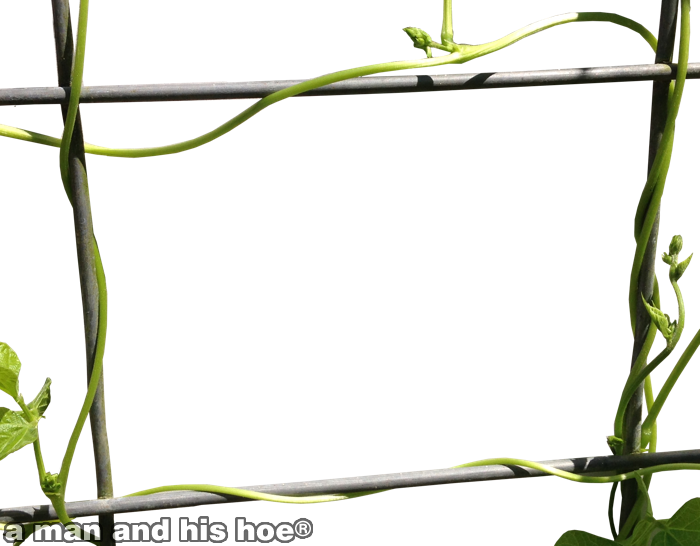
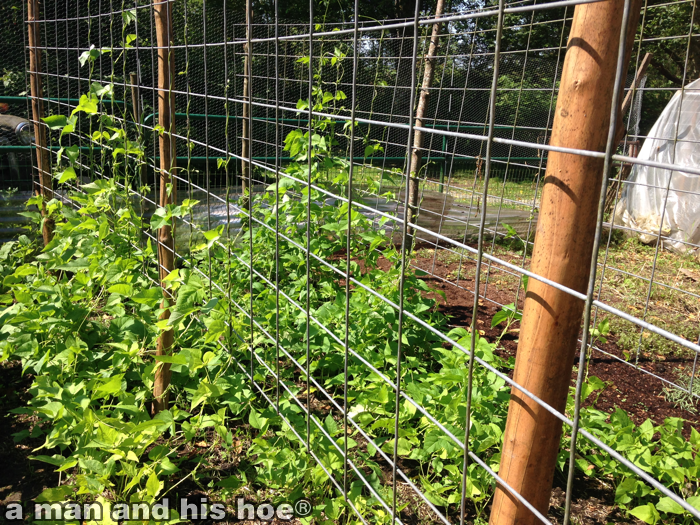
Watching them grow is like watching a monster devour a city. This year, I will be topping the vines once they reach the tops of their poles or fill out the welded wire panels. Left unchecked, they will spiral up into the heavens.
Check back with me in the October. I may have some extra for sale. Your chances of finding this special bean in your grocery store are slim to none. Few farmers grow pole beans because they are so much work. Highly mechanized agriculture limits beans to those that can be easily managed and harvested with machinery. Pole beans have been tossed out of the repertoire of grown beans in exchange for easy harvested bush beans. There are some 40,000 varieties of beans. The next time you go shopping, count how many varieties your find for sale. Ten? Twenty? Thirty? It’s just a tiny, tiny fraction out of all the wonderful varieties of beans there are.
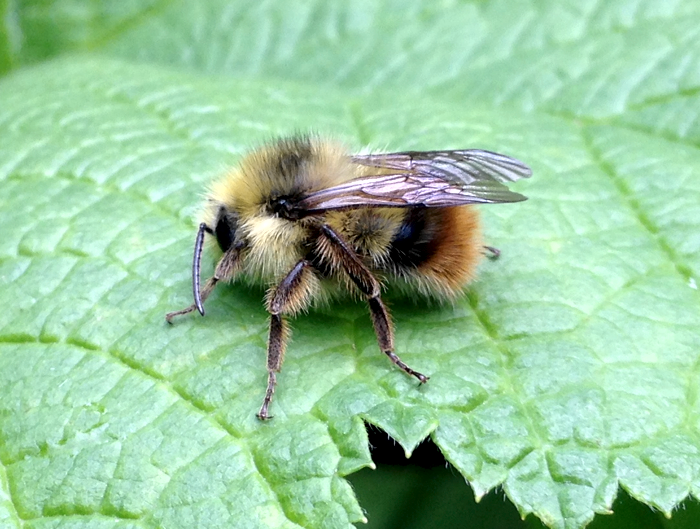
Here is one of the many bumblebees which buzz about at a man and his hoe®. Without them, there would be far fewer things to eat around here. Sadly, many bumblebees are in trouble. One of them, the Western Bumblebee, has been in decline. It used to be common in this area but began declining in the 1990s and was thought to have disappeared from the Puget Sound lowlands.
Recent sightings have confirmed colonies near Everett, Lynnwood, Tacoma and on the Olympic Peninsula. Will Peterman, writer, photographer, software engineer, and native bee nerd, came across a Western Bumblebee in the Seattle area and is now on a study to collect samples from local populations in California, Oregon, Washington, Idaho, Montana, Wyoming, Colorado, New Mexico, and (time, weather, and customs permitting) British Columbia. The goal of the study is to compare the Western Bumblebees they find in areas where they disappeared with those in areas where they remained, to try and understand why they disappeared and what is different with those that are reappearing. The hope is that the answers will help with efforts to reestablish the Western Bumblebee in the Puget Sound lowlands.
The bumblebee I photographed is not a Western Bumblebee. Western Bumblebees have a darker midsection and their tails are white.
Six legged bigfoot, the fall and rise of the Western Bumblebee
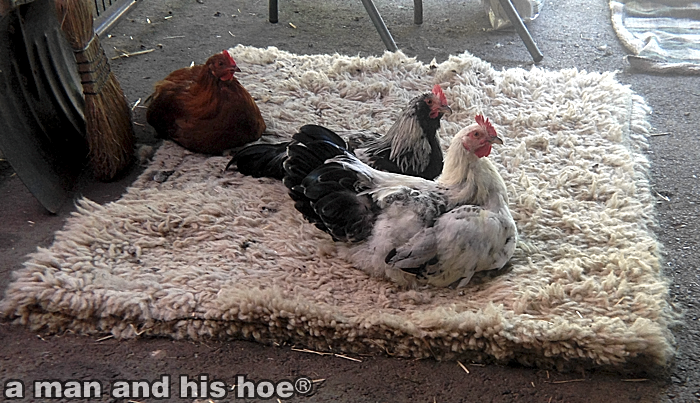
These nearly four month old rooster siblings hang out together much of the day. That’s what young roosters do. Sort of like kids, they are afraid of getting cooties from the hens. Another month or two and their attitude towards the hens will change.
This morning I found them hogging one of the dog carpets. I guess the carpeting is a comfortable spot to hang out on a cool morning.