• The Continuing Evolution of Genes

    Carl Zimmer writes today in the New York Times in The Continuing Evolution of Genes that scientists used to believe that the some 20,000 genes we all have, came from our parents, which came from their parents, and on backwards to the very first forms of life. And that the genes all organisms have, can be traced back to these original genes.

    The thinking was that at first there were just a few genes, and at times when they duplicated, making two copies of the same genes, which over time evolved into different genes, hence the increasing number and complexity of genes we now find.

    With new genes evolving from earlier ones, it would be possible to compare the genes and see which genes came from which genes.

    But when scientists gained the ability to read DNA sequences, they discovered that though most genes were duplicated versions of earlier ones, there were also a number of genes which were unique to a species. They called these orphan genes de novo genes. Unlike most genes which have been passed down through the generations for billions of years, de novo genes came into being much later.

    Carl Zimmer’s article explains how these orphan genes came into existence, and the role they play in evolution. The article is worth a read. It also has a podcast with a segment describing the origin of genes.

    One thing I am trying to find is a scientist who is researching how instinct is encoded in DNA. The first time one of my hens hatched and raised a clutch of chicks, it made me wonder how she knew how to that. She was a hatchery chick and raised without a mother. So how did she know that if she sat on an egg for 21 days that they would hatch. And all of the hens I’ve observed, use the same calls for danger, here’s good food, be quiet, etc. And all the chicks know from birth what these calls mean.

    So how is all that complex behavior inscribed on DNA? I’ve come up with many scientists researching genetic behavior and trying to determine what behavior is genetic and what is learned. And scientists knocking out genes in organisms like flies to see how those genes affect fly behavior and the like. But I’ve yet to find the scientists looking at the GATC letters of specific DNA to tease out how complex behavior is carried by DNA from generation to generation. I’m sure it is extremely complicated, but hopefully there is a scientist out there who is studying this and can explain how nature does this amazing feat.
  • They Are All Unique

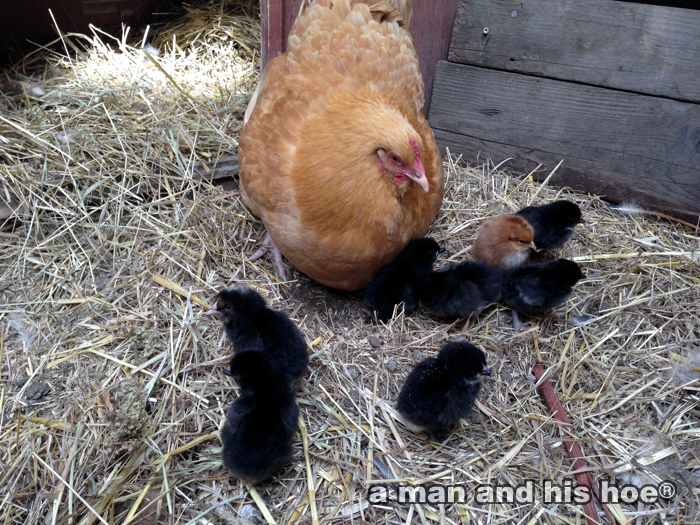
    How do you tell them apart? When they are this young, like these eight chicks hatched yesterday, there is one that pops out because it is a different color. The rest look the same, but if you look closely, you’ll see little differences in the coloring, the feet, the faces, and the personalities. Some stay close to their mothers. Others are more adventurous. Some are quiet, others loud.

    EightChicks

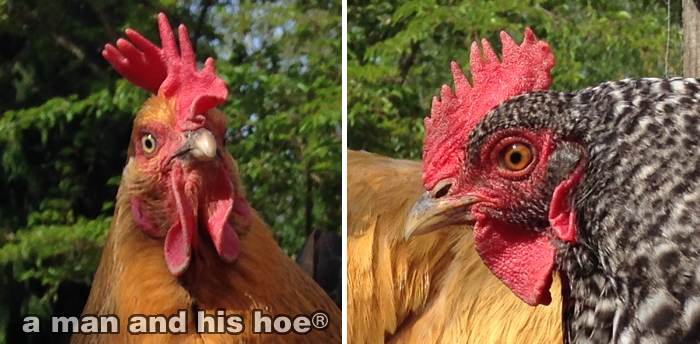
    As they grow up, their differences shine. You would never mistake these two hens. Their coloring is very different, but so are their combs and wattles, their faces, and their beaks. Compare the combs on these two hens. One has floppy, rounded teeth on her comb. The other upright, pointed ones. There is an infinite variety of combs. Some flop left. Some flop right. Some both ways. Many are straight. Looking at their combs is one of the easiest ways to tell chickens apart.

    TwoFaces

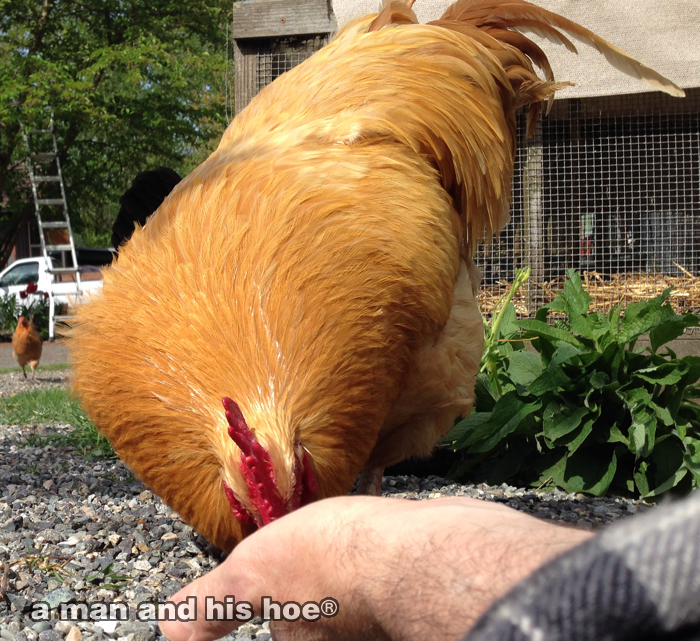
    Their personalities also stand out. Stay in one place very long, and Billy and his consorts are sure to come by. You might say some roosters develop an entourage. To keep an entourage, they have to work at it. Hens won’t stick around if they aren’t being treated right.

    Of course, if you pack in chickens cheek to jowl, and only have hens, the dynamics change. In the wild, chickens never end up cheek to jowl. They spend as much time alone as they do with the rest of the flock. So it makes me think that chickens raised in the artificially super-packed quarters most are, must be under continuous stress, not know how to deal with having so many others around them all the time, and never having any time alone.

    TreatingBilly

    On a place like a man and his hoe®, chickens are not cackling all the time. But if you enter an egg laying house or poultry barn, the noise is deafening. They don’t make such continuous noise in a natural setting, so something is dreadfully wrong when they are packed in together.

  • Places Chickens Love to Roam

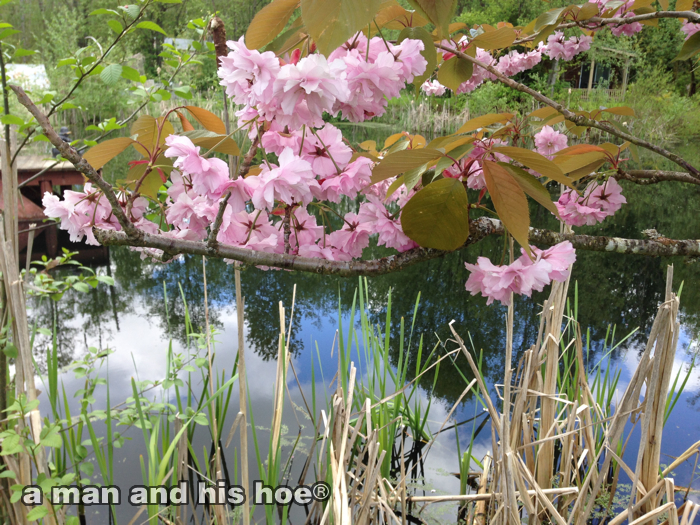
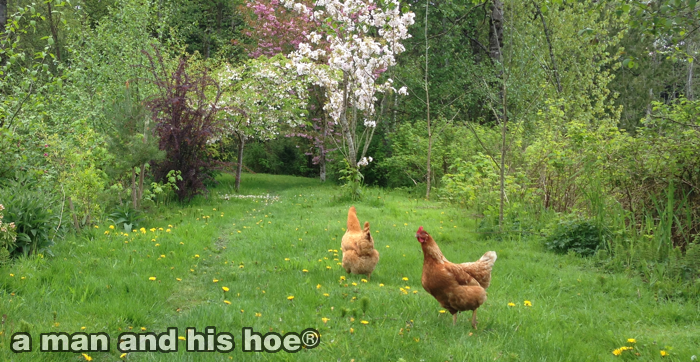
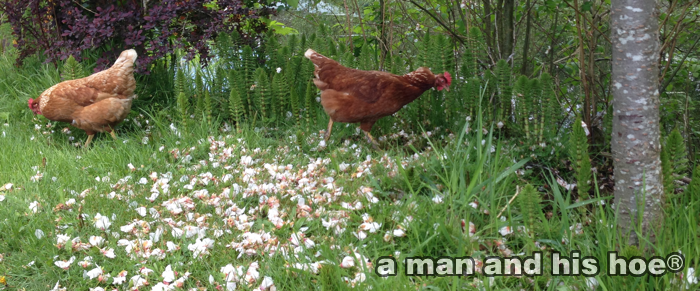
    Today is the type of day chickens dream about. The weather is nice, and there are plenty of good things to eat around the pond. On days like this, they wander far. It’s not unusual to find a hen, hidden in thick grass, a long distance from any of the other chickens.

    CherriesAbovePond
    HensOnPasture20140428A
    HensOnPasture20140428C
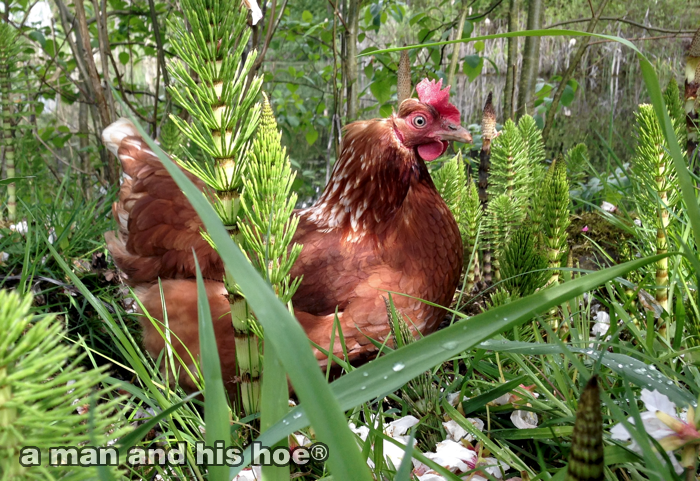
    LuckyInTheHorsetails

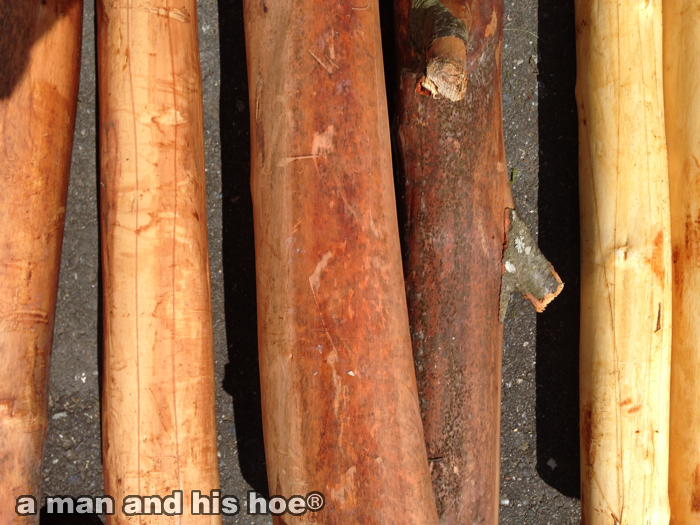
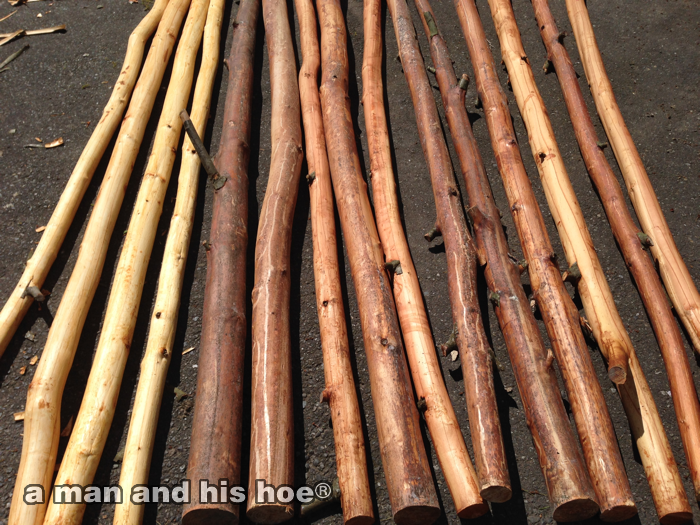
    The first set of poles is done. The ones stripped last week are quite dark. Once the poles are up, they will make for a unique fence.

    Poles20140428A
    Poles20140428B

  • First Trillium

    While clearing one of the forest trails, I saw two trilliums in bloom, the first of the year. It won’t be long before the forest floor is wall to wall trillium blossoms. It’s a luxury being able to leave the house and be in the forest in a few steps. In twenty years, this forest may be gone and this trail a parking lot of a mall. It seems impossible now, but every mall and strip mall within a hundred miles of here was at one time a thick forest where trilliums bloomed each April.

    The next time you drive to a mall, park and step onto the asphalt, stop and imagine what used to be there: giant cedars, vine maples, alders, lush mosses, a doe with her fawn, fresh air. Could it possibly be that again?

    Maybe when this lot is paved over, there will be plaque mentioning how in the past, a man raised chickens here, chickens who got to see trilliums blooming in the forest.

    If you’ve never seen trilliums blooming in a forest, don’t wait. Venture into the woods. Find some trilliums and enjoy how peacefully they bob their graceful white or purple heads above their green skirts. Someday the forests may be gone and you will have missed your chance.

    FirstTrillium2014
    TrilliumsA
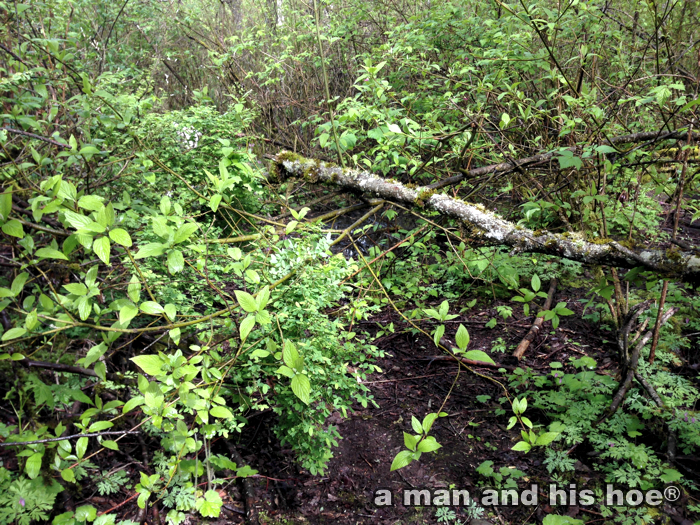
    FallenBranch
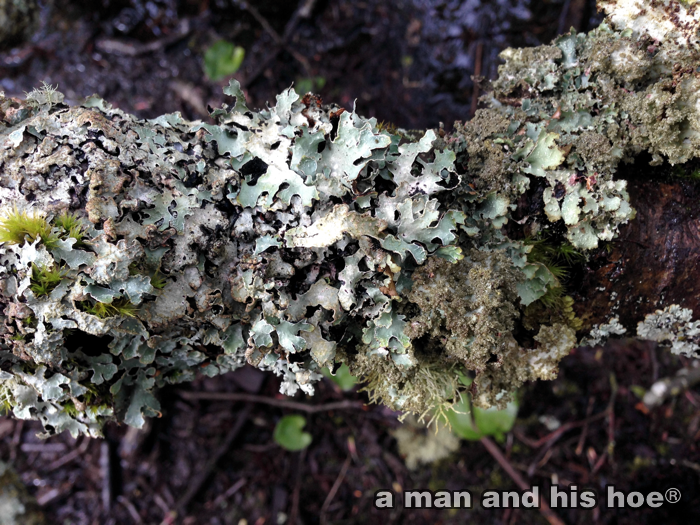
    LichenOnBranch
    SkunkCabbage20140427

    Where Chickens Like to Live

  • Mothers making baby food – a pernicious trend?

    Sometimes I wonder if some corporate executives ever stop to think what their words sound like. I was reading an article in the New York Times yesterday, As Parents Make Their Own Baby Food, Industry Tries to Adapt, by Stephanie Strom. Evidently sales of prepared baby food are falling because more parents are making their own baby food. Doesn’t that sound like a good thing? Instead of relying on the factory kitchens of large corporations, parents are making fresh food for their babies. Great! Right?

    But it’s not a good thing if you are a corporation relying on sales of baby food for your profits. According to Jeff Boutelle, chief executive of Beech-Nut Nutrition (owned by Hero Group of Switzerland), mothers making their own baby food at home is a pernicious trend! This is the quote in the article:

    “Underlying our problem, there was a silent, pernicious trend going on that no one was really paying much attention to,” he [Jeff Boutelle] said — mothers making their own food at home.
    “Today, moms are 50 times more busy and don’t have the cooking skills that women did when we introduced baby food 80 years ago,” Mr. Boutelle said. “But the category is so bad that they’re going to the grocery and spending an afternoon boiling and cooking and filling jars and sealing them because they don’t like what’s on the shelf.”

    Well, hopefully this pernicious trend of parents making their babies’ food will continue, and as far as the women not having the cooking skills of moms from yesteryear, if that is the case, the solution is teaching those skills, not reducing them by offering even more processed foods.

    pernicious – having a harmful effect, esp. in a gradual or subtle way: the pernicious influences of the mass media.