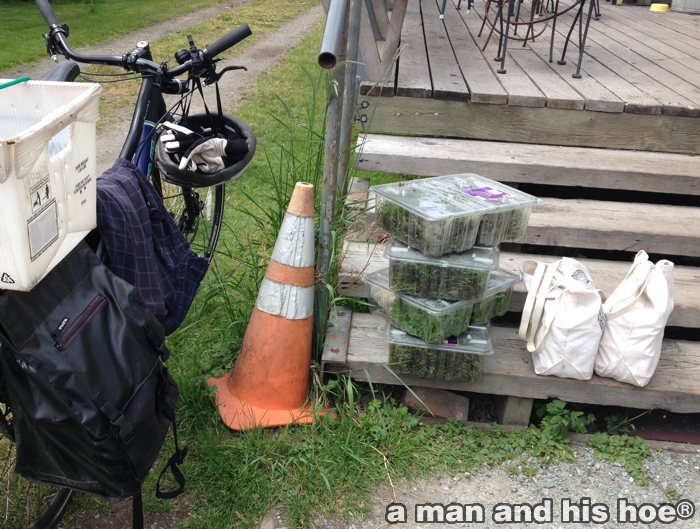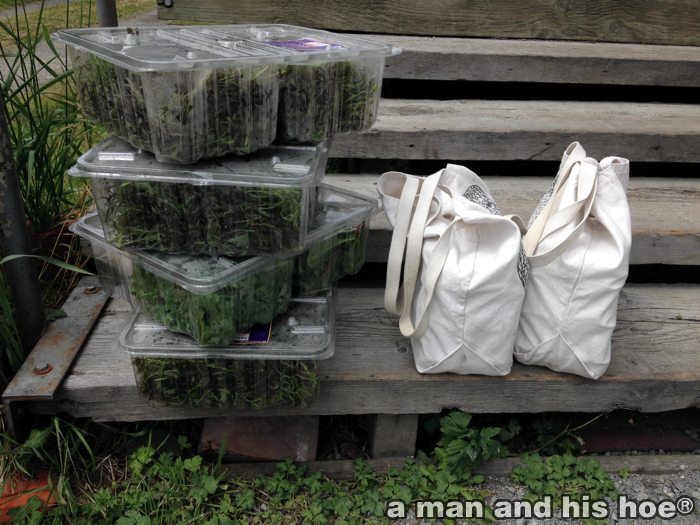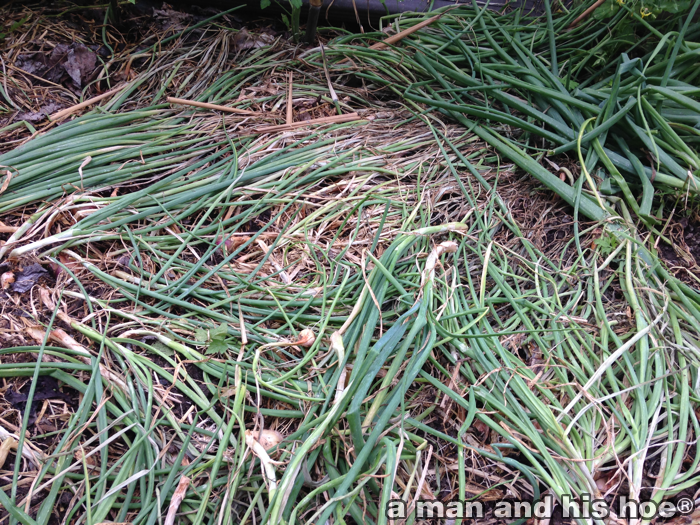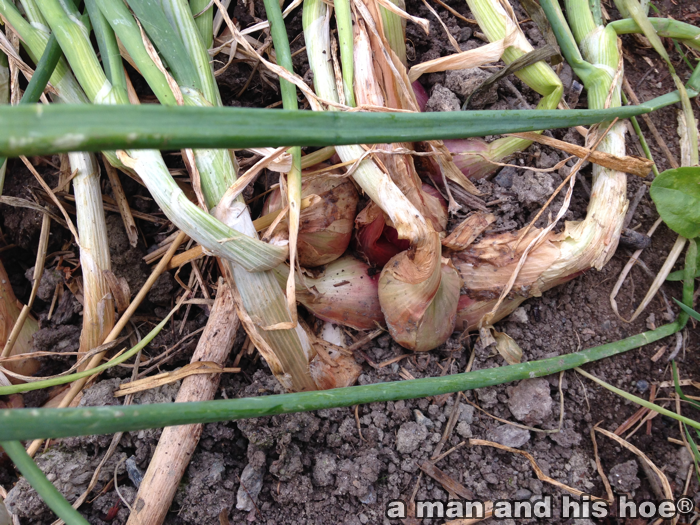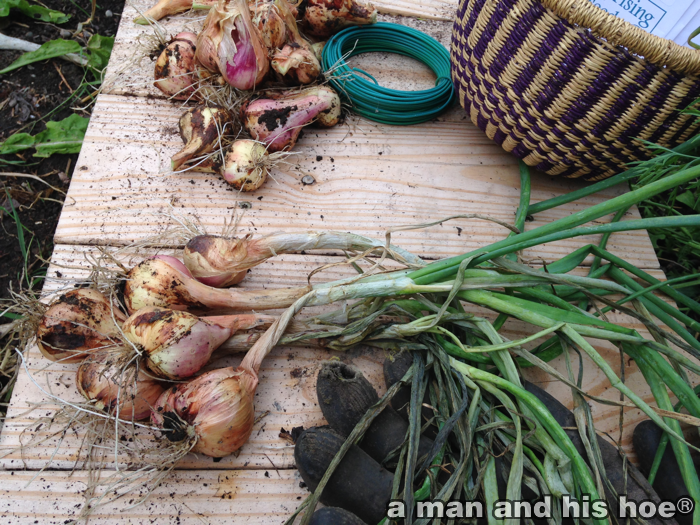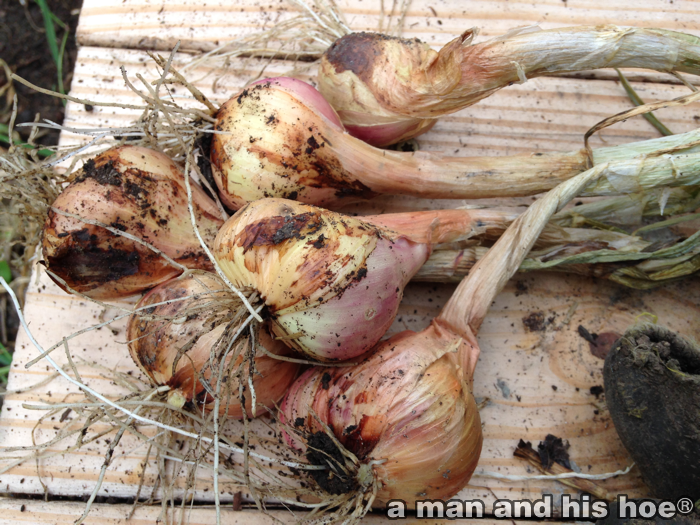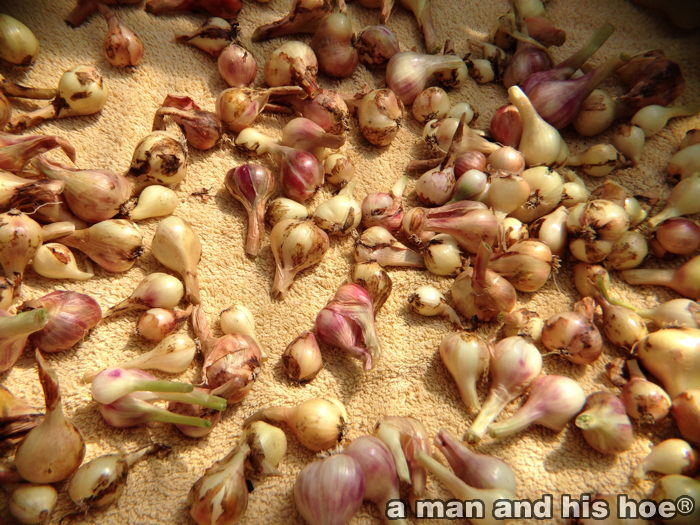
It’s a good day when you can pull 9 pounds of shallots out of the ground from a 6 square foot plot. I’m getting 1½ pounds per square foot, so if I want to grow a ton of shallots, I’ll need 1,333 square feet. Round that up to 1,500 square feet or a 15 by 100 foot area.


Author: theMan
-
Harvesting Shallots
-
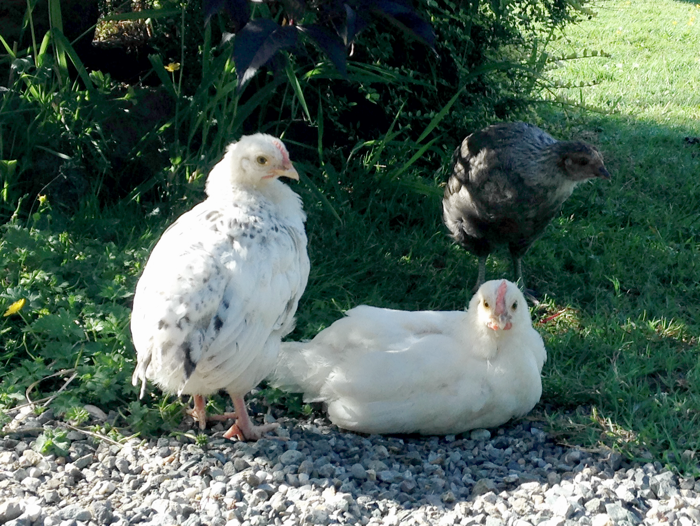
Three Young Roosters
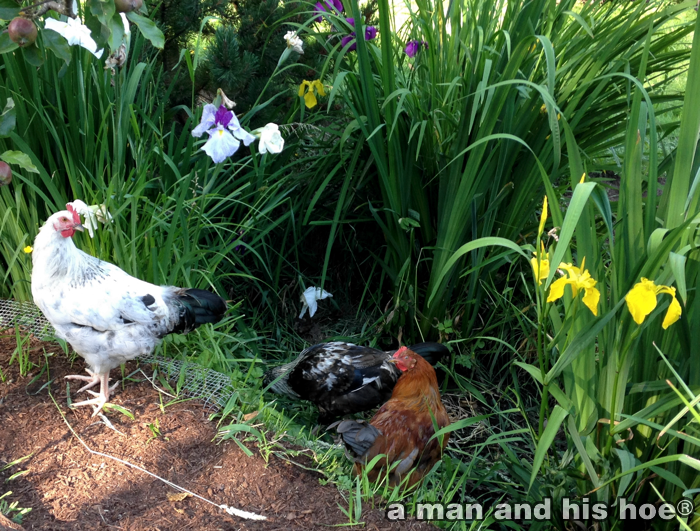
These three young roosters are as colorful as the flowers around them. Young roosters spend most of their time together. They remind me of teenage boys who hang out together, too timid to ask girls out for a date, too insecure to be on their own. Roosters don’t come into their own until they are nearly a year old. Until they do, they seek each other’s company.
Roosters come in so many colors, I wonder if they look at each other and think, “I wish I had his feathers.”

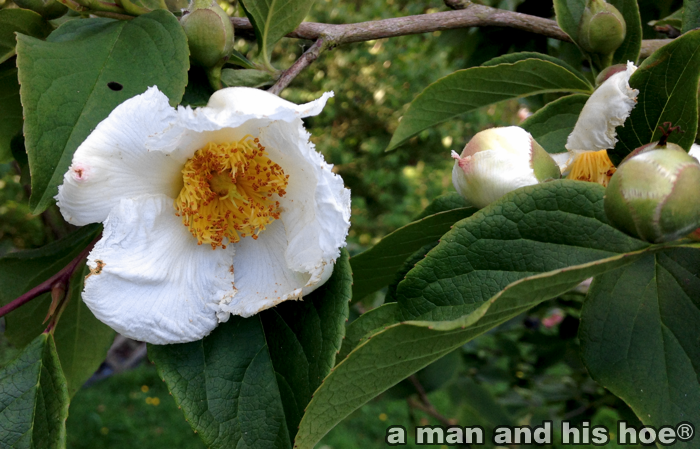
The Stewartia is still blooming. Their flowers are refreshing on a soft summer evening.

-
Summer Heat
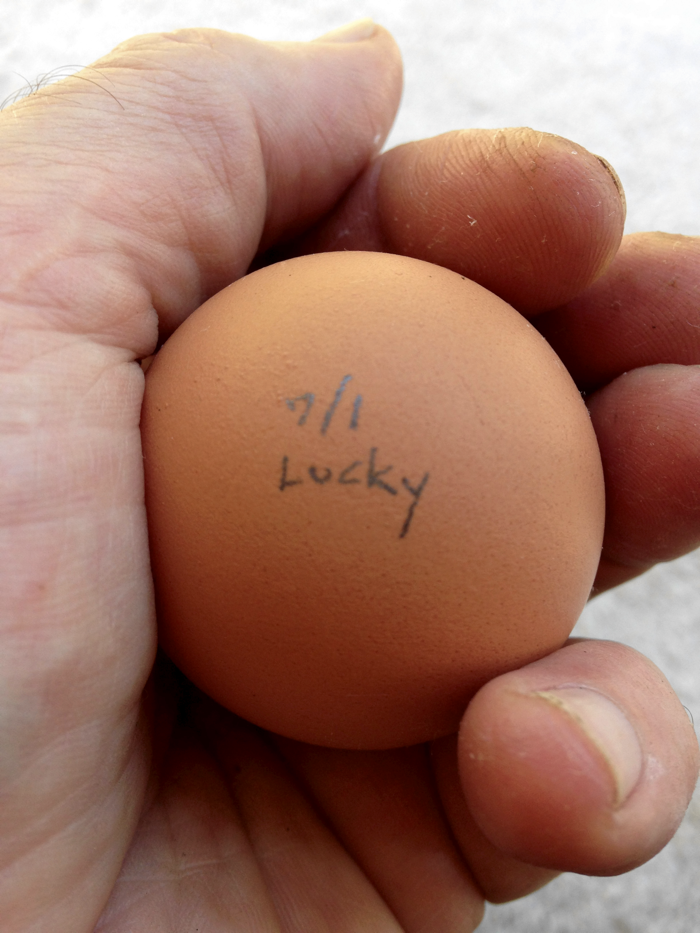
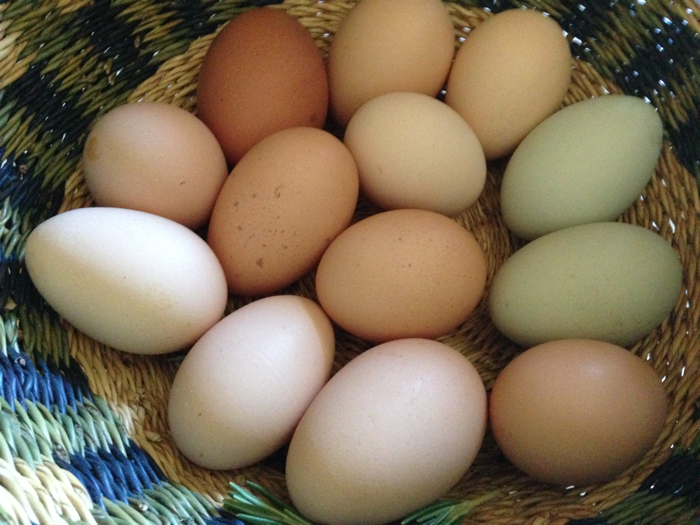
It’s a new month and the first egg of the month is from Lucky. That’s a good way to begin a month.

July starts with a heat wave. It’s almost three in the afternoon and it is 78ºF – 25.5ºC, the hottest day so far this year. It will be even hotter before it starts to cool down. This may be our first day over 80ºF – almost 27ºC. For many readers this probably makes you laugh. Some of you live in places where it doesn’t get that cold at night. Growing up, I didn’t feel like it was a summer day unless it got over 30ºC – 86ºF.


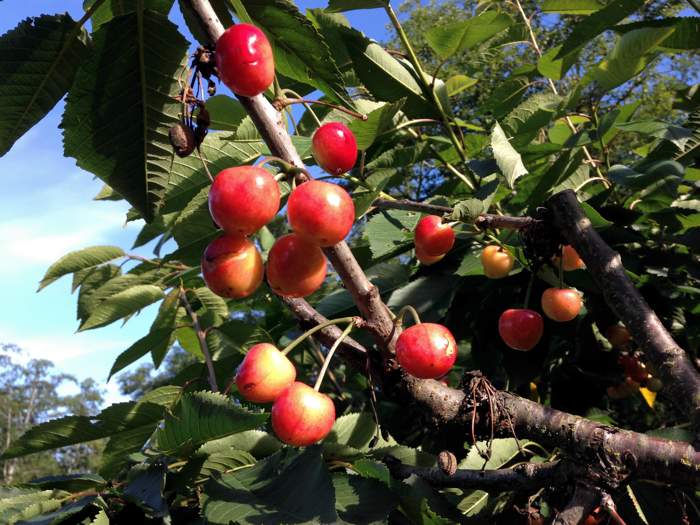
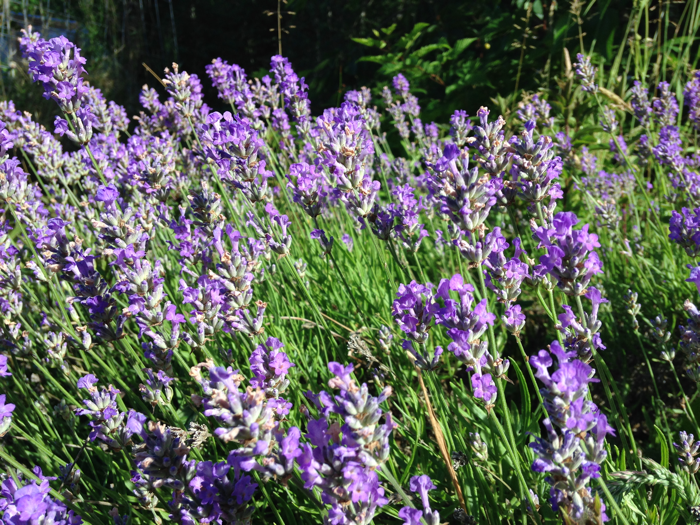
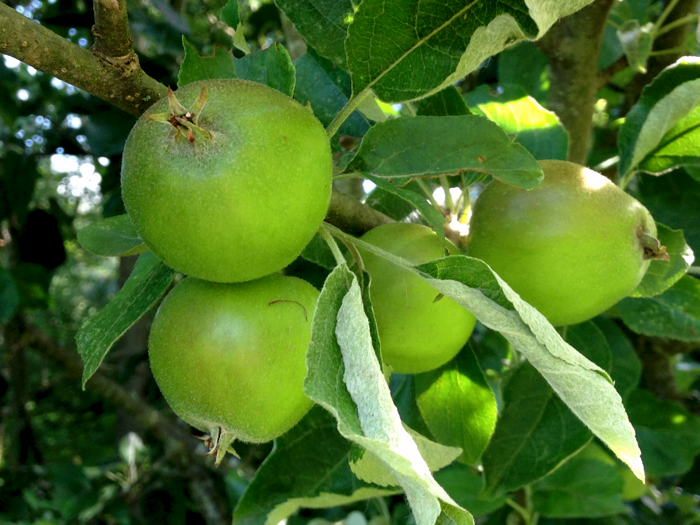
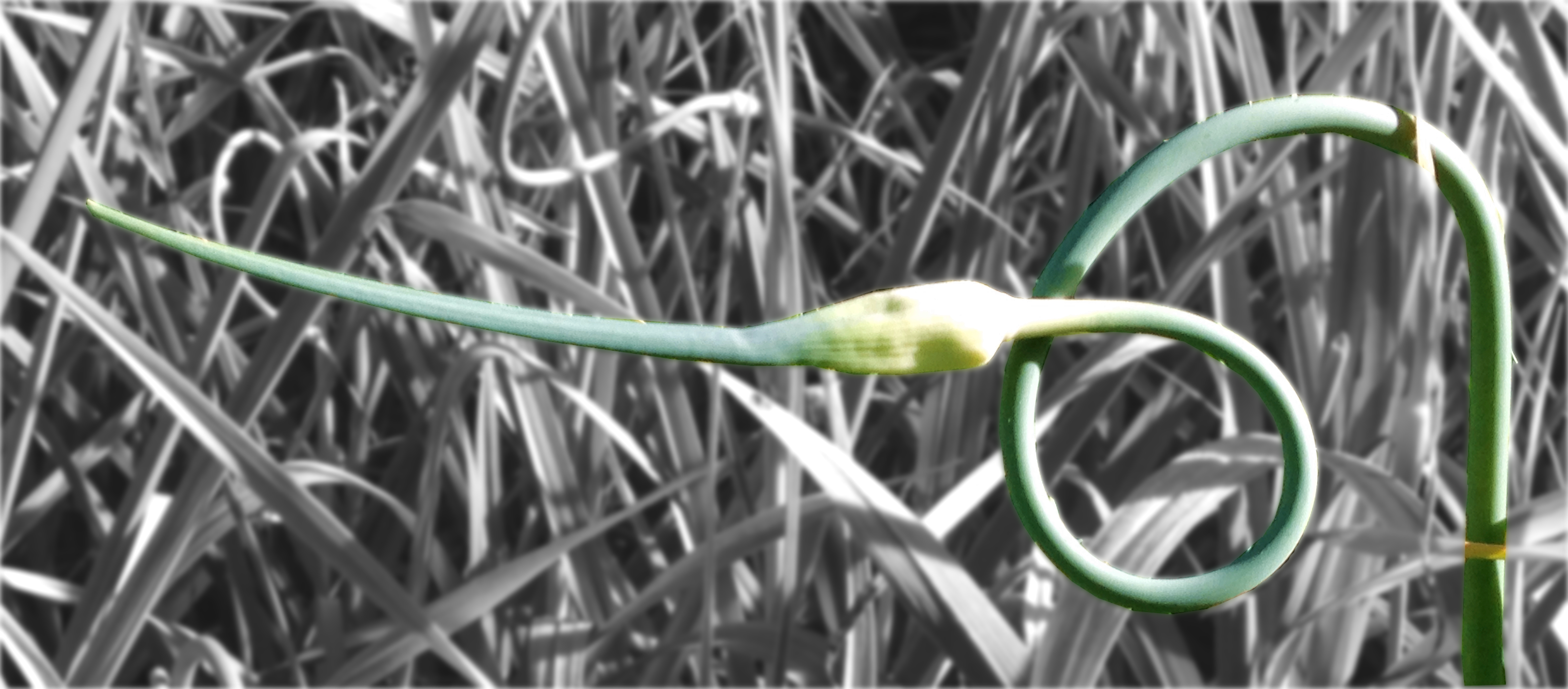
The chickens are in the shade, the cherries are ripening fast, the lavender is in full bloom, the apples are growing, and the garlic is being whimsical. What more could I want?


-
Summer Morning
This last day of June, the hydrangea are starting to bloom. In Japan, hydrangea bloom during the rainy season in June and July. Growing up I associated their flowers with rain and snails. When I close my eyes and think of hydrangeas, they are always wet with drops of fresh rain water dripping off them. Here, hydrangea bloom during the dry season from July through August. They are rarely wet and in this land of no snails, you never see a snail sliding across a wet hydrangea leaf.

South of Tokyo in Kamakura you’ll find Meigetsu-in, a Zen temple founded in 1383 also known as the Hydrangea Temple 紫陽花寺 because of its many hydrangeas. There are some 2,500 hydrangea on the temple grounds with 80 to 90 percent of them an old variety known as Princess Hydrangea. On busy days when the hydrangea are in bloom, the line of visitors waiting to get into the temple grounds can stretch for a third of a mile.

There are no lines here to see the hydrangea. Only a handful of people have ever seen the hydrangea bloom at A Man and His Hoe®. Actually, more chickens than people have seen them in bloom, though this morning, the chickens are more interested in pecking through the duckweed I pulled out of the pond for them. Maybe they will pause and admire the hydrangea when they are in full bloom and they have had their fill of duckweed, tadpoles, and waterbugs.

-
Importance of Love
Looking at two cats snuggled together on a chair, it’s easy to see that love is important to cats. In her book Animal Madness, Laurel Braitman states that animals think, feel, and experience the same emotions that people do. Live with animals and it’s as obvious as saying that the sky is blue.

It’s not only cats and dogs which thrive when loved, so do little chicks. They thrive under the watchful eyes of their caring mothers. When they are snuggled under their mother’s feathers, safe and warm, listening to her heartbeat, you wonder what they are feeling. And what is she feeling when there are little ones gathered under her wings? Is she feeling the same warmth a human parent feels when their children are snuggled in their lap, listening to them read a children’s book?


Researches warn against anthropomorphizing animal behavior. And yet, since we are animals ourselves, and have very distant common ancestors, just as we share many of the same physical characteristics such as hearts, lungs, legs, two eyes, etc., wouldn’t it be reasonable that we share many of the same emotions? For example, love is essential to the survival of every mammal and bird species. Without at least one parent’s concern for it’s offspring, all these species would quickly go extinct. Their offspring would quickly die off without their parents looking out for them.
It would seem rather specious to think that many of our emotional states developed only after homo sapiens arose. It would seem more plausible that our emotional states go far back down the evolutionary chain and began hundreds of millions of years ago in the distant past. They were as important to the survival of distant species as they are to us today.