Author: theMan

  • When Do Poppies Wake Up?


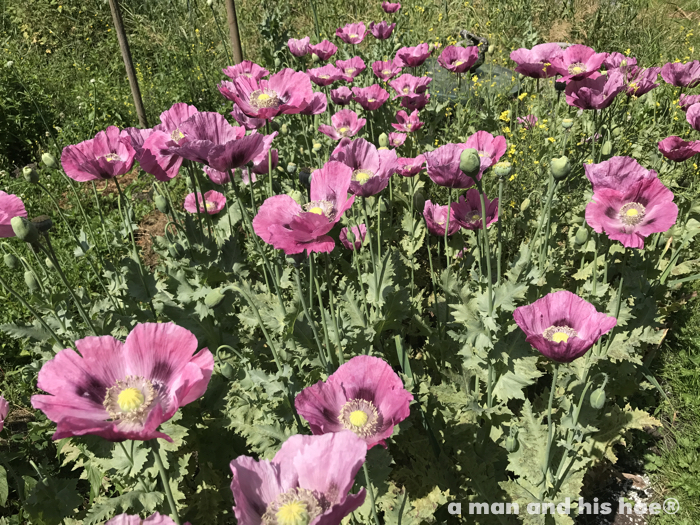
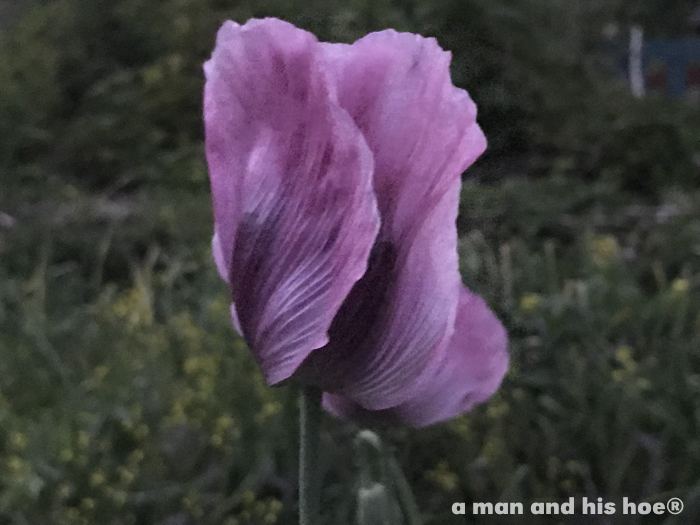
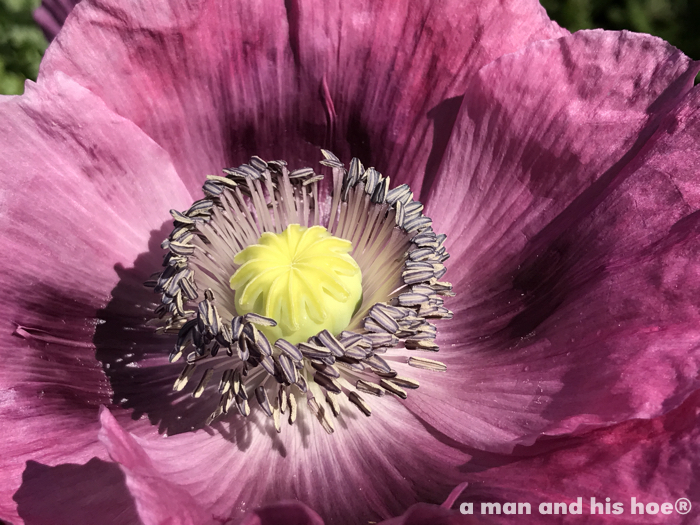
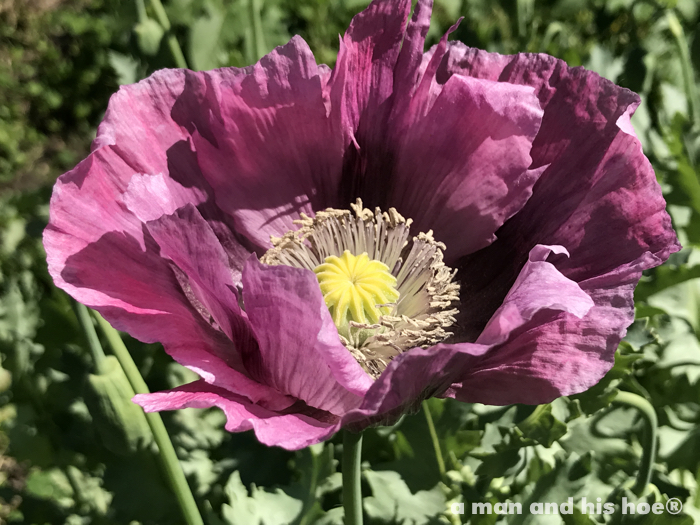
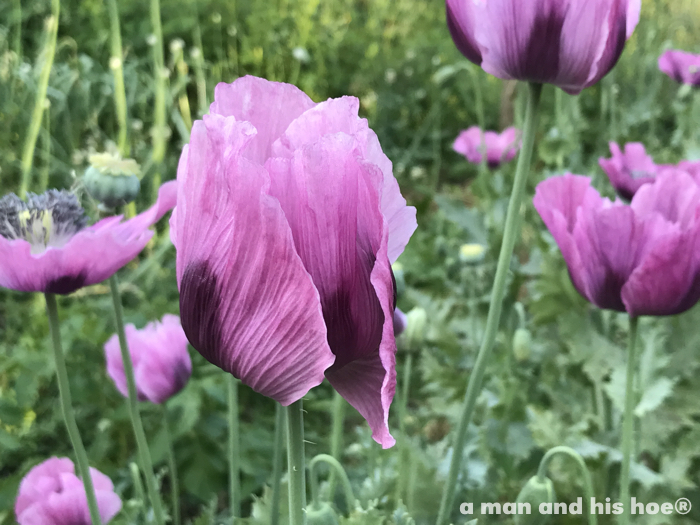
    So when do poppies wake up? At the crack of dawn? At a reasonable hour? Wouldn’t you know, just like people, some are early risers, and others like to sleep in. At 6:40 this morning I went out into the garden to get an answer to the nagging question. Some of the poppies were wide awake and ready to go. Others were still fast asleep, and others starting to stir. So when do poppies wake up? It depends on the poppy.
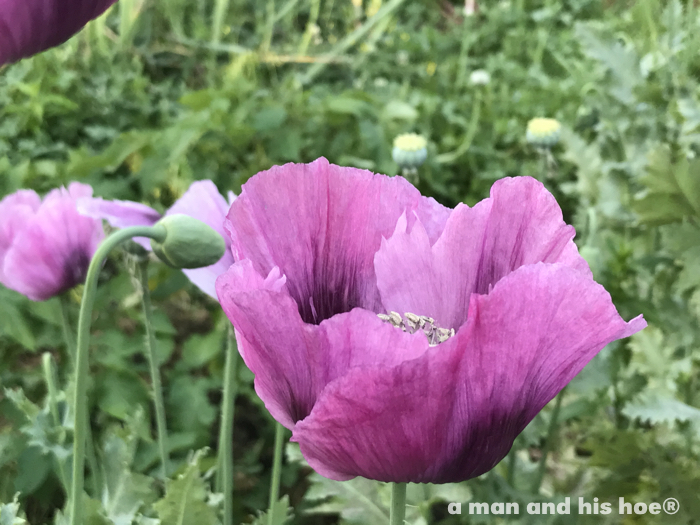
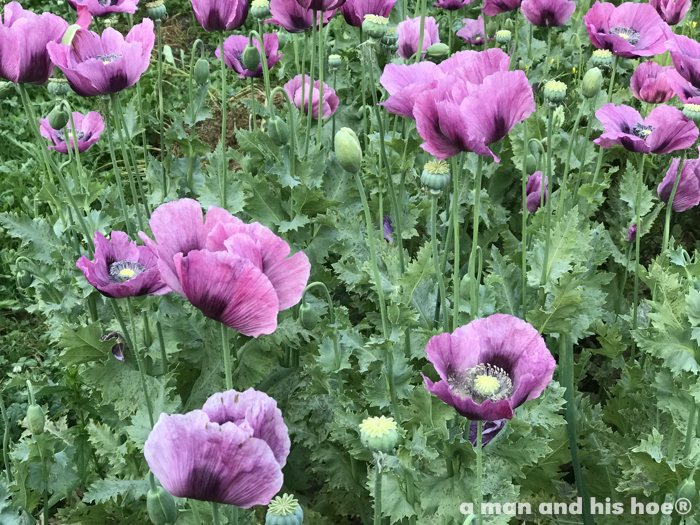
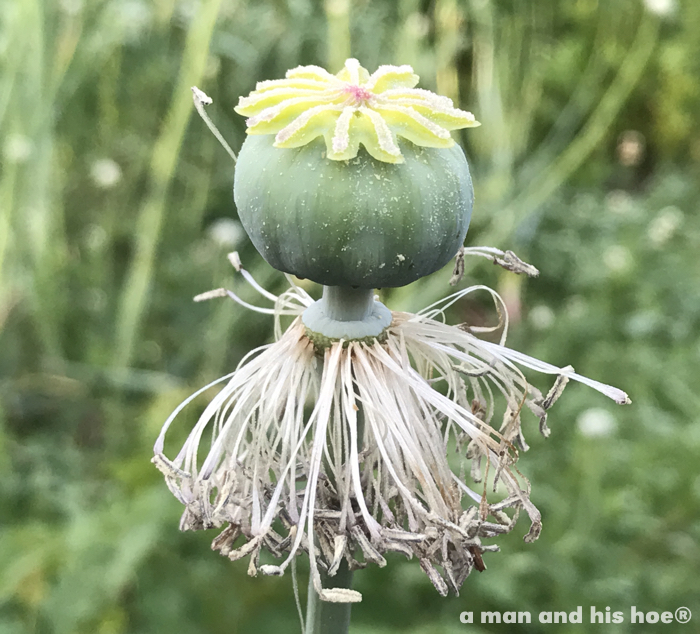

    And some poppies have rushed through the whole flowering thing are merrily into the being pregnant thing. There is no one way to do things in nature. It’s every poppy to itself.
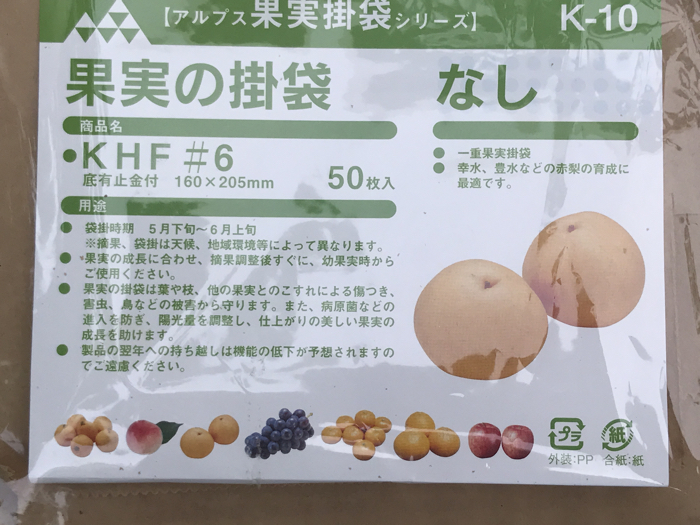

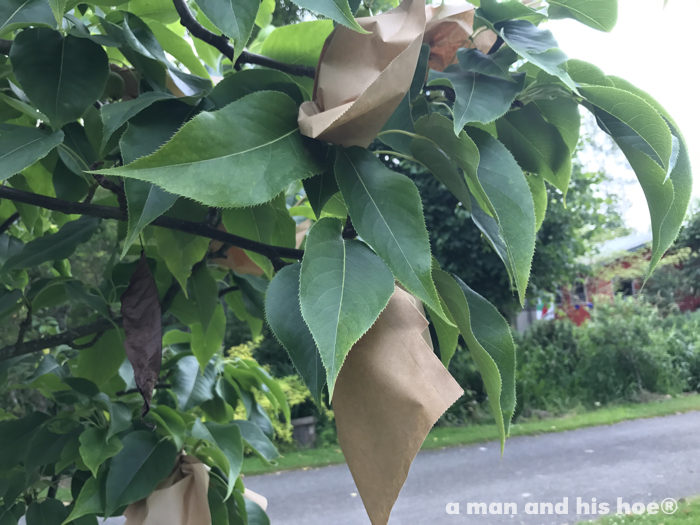
    And what do we have here? These are fruit ripening bags specifically for Kosui and Hosui, reddish varieties of nashi or Asian pears. The way they work is that you place the bags over developing fruit and the bags do the following marvelous things:

    • Protect the developing fruit from damage caused by leaves, branches, and other fruit rubbing against it
    • Protect the developing fruit from birds and insects
    • Protect the developing fruit from disease causing bacteria and fungi
    • Regulate the amount of sunlight the fruit get so that you get beautiful fruit

    The bags sound indispensable. I bagged about half of the developing fruit on our nashi tree and will see if they are indeed as marvelous as they claim to be. The bags have a built in twist tie making it easy to fasten around the stem.

    Like any product it comes with plenty of warnings, such as don’t let small children put them in their mouths, don’t stab yourself with the metal twist ties, the bags are flammable so keep them away from flames, you know, all the things we are all tempted to do with new products.
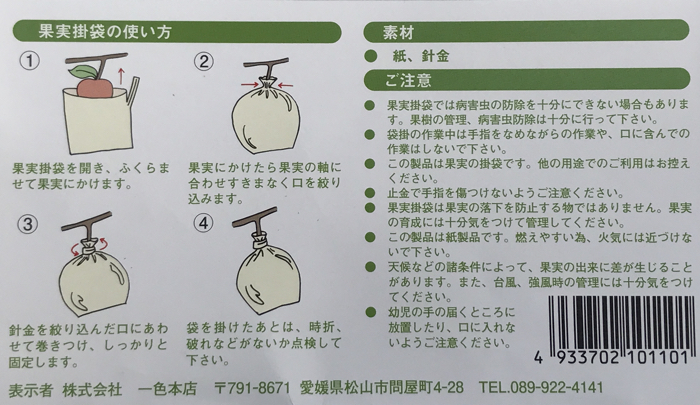

    There are fruit specific bags for various apples, peaches, grapes, tangerines, and on and on. And not surprisingly the label asks the user to refrain from keeping bags you buy this year to use on next year’s crop as the efficiency of the bags diminishes over time.

  • Mint to the Rescue


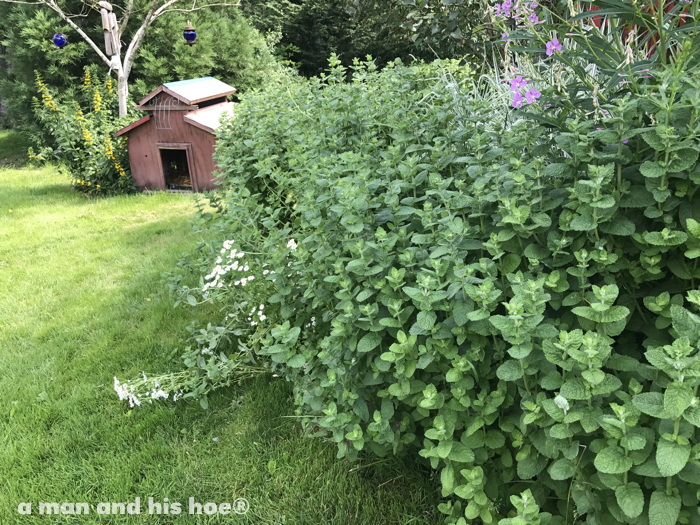
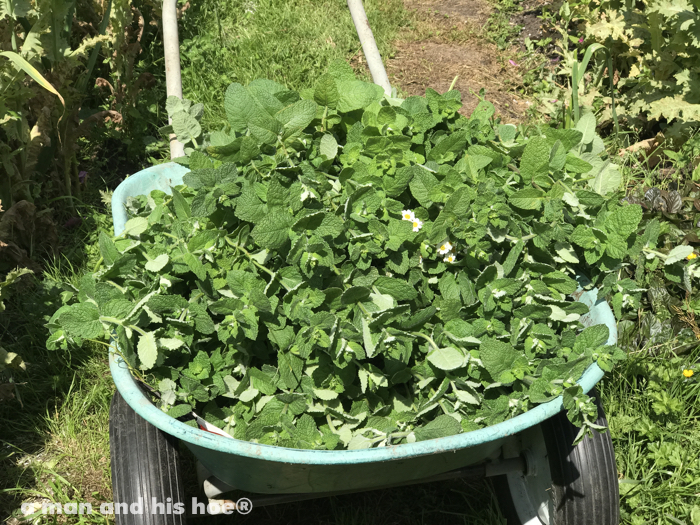
    The slugs are plentiful this year. It’s not surprising after the long, wet spring. But I’ve noticed that you never see a slug on the mint, and we have long hedges of mint, so I can load wheelbarrows full of mint to lay between the vegetable rows. Maybe that will keep them away from the vegetables. Every evening and if I happen to get up in the middle of the night, I go out with scissors and a flashlight to snip, snip, snip the slugs away.


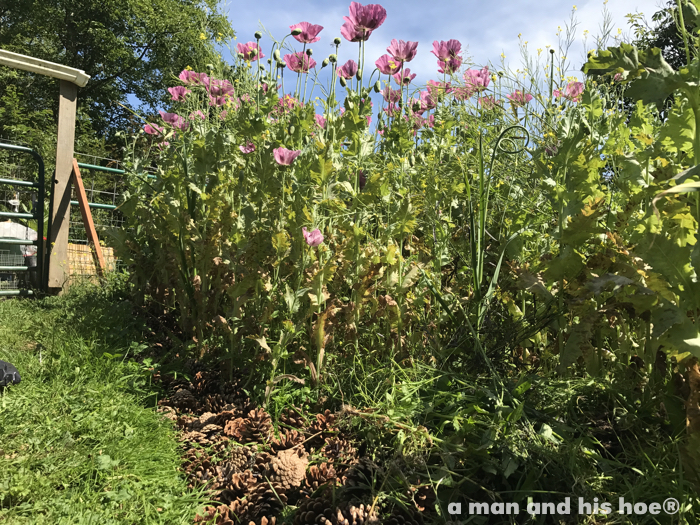
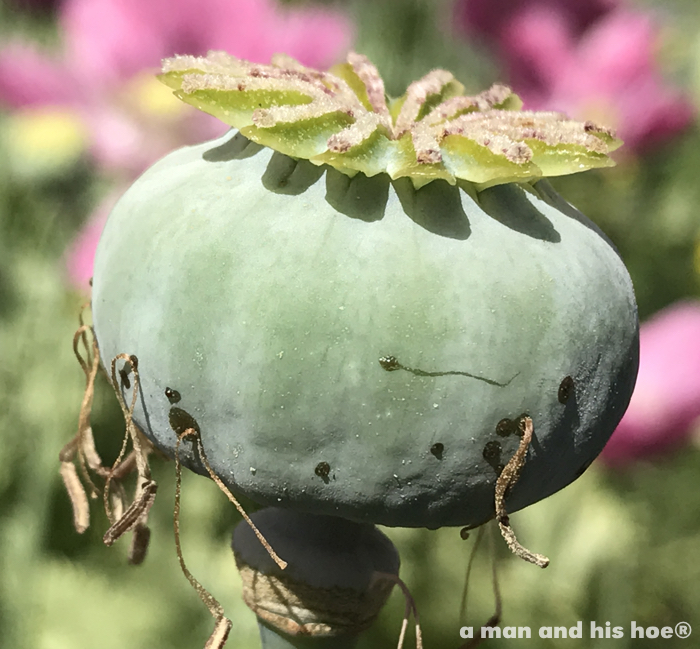
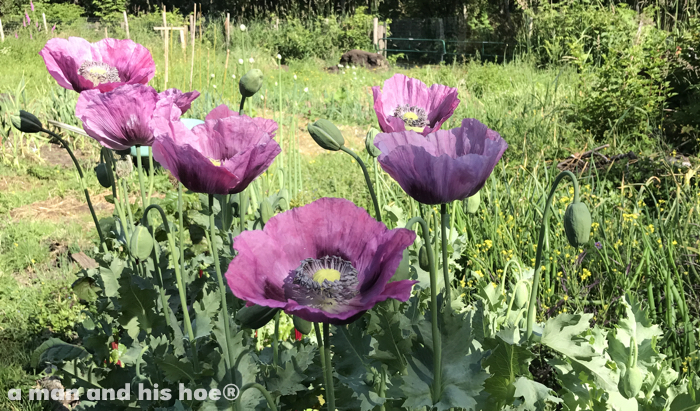
    The poppies are in full bloom, and some are already shedding their petals and showing fat, pregnant seed pods. There is a trick to picking the seed pods before they drop to the ground, or something comes along and eats them. Growing up, Mach Kuchen, poppy seed rolls, were a rare treat. Basically what you do is grind up poppy seeds, cook them with sugar to make a poppy seed jam, spread it on rolled out yeast dough, roll it up, and bake. The thinner the dough, the more layers you can roll, and the better the Mach Kuchen. A good Mach Kuchen should be more poppy seed jam than dough. A few hundred seed pods should provide enough poppy seeds to make an unforgettable Mach Kuchen.


    The poppies which have not fallen have gone to sleep this evening. Every night, the poppies close their petals fast, and sleep the night away.

  • Okara to Okra


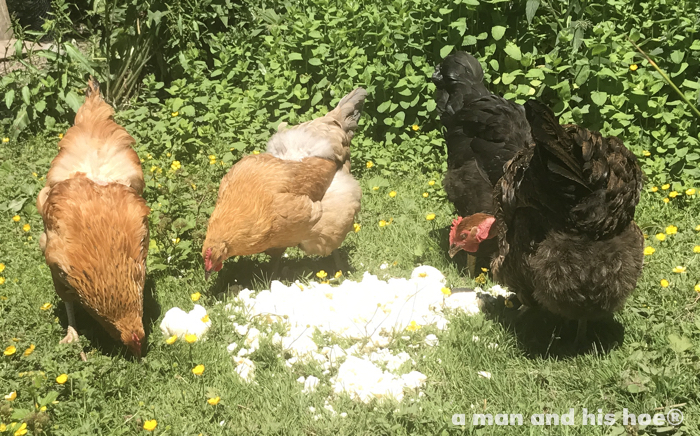
    “You have okra?” is a question I get a lot at the farmers markets. It’s because customers see that I am selling “okara” and mistake it for “okra”. Okara is a byproduct of making tofu, and there are many dishes you can make with it. It makes remarkable pancakes and muffins, and the hens love it too.

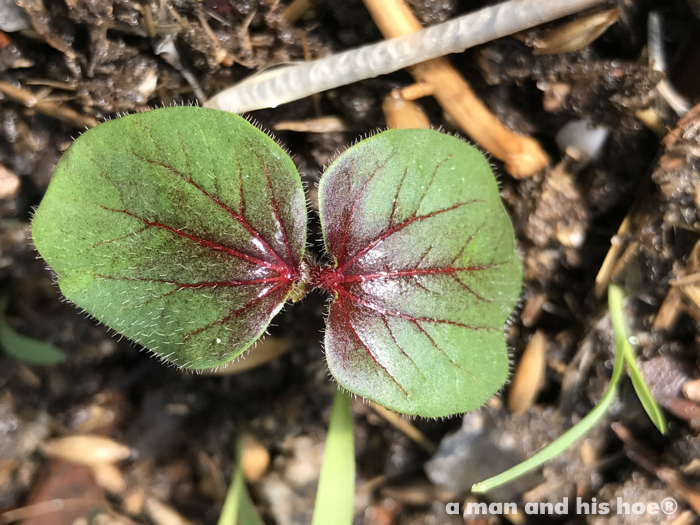
    I get asked about okra so much, that I went ahead and planted a hoop house full of it. It started sprouting, and come mid August, when customers at the farmers market ask, “Do you have okra?” I should be able to say, “Lots of okra!”


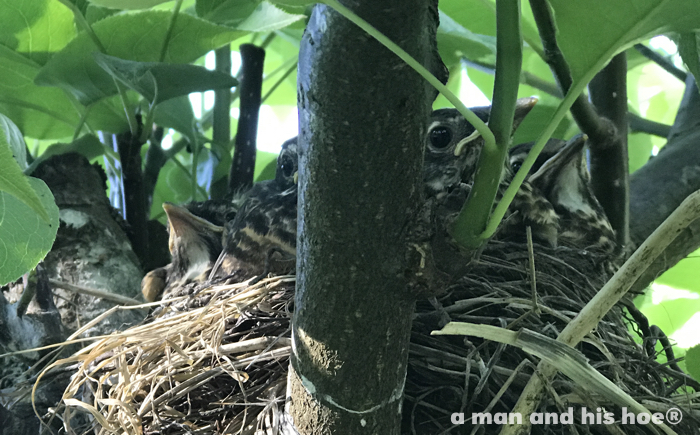
    Life is like a river ride. You never know what is around the bend, and you really have no control where the river will take you. You might as well enjoy the ride. Often the best things in life are the things you never planned. My childhood dreams, or visions of where I would live or what I would do when I was studying in university never included me growing okra out in the country in the Pacific Northwest. They didn’t include having an established bed of poppies that miraculously grows every spring and puts on a dazzling display of flowers in early summer, or having pear trees where robins nest.


  • A Sad Day


    The first of the poppies opened this summer solstice day. I find the summer solstice tinged with sadness. It’s all down hill from here. It’s barely gotten warm, and already the days will start getting shorter. They should keep getting longer until the end of July, and wait to shorten until September.


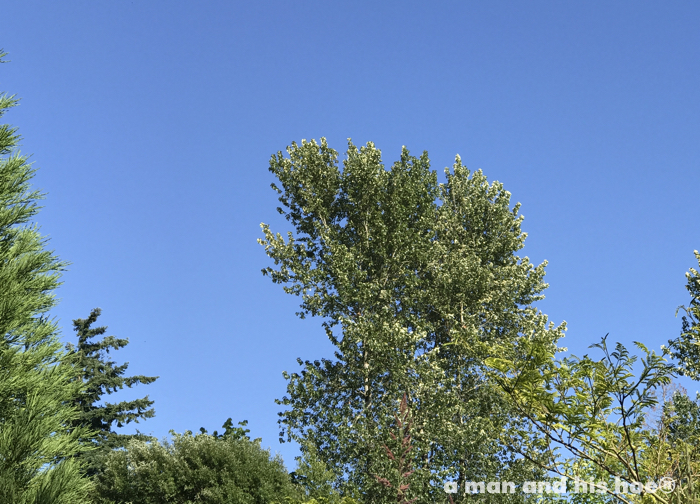
    The skies are rarely so blue as they are in the Pacific Northwest. The cottonwoods on the other side of the pond wave good bye to the setting sun. Are they sad to see the days getting shorter?


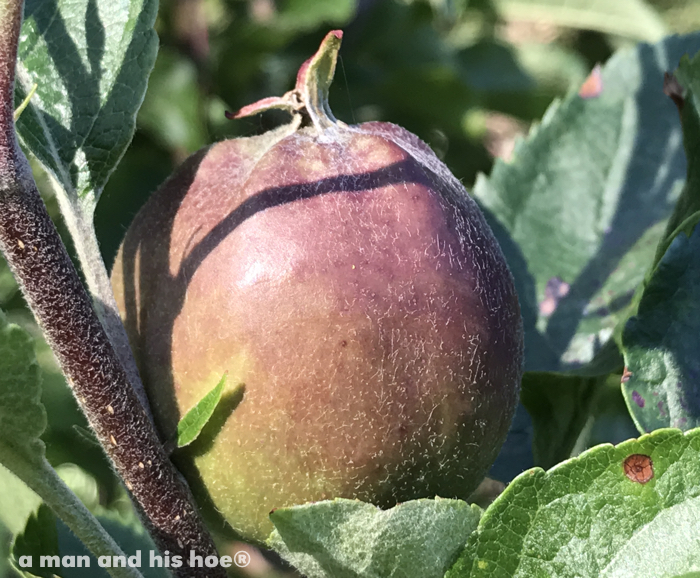
    With the days getting shorter, it’s a race for the apples to get fat by fall. I don’t know what kind of apple this tree is, but by mid August it’s apples are sweet, crisp, and juicy, a consolation for shortening days.

  • First Blush


    The first blush of blue is tinging the hydrangea. They are called “Ajisai 紫陽花” in Japanese, which translates to purple 紫 sun 陽 flower 花, though since they bloom during the rainy season, they are associated with rain. Throughout Japan, there are temples with so many hydrangea, they are called hydrangea temples. Hasedera in Kamakura has some 40 varieties of 2,500 hydrangea. Yatadera in Nara has 60 varieties and 10,000 hydrangea.

    Philipp Franz Balthasar von Siebold, a German doctor from Würzburg who joined the Dutch military, traveled to Japan in 1823 and was posted as a physician and scientist at the Dutch trading post of Dejima, a small island in Nagasaki where the Dutch were allowed to live and trade from 1641 through 1853. At the time, it was the only place where foreigners were allowed to live in Japan.

    Because of his skills as a doctor, Siebold was allowed to travel throughout Japan, and he collected specimens of thousands of plants and animals during his stay. He particularly loved hydrangea, and named a variety, Hydrangea otaksa, after his Japanese wife, Otaki.