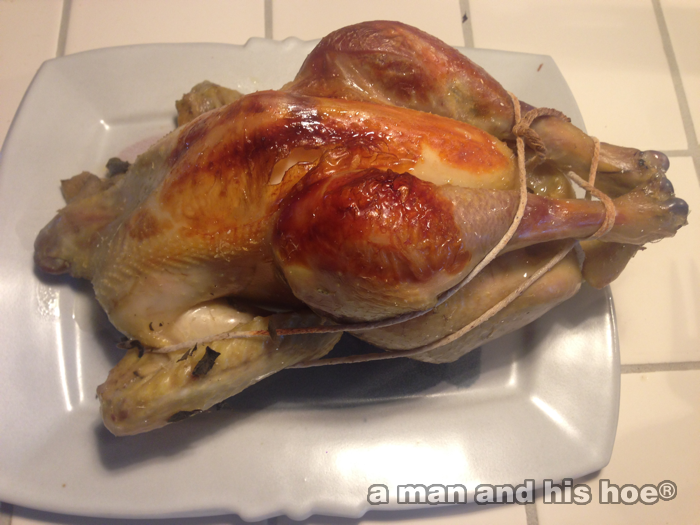
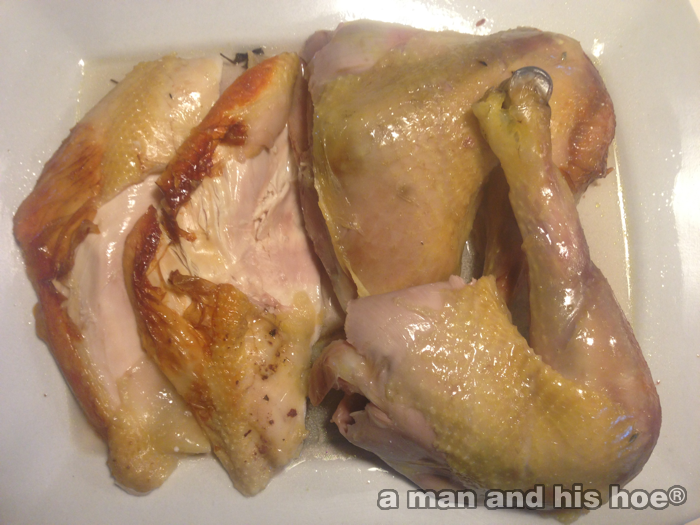
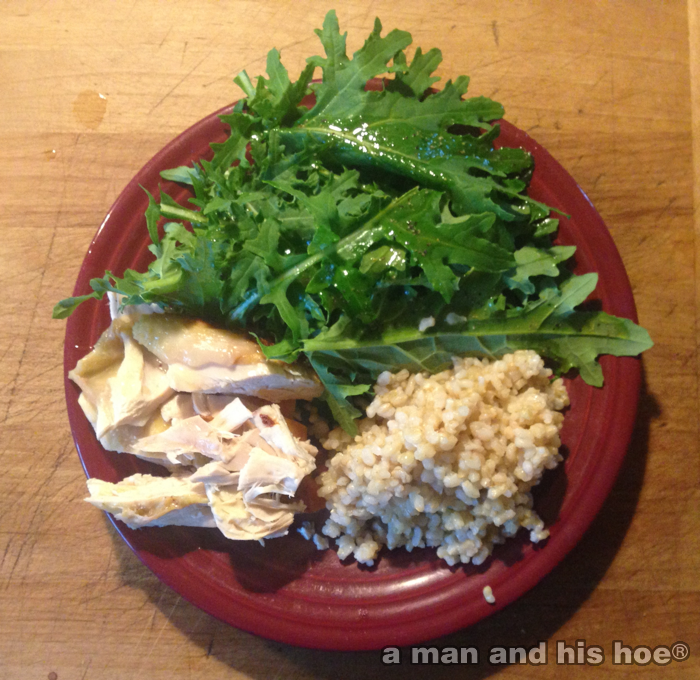
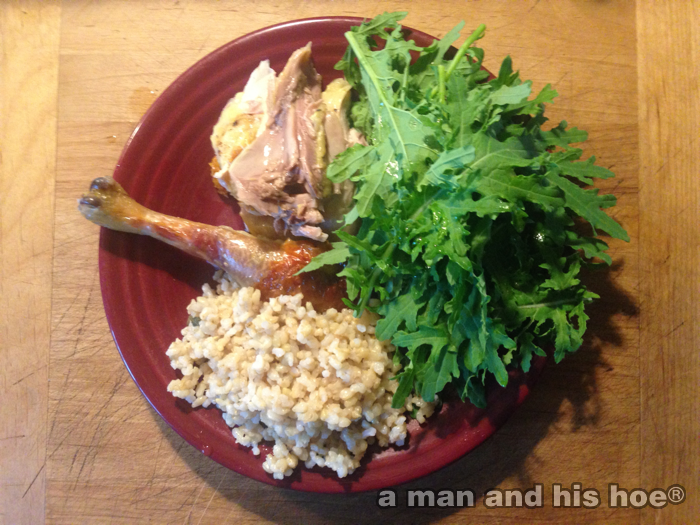
After five hours in the oven at just 190ºF, and a short time under the broiler to brown the skin, here is the result – a juicy, tender roasted bird. This is real slow food, and worth the nearly half year it took to raise the bird and the many hours of slow roasting. You’ll never find a bird like this, even at WholeFoods.
-
Out of the Oven Today
-
In the Pot Today
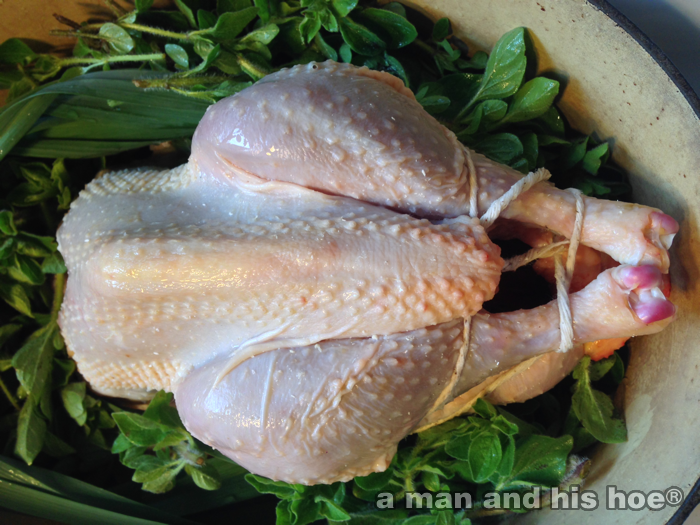
The young rooster is in the pot, resting on a bed of oregano and garlic leaves. After adding some sake and whiskey it’s in the oven at just 190ºF (88ºC). It will slowly roast the rest of the afternoon. The great thing about having beds of herbs, is that I don’t have to worry about how many to use. If I want a bed of oregano, it is there for the picking. If the only place to get fresh herbs in your supermarket, you’re limited to small bunches or just a few sprigs at a time.
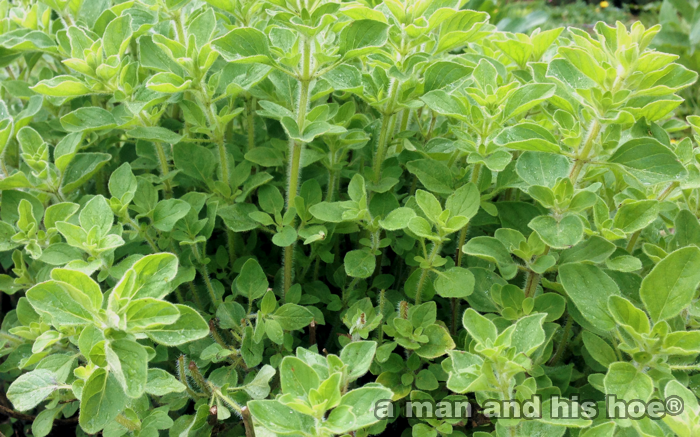
And yet, cities don’t need to be like that. Many herbs are prolific plants. Urban areas could be designed to grow endless quantities of herbs their citizens could pick at will. Planting strips, park hedges, sidewalk borders, rooftop gardens, apartment courtyards; all could be herb gardens available for city residents to use. Imagine getting off the subway on your way home from work, scissors in hand, snipping fresh handfuls of oregano, marjoram, rosemary, thyme, for use for that night’s salad, soup, and roast. -
On the Board Today
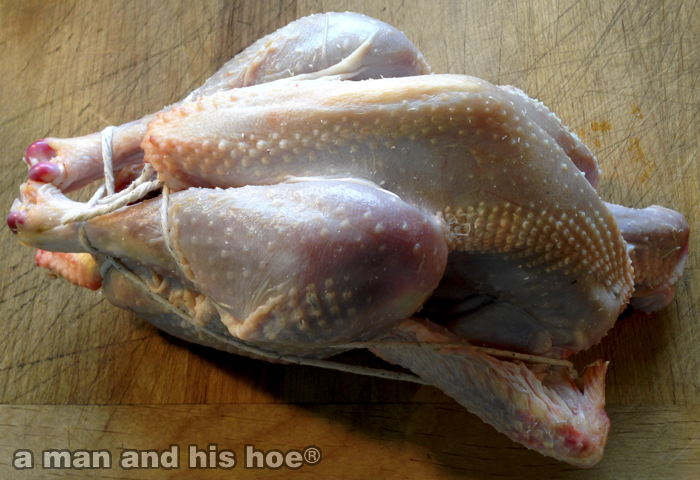
On the board today is a young rooster, born in December. When you raise heritage breeds of chickens on open pasture and woodland, each bird is unique. It takes nearly a half a year for these birds to get to butchering size. A truly great rooster takes a full year to raise.Each bird has a long story. A rich childhood with its mother and siblings. A period of young adulthood shared with its siblings, followed by a more independent adulthood, with plenty of opportunities to explore chicken love.
Modern factory farming is all about denying birds their uniqueness. It is about cutting expenditures to the bone and producing as much meat as possible and making everything the same. It makes fast food possible with its buckets of inexpensive fried chicken. Cheap food demands cheap wages which demands even cheaper food in a never ending cycle of ever decreasing quality and satisfaction. In the end it leaves us all poorer.
It deprives us of experiencing the richness of a hearty meal of slow-roasted fowl. Try finding a year old fowl to enjoy in your supermarket or butcher. I’ll be roasting this bird today at 190ºF. Come back this evening to see how it turns out.
-
Waiting for Mother
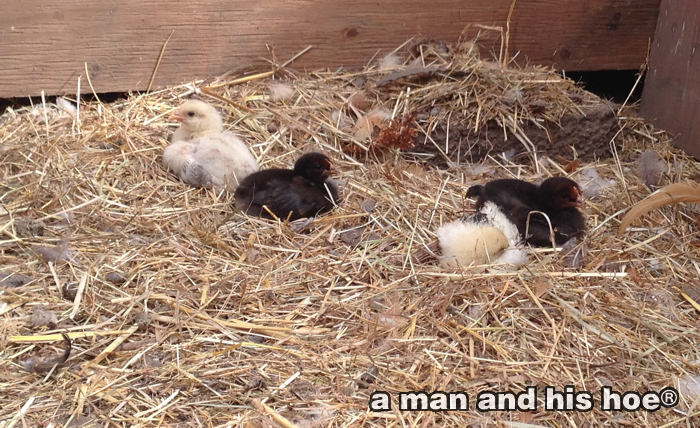
These six week old chicks are resting while their mother is off laying an egg. At six weeks, they are still tiny, and yet some commercial breeds are large enough to butcher by the time they are six weeks old. It will take these chicks all summer to get that large. -
Personality
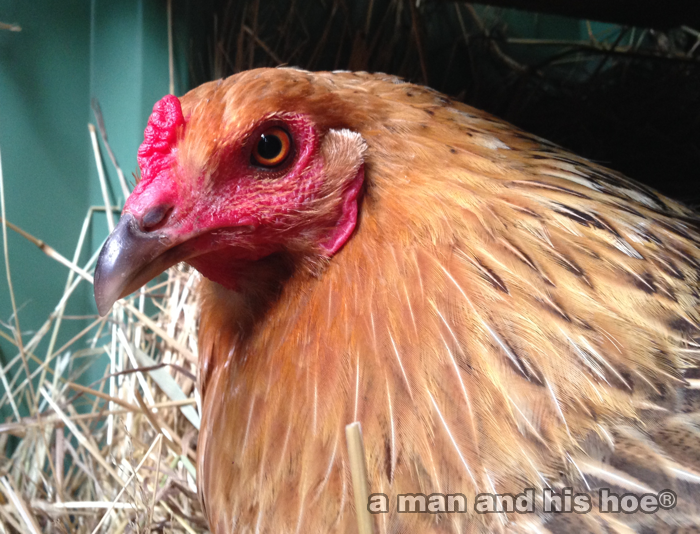
Tora-hime is one of my favorite hens. She has such piercing eyes and beautiful feathers. It’s always easy to spot her when she is on a nest.
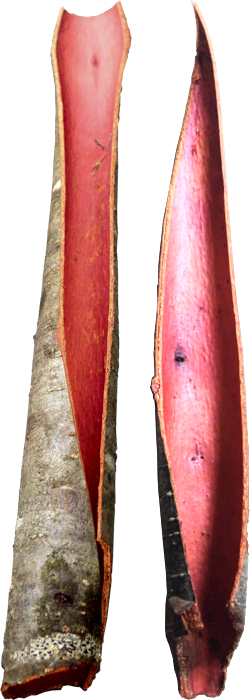 The bark I stripped off the alder trunks when I made posts dried and curled into these beautiful shapes. These strips of bark were flat when I peeled them off the alder trunks. In the sun, they turned red and curled.
A little sanding, trimming, and waxing could turn these into interesting dishes for appetizers, chopstick holders, or flower vases.
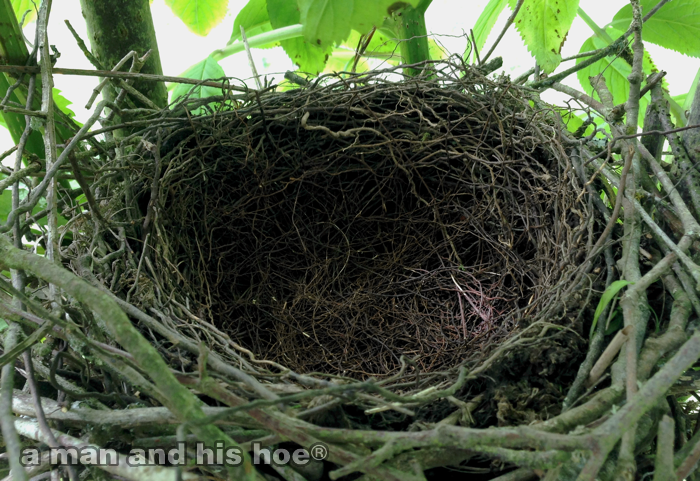
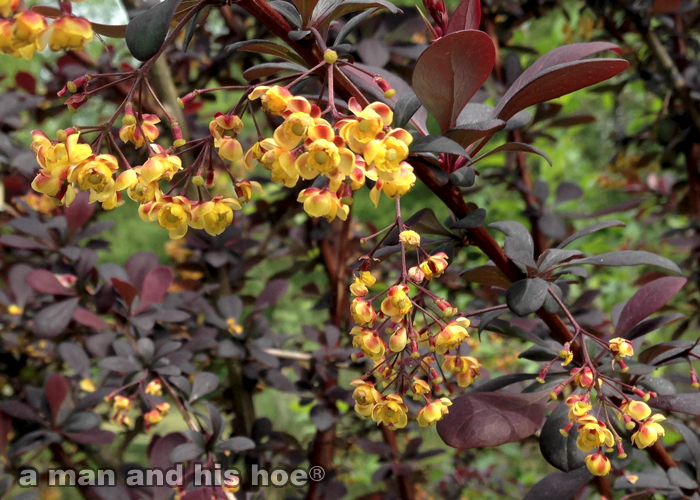
Everyday there are surprises waiting to be discovered. This is an abandoned Stellar Jay’s nest. And below are the flowers of a barberry bush.