Curious as to the sculptor and the actual sculpture I saw at the Hakone Open-Air Museum back in my college days, I sent a query to the museum describing the sculpture. A short time ago I got a reply from the museum. The sculpture is now at their sister open-air museum, The Utuskushigahara Open-Air Museum in Nagano prefecture in Japan. The links are in Japanese, but they have plenty of pictures to give you an idea of the beautiful, mountainous area. Below is a picture of that sculpture.
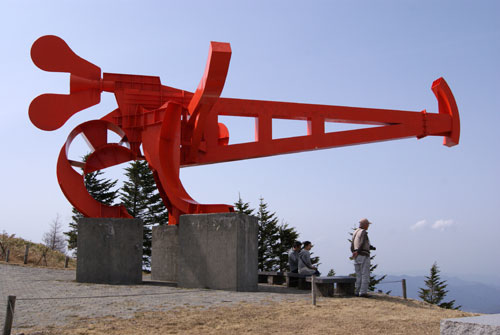
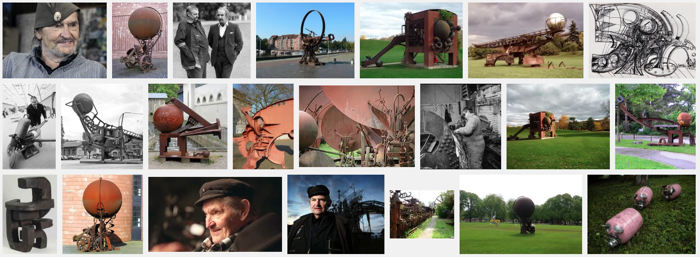
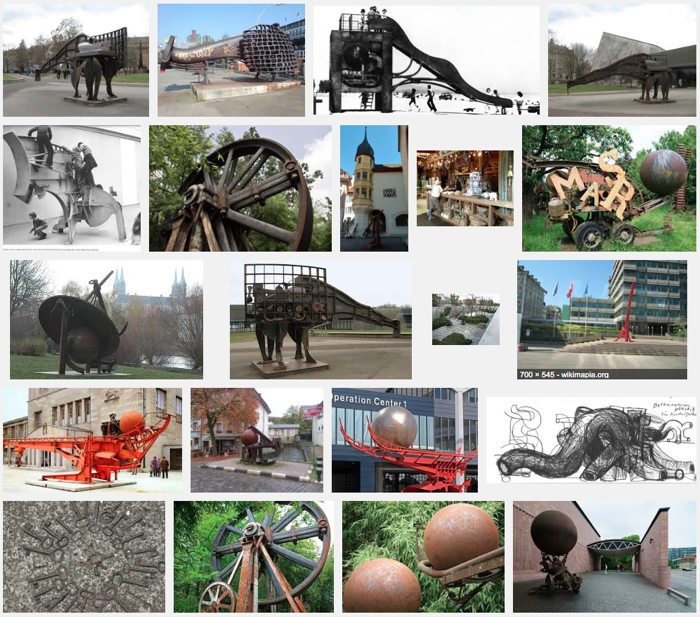
The sculpture is by the Swiss artist Bernhard Luginbühl and is titled スズメヲウツノニタイホウヲモチダス Suzume wo utsu noni taihou wo mochidasu, which translates to Bring out the cannon to shoot the sparrow. He created many huge, fantastical pieces. Take a look at the Iron Giants’ Garden, a park in Mötschwil, canton Bern, Switzerland, that has a collection of his work. And below are images of some of his works. The world has an endless supply of interesting, creative people.
-
Bring Out the Cannon to Shoot the Sparrows
-
On Mother’s Day
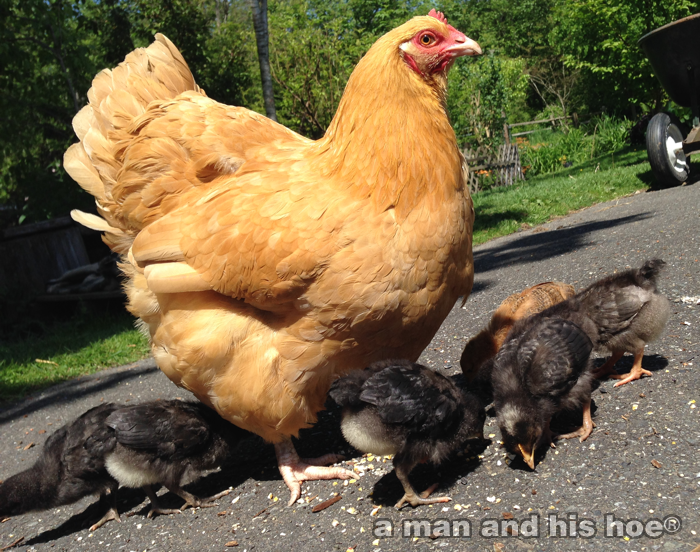
This is a tribute to the 99.999999999999% of chicks who don’t have a mother. Who are hatched in mechanical incubators, rushed to broilers and laying barns, and grow up never spending a night snuggled under a mother’s warm feathers.
This is a tribute to the 99.999999999999% of laying hens who never get to hatch a single one of the many hundreds of eggs they lay. Who never get to express their love for little chicks.
A melodramatic, sentimental tribute, and yet, perhaps the fact that we don’t even stop to consider that chicks do need a mother, and think it quaint that there are still places that have mother hens raising chicks, speaks more about what has happened to us humans than anything.
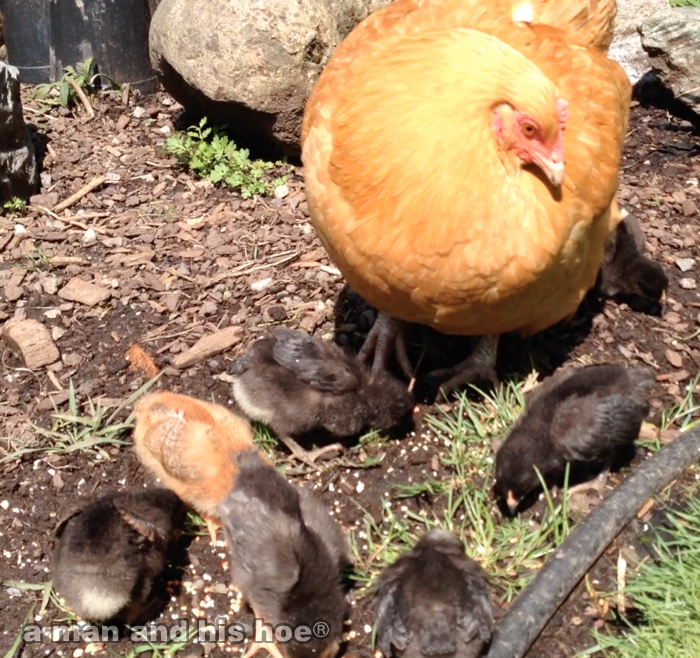
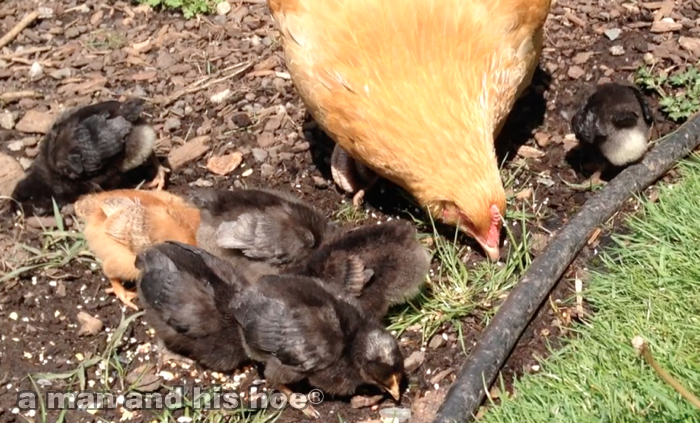
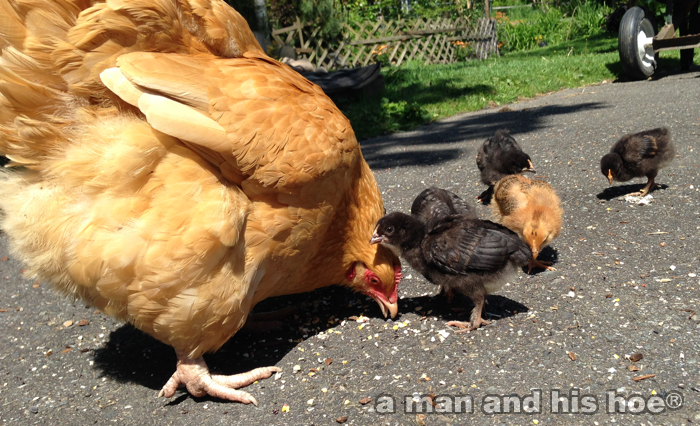
A mother hen teaches the chicks manners. She teaches them to be confident in the presence of other hens, and to mingle with the rest of the flock.
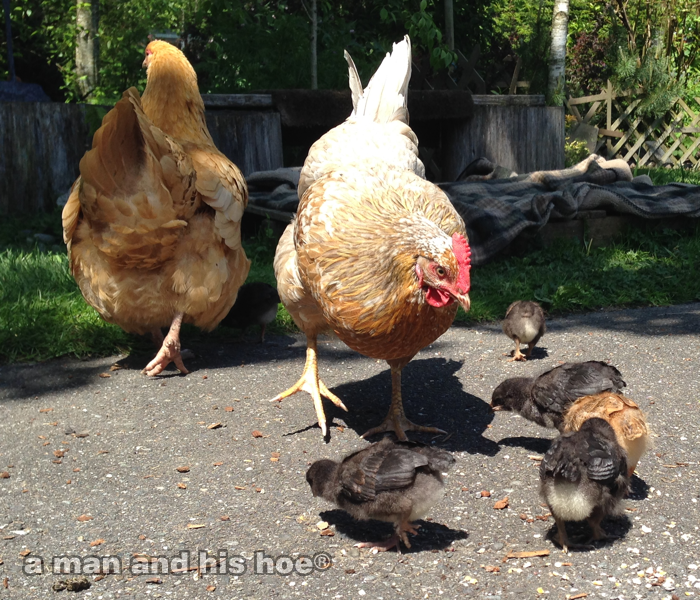
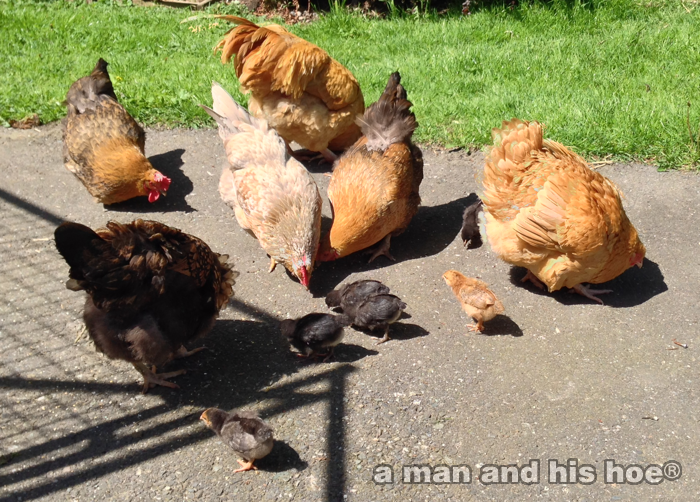
Happy Mother’s Day! The chicks who have mothers sure adore them.
[wpvideo zHVGsckg] -
Mornings Start Early
Mornings start early for the roosters. They start crowing at the crack of dawn.
[wpvideo K38coF0m]
Mornings start early for a mother hen and her chicks. They are often the first ones out of the chicken yard. Often it is the little ones that are most anxious to get outdoors.
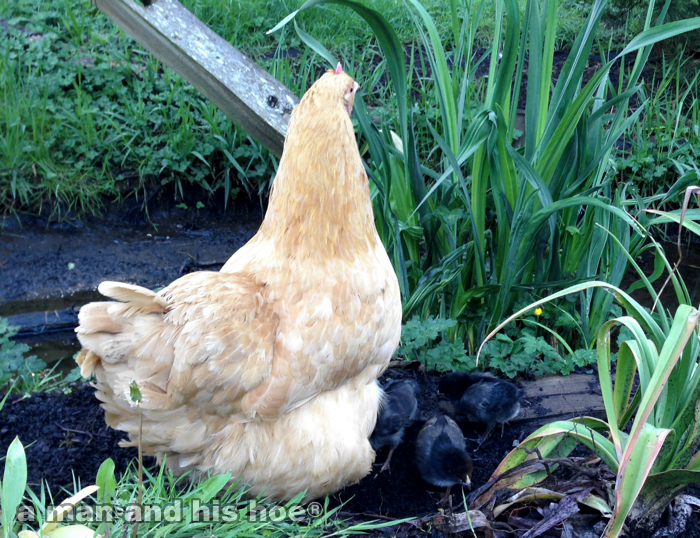
It’s a different story with these chicks. Last night their mother was back up on the roost and the four chicks spent their first night without her. This morning they are glad to have her back, though now that she is roosting again, it won’t be long before they will be on their own for good.
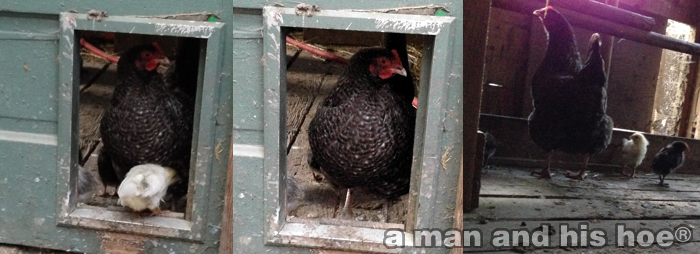
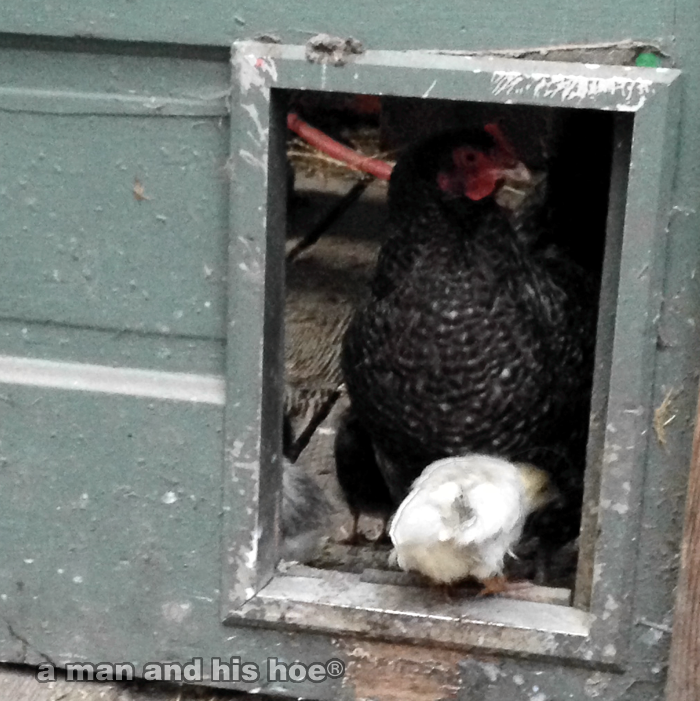
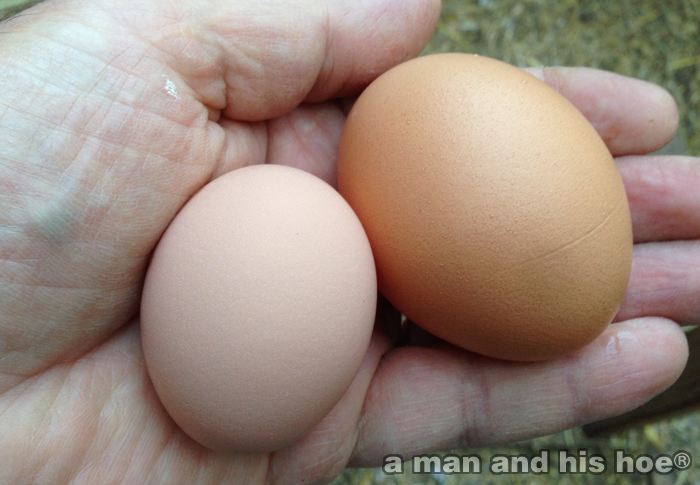
And a pleasant surprise this morning was finding a young hen laying her first egg.
-
On the Board Today – May 10, 2014
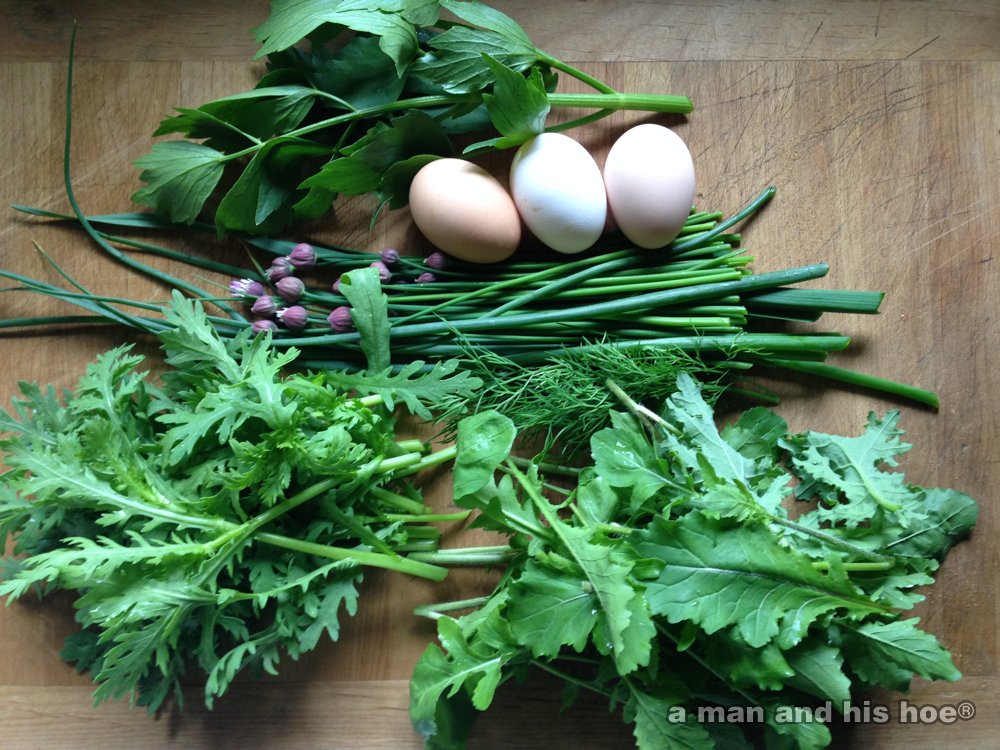
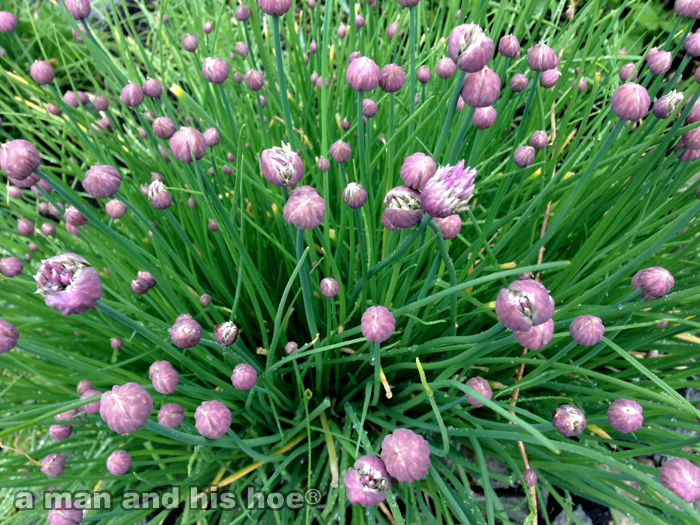
On the cutting board today for lunch: lovage, eggs, chives, dill, arugula, shungiku (spring chrysanthemums). Half the fun of making and eating lunch is gathering the ingredients from the garden. -
Living Sculpture
The Hakone Open-Air Museum is an amazing outdoor museum in Hakone, Japan. Located up in the hills, you take a cog-wheel tram which climbs steeply through a lush, narrow canyon up to the town of Hakone. The tram starts at sea level in the town of Odawara and by the time you reach the stop for the museum, you are at an elevation of 1,768 feet or 539 meters.
Decades ago, when I visited the museum for the first time back in my college days, there was one piece that really made an impression. I don’t recall the artist or the exact title, but it was a metal piece that looked like a massive crane pointing down at you. It may have been twenty of thirty feet tall, and the description was something like “A gun to shoot sparrows” (Found it!).
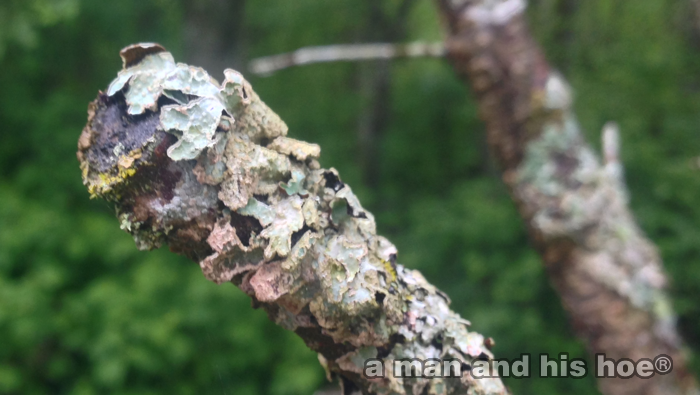
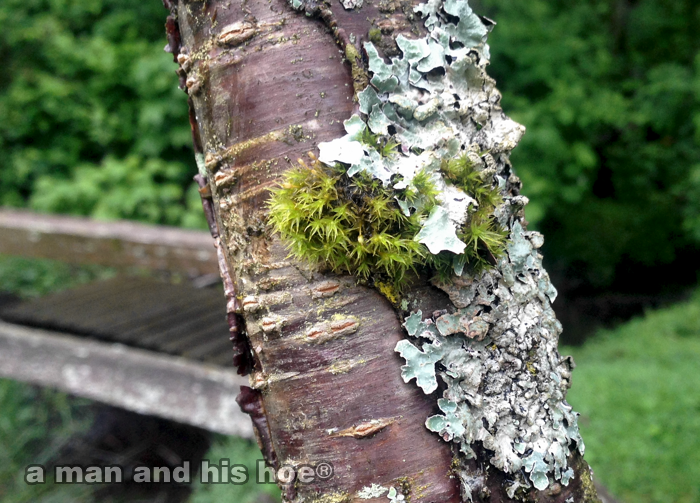
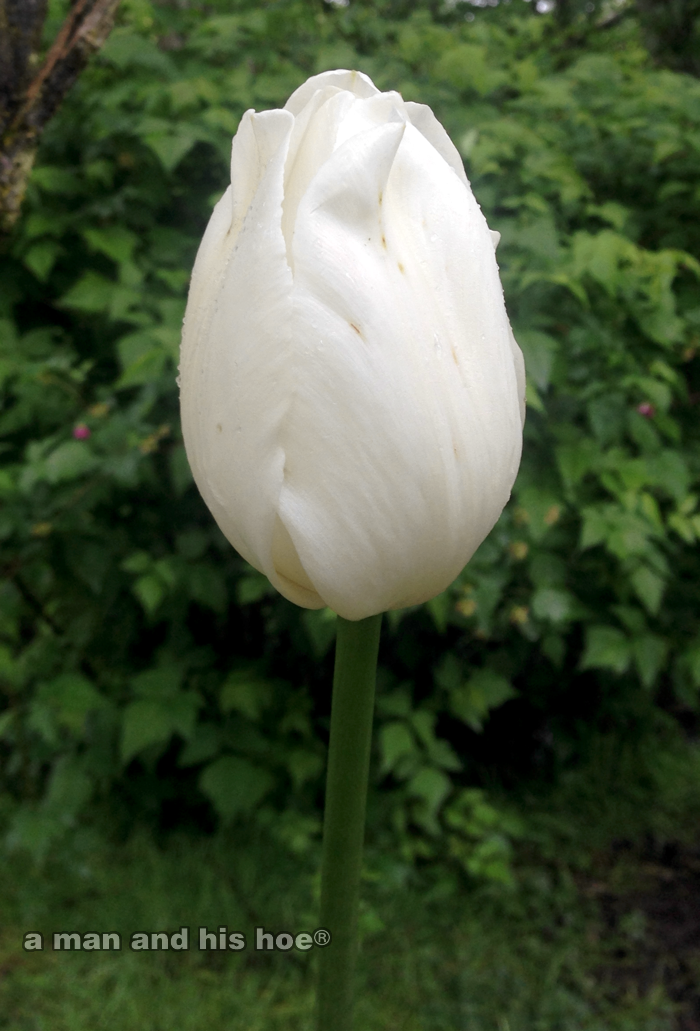
There are a few outdoor scupltures here at a man and his hoe®, but the sculptures that really impress are the ones nature creates. These are the living sculptures. The ones that change day by day, hour by hour, minute by minute, second by second. Truly amazing shapes of all sizes, colors, and textures.
What is remarkable is that many of these are edible. The great thing about being able to pick your food while you make your meal, is that when you sit down to eat the salad or dish you prepared, you can picture the beautiful setting where that onion or lettuce or cucumber or cherry or apple came from. You can remember all the shapes that fruit morphed through, from bud to flower to green fruit to ripened fruit. It adds another dimension to your eating pleasure. Gathering your food becomes an integral part of the recipe. It is like the sensations you feel while you knead the dough, or rub spices into your food.
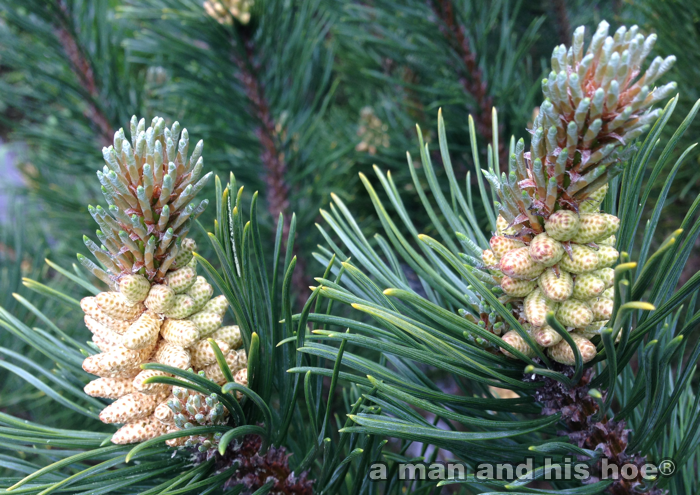
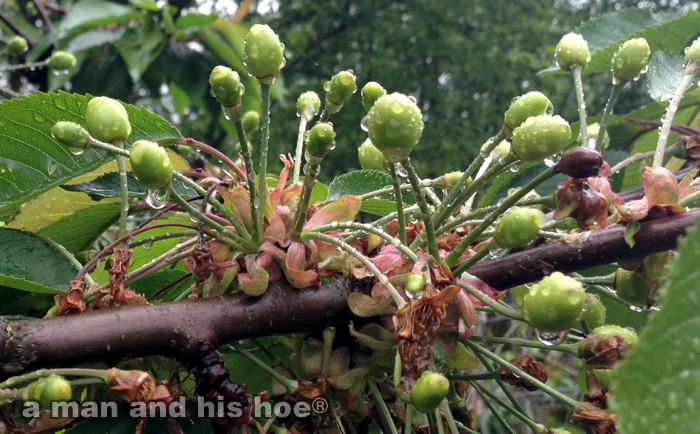
A great meal is much more than just sitting down at the table and eating what is in front of you. It starts with collecting the food in the first place. Pushing a cart through a supermarket and heaping it full of produce creates a much different meal experience than going out into the garden and selecting the ingredients for your meal.
It’s frightening how disconnected many people are from nature when we humans are so dependent on other organisms. We can’t survive if the ants and bees and earthworms can’t thrive. We are dependent on chickens and cows shitting to nourish the plants and grains we eat. Our lives depend on the ocean being healthy, even if we live thousands of miles from the nearest beach. There are a million billion trillion intricate interdependencies among bacteria, fungi, mosses, plants, and animals that make our lives possible. The most important thing we humans can do for ourselves, is to protect nature.