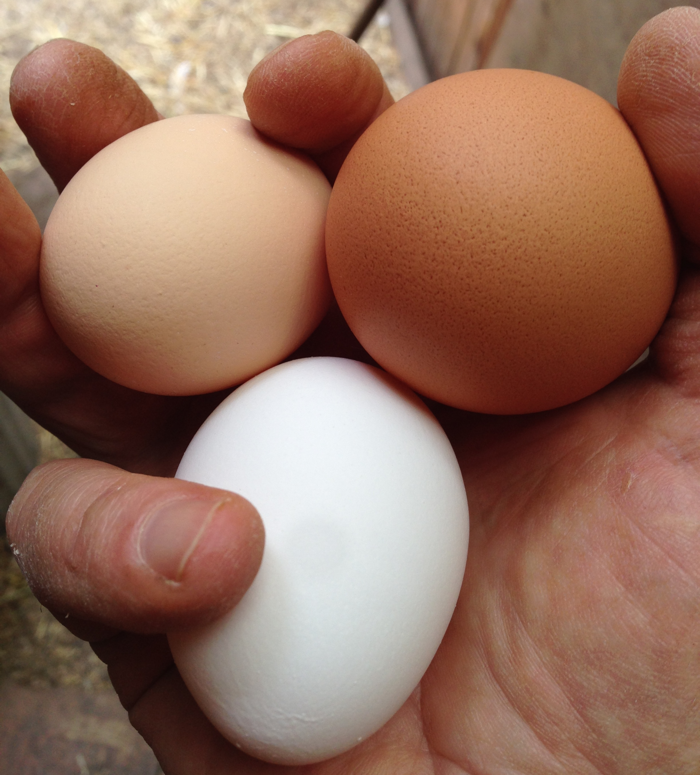
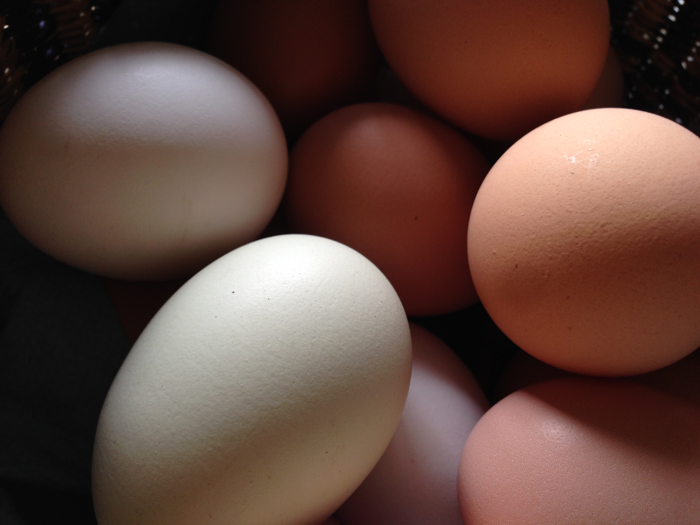
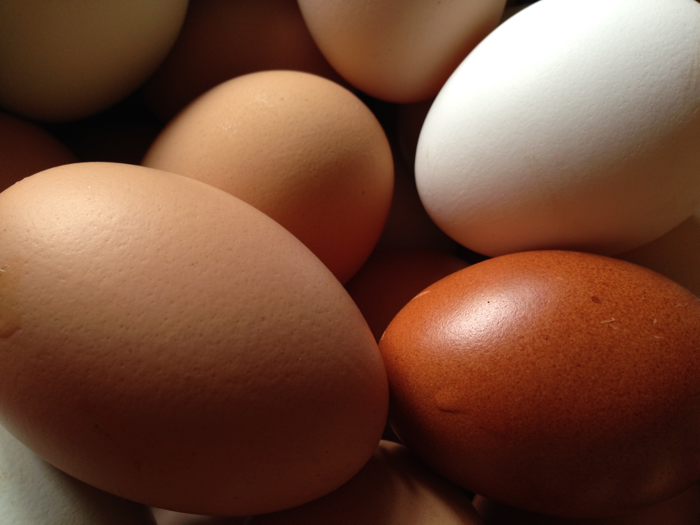
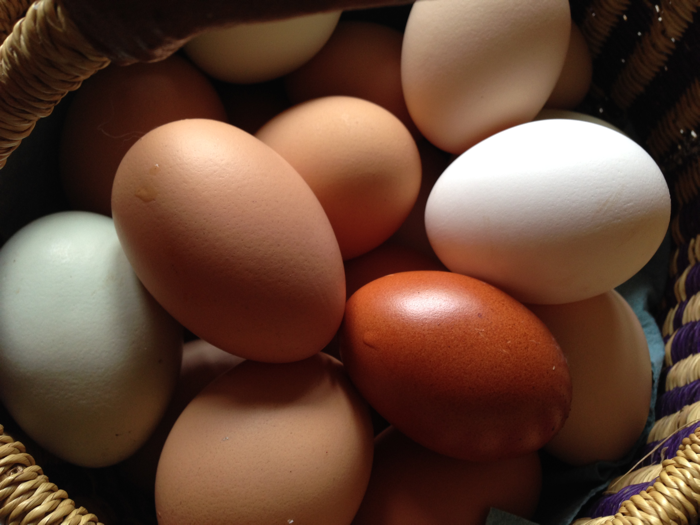
Every day the hens lay eggs with such beauty, they are small works of art. When you buy them in a store, they are cold and lifeless. But when you gather them throughout the day, they are warm to the touch, almost hot if the hen has just laid them and left the nest. You can tell they are living things.
-
Egg Art
-
Reuse, Recycle
I needed a weeding platform for the hoop houses so I could weed the vegetable beds without stepping in them. I had ten foot alder branches, so I cut some down to five and a half feet, stripped them and ripped one in two.



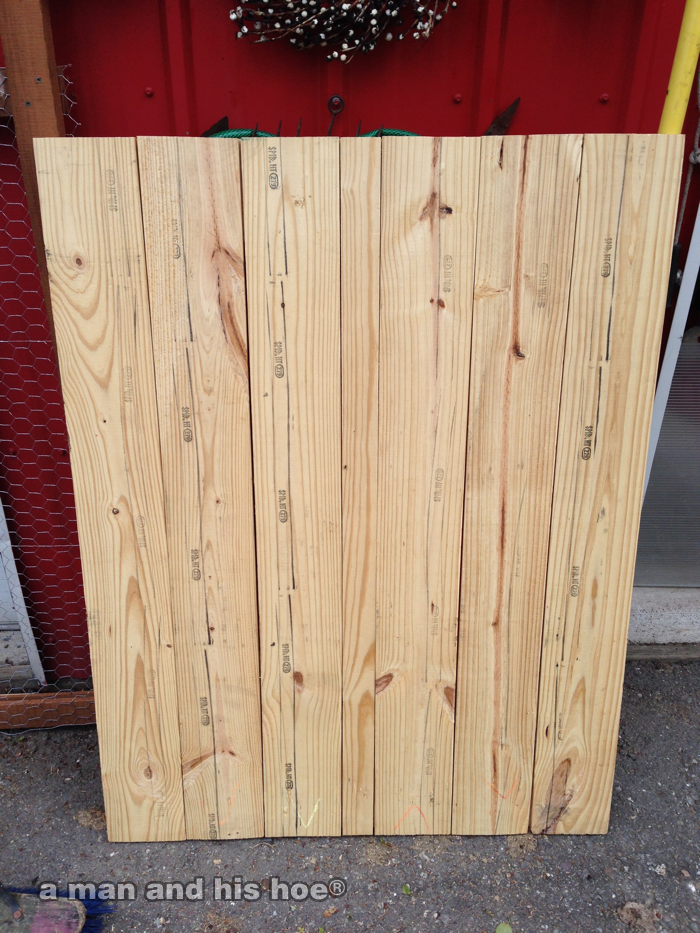
I also had a pallet lid with decent planks. I took the lid apart and used the blanks to make the platform.

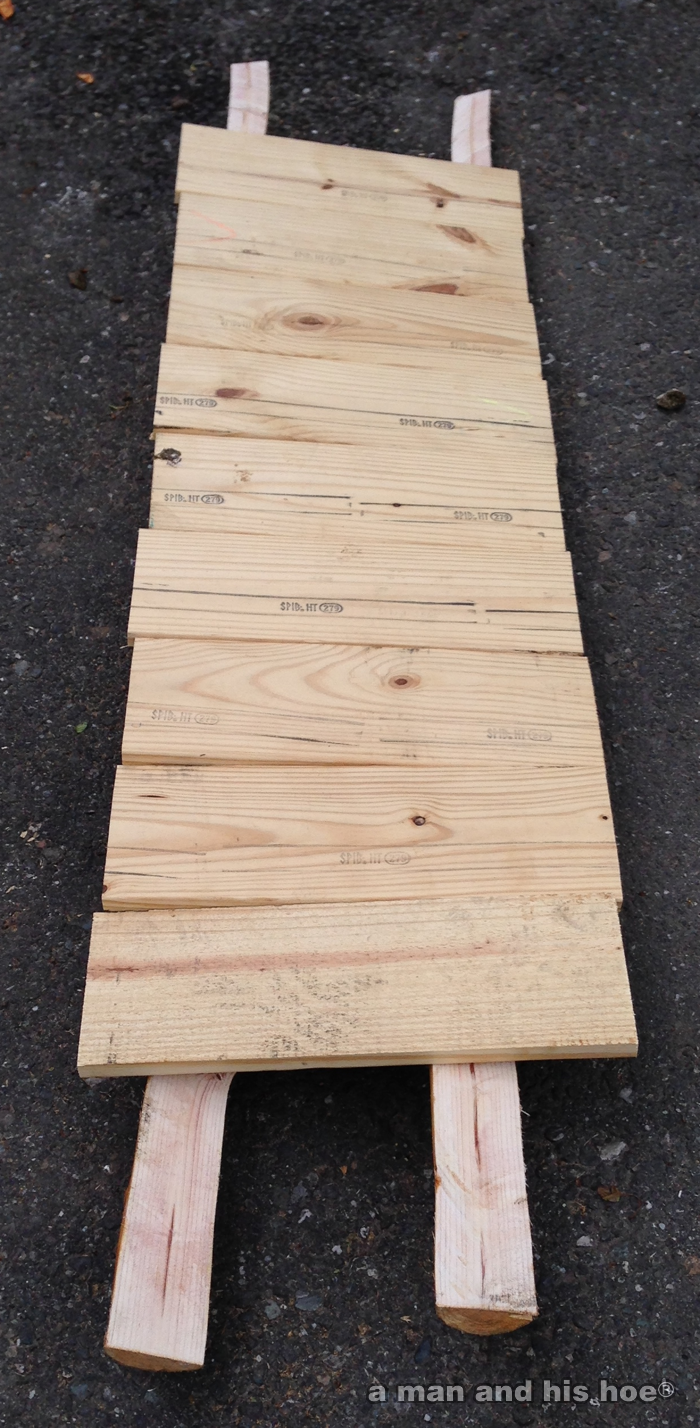

I used sections of the alder branches to make the legs for one side of the weeding platform.

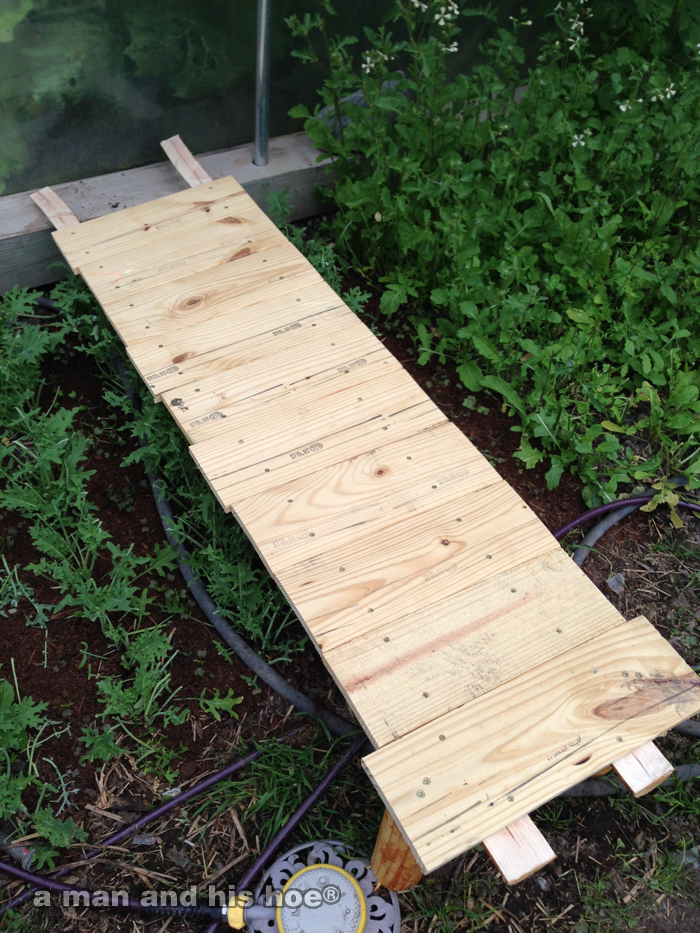
Here is how the weeding platform works. The end without the legs rests on the frame of the hoop house. The end with the legs sits out in the middle of the hoop house. And I use the platform to kneel on to weed the vegetable rows. The weeding platform is easy to move and now I can tend to the rows of vegetables without having to step on the soft dirt and compacting it or stepping on the plants.
-
Egg Day – May 15
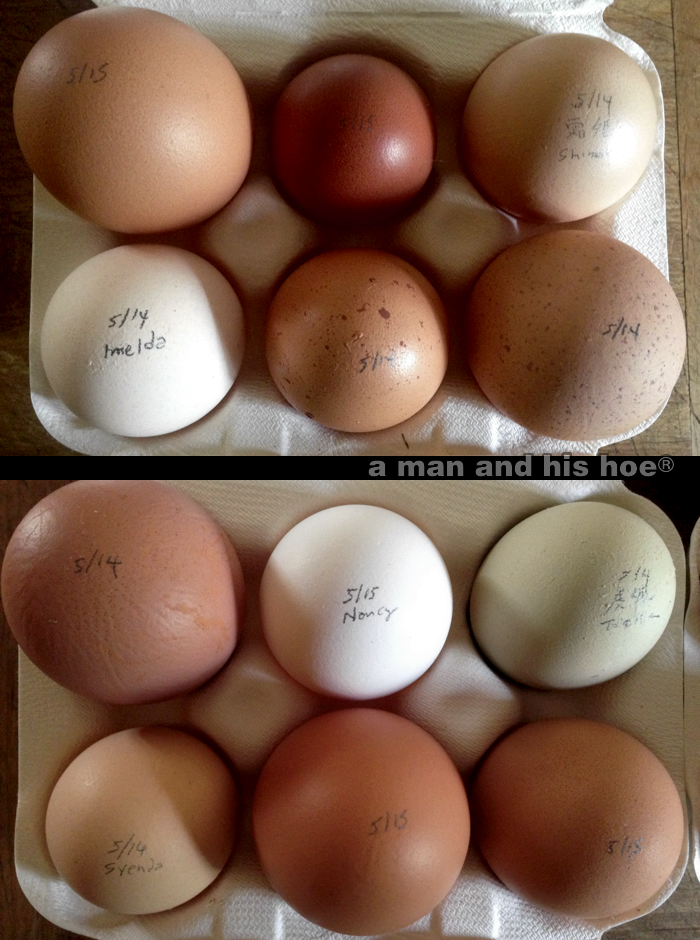
Today is Thursday, Egg Day here at a man and his hoe®. Time to pedal this week’s eggs down to Tweets Café in Edison. The subtle variety in the eggs the hens lay always impresses. You never get the idea from supermarket eggs that chicken eggs come in such a riot of shapes, sizes and colors. The relentless push to sort and standardize gives people the impression that chicken eggs are all the same, and that they only come in three sizes: small, medium, large. And that they only come in two colors: white or brown.
Reality is far more interesting than that. Not only is there a vast variety of sizes, shapes, and colors, each hen lays a slightly different egg every time. They are never identical. It almost makes you believe that they scheme about what kind of egg they want to lay the next day. The really radical hens have figured out how to squeeze two yolks inside a gigantic egg, or do they lay a double egg when they feel really lucky or are hopelessly in love?
-
Fresh, Fresh, Fresh
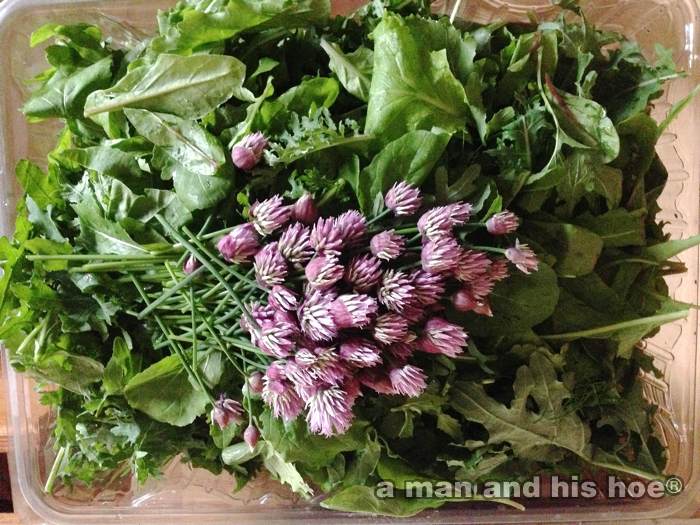
A tub of greens picked this morning, headed for Tweets Café this afternoon, along with dozens of fresh eggs. -
Harvard Study Linking Bee Colony Collapse Disorder to Neonicotinoid Pesticides
In this article of the Bulletin of Insectology, Chensheng Lu, Associate Professor of Environmental Exposure Biology at Harvard, describes a study he conducted testing the effect of neonicotinoid pesticides on bee colonies.
In the study, they compared bee colonies which were given exposure to neonicotinoid pesticides to bee colonies which were not exposed. The study started in July and after a winter, the colonies treated with neonicotinoid pesticides had significant colony collapse disorder, while the non-treated colonies did not.
Upon close examination of colonies in early April 2013, we found that the majority of bees in all neonicotinoid-treated colonies, regardless of whether they survived or not, had abandoned their hives during the course of winter. However, we observed a complete opposite phenomenon in the control colonies in which instead of abandonment, hives were repopulated quickly with new emerging bees.
Neonicotinoids are banned in Europe. Hopefully, with more studies like this, showing the dangers of these pesticides, they will be banner in the US as well.
- Scientists May Have Finally Pinpointed What’s Killing All The Honeybees ~ Dina Spector, Business Insider
- Honeybees abandoning hives and dying due to insecticide use, research finds ~ Damian Carrington, The Guardian
- The Cause Of Colony Collapse Disorder, Disappearing Bees Becoming More Clear
~ Eric Mack, Forbes