Author: theMan

  • It Takes a Lot of Smarts to be a Duck


    The path to the cabin is overgrown with lavender and thimble berries. You can’t see the cabin until you are almost there. When the summer busies are over, the market a memory, I’ll have time to trim the thimble berries, but I’m in no rush. It would be a shame to trim the thimble berries before I’ve eaten them all.


    Shasta daisies are a sign that August is nigh. It’s been a cool summer, frequent rains and clouds, not good for tomatoes but a paradise for potatoes.


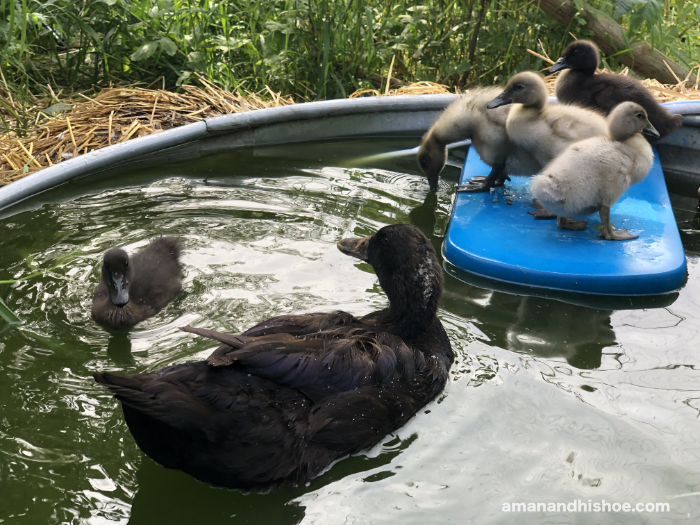
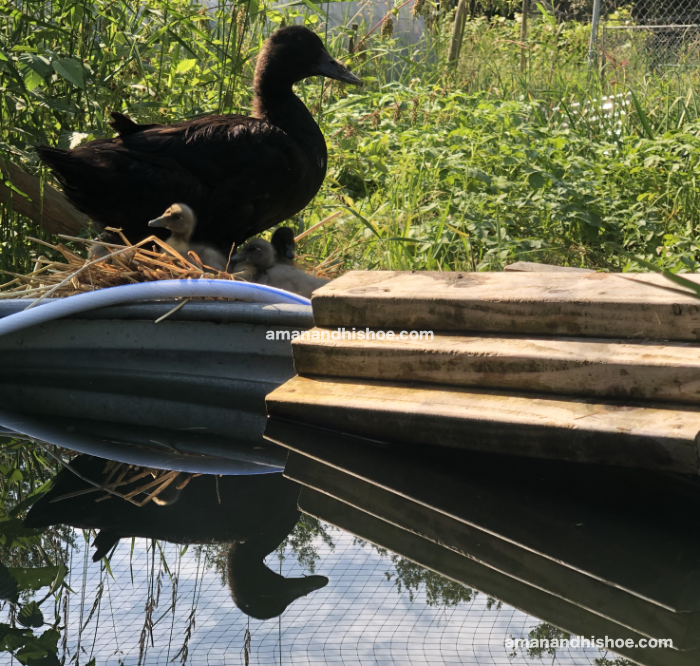
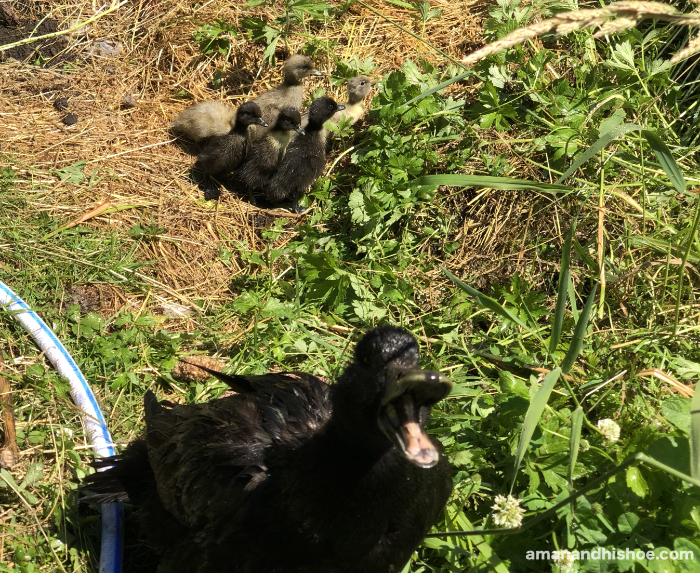
    A near drowning incident with one of the ducklings was the inspiration to make an easy landing for them to get out of the water. I didn’t expect the landing to be a hit with the ducklings. After a swim, they love gathering on it to relax.

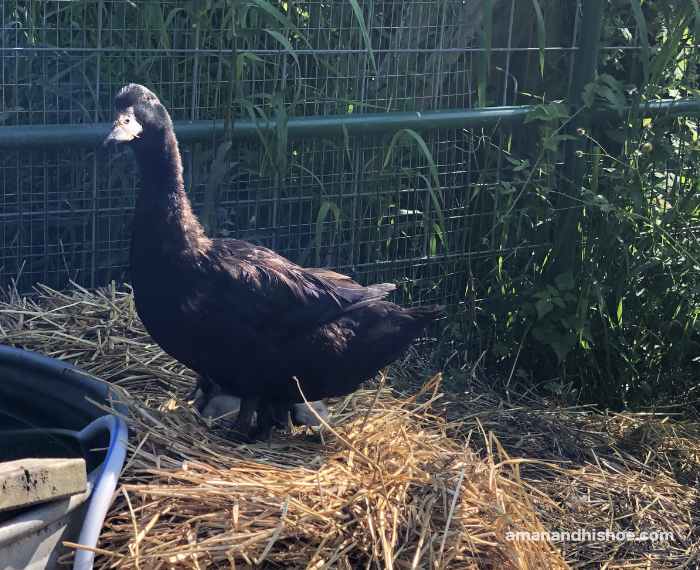
    Spend any time with ducks and you realize that there is a lot going on inside their little heads. They converse with each other much more than chickens. When you consider the feats that wild ducks have to accomplish to survive in the wild, migrating long distances, finding places to raise their young, eluding prey, it’s not a life for the stupid. It takes a lot of smarts to be a duck.

  • Lap of Luxury


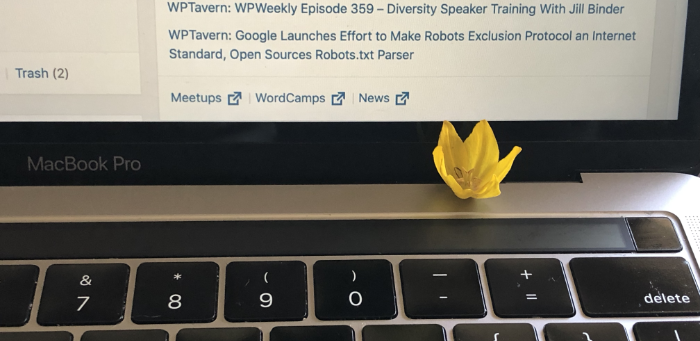
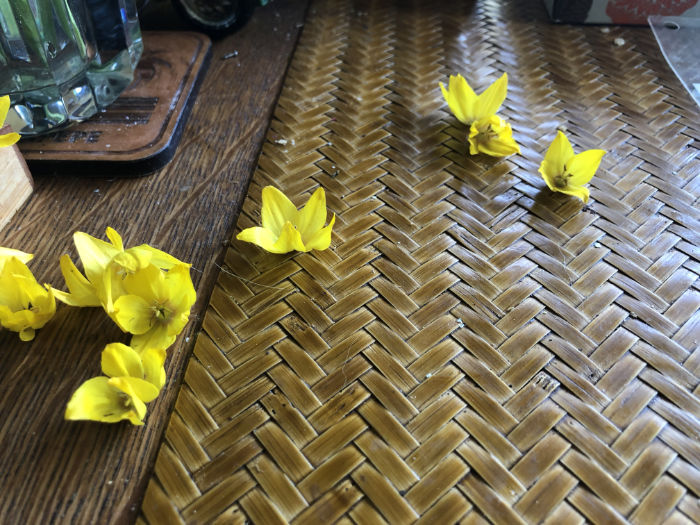
    An unexpected surprise were the falling flowers from this morning’s bouquet. Within minutes of bringing in fresh flowers for the table, some of the flowers rained down on my keyboard and the table.


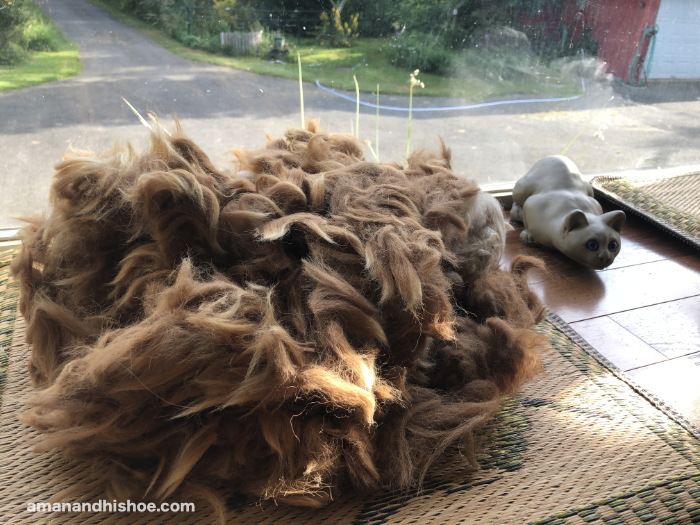
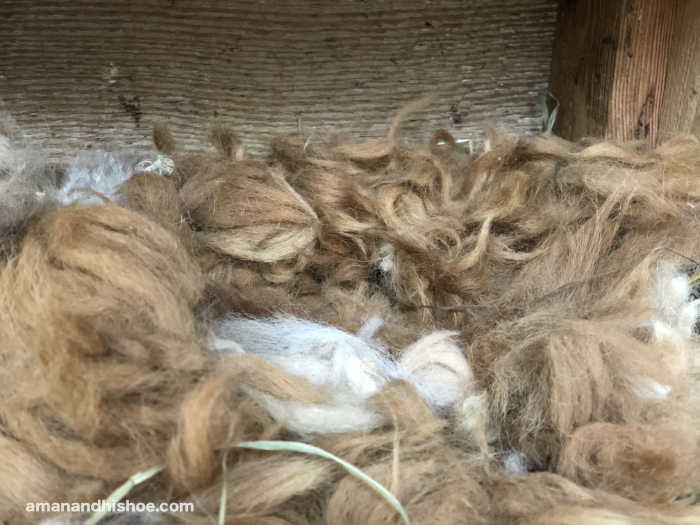
    And this is the definition of luxury. From a friend, a pile of their alpaca fur clippings for my chickens. Yes, alpaca fur lined nests. I’ve yet to read a claim on any egg cartons that their hens have alpaca fur lined nests.


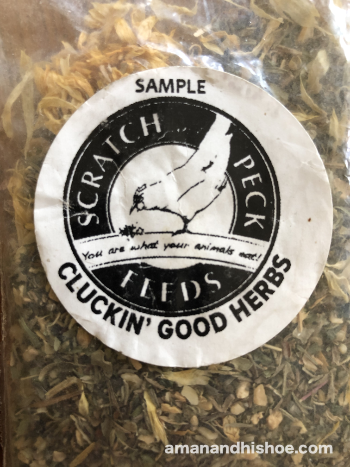
    It’s an experiment to see if hens prefer alpaca lined nests to straw and hay nests. And to entice them to use one of the two alpaca fur nests, I sprinkled herbs on one of them. According to another friend who gifted me these herbs, they are supposed to attract hens to nests when you sprinkle them onto the nest. We will see. I have my doubts.
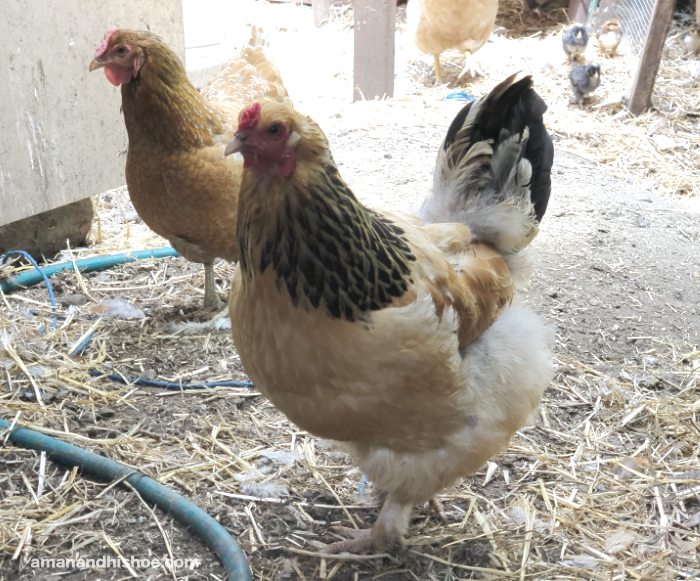
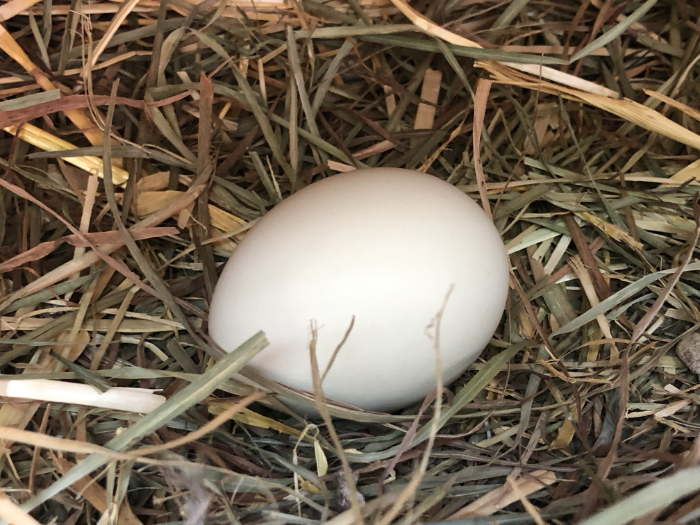
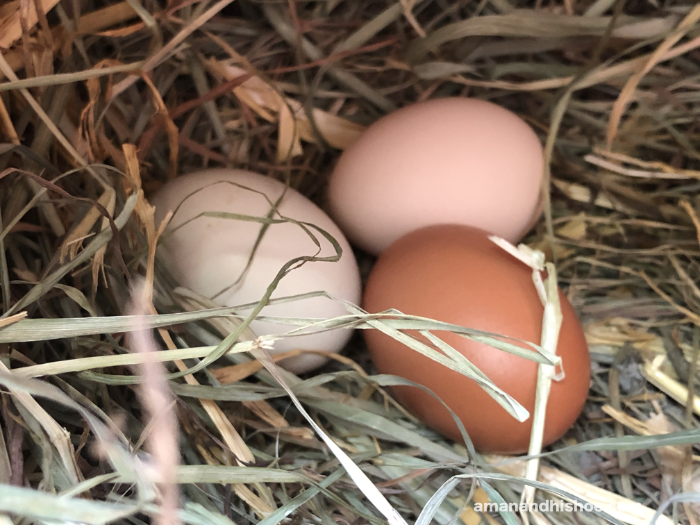
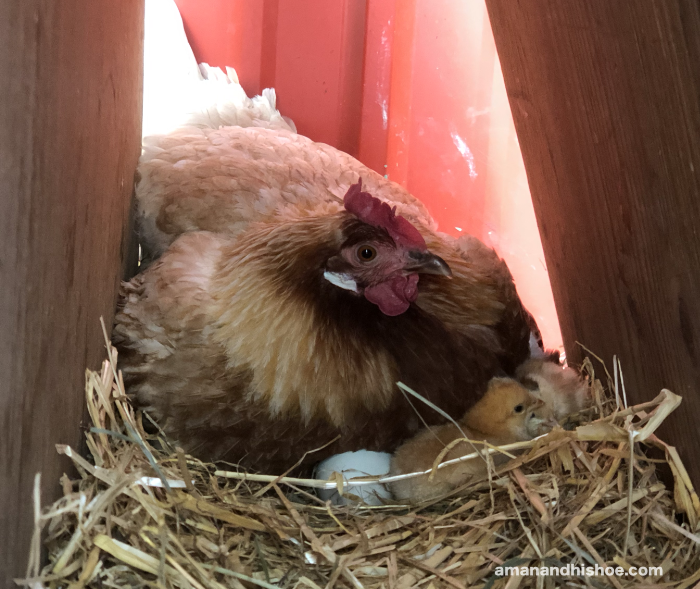
    And more chicks hatched today, by Hazel, who weeks ago, decided to nest in an out of the way place, hidden behind a board, above a set of nesting boxes. I knew one of her chicks had hatched when I heard it peeping, went into the chicken coop, and discovered the chick perched high above the nesting boxes. I tucked her back underneath her mother, and will move Hazel and her new chicks to someplace closer to the ground tonight. She is up more than five feet above the ground. I wonder how she is planning to get her chicks down.

  • Dog Days of July


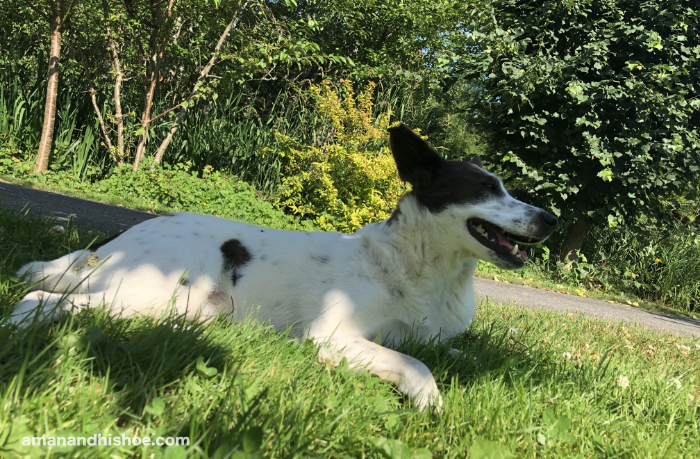
    It’s the dog days of July, but when you think about it, every day is a dog’s day.


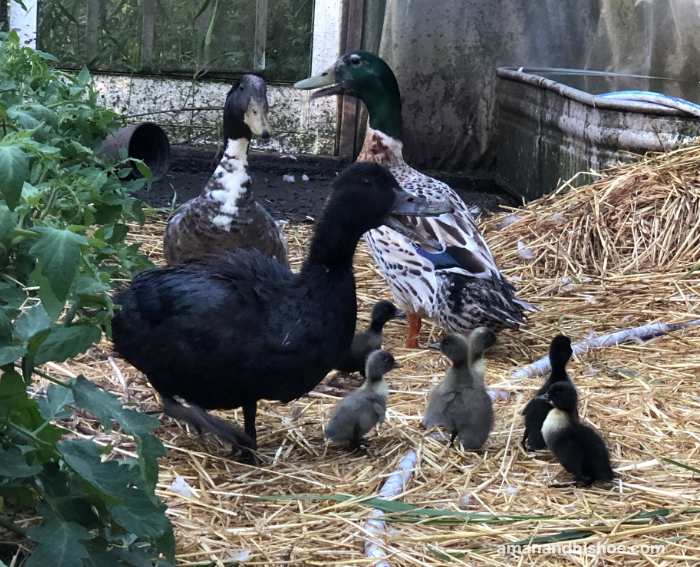
    I’ve had to separate Ema and her ducklings from the other ducks. She needs time alone to raise her ducklings without being harassed by the drakes or fighting with Snow whose eggs should be hatching soon.


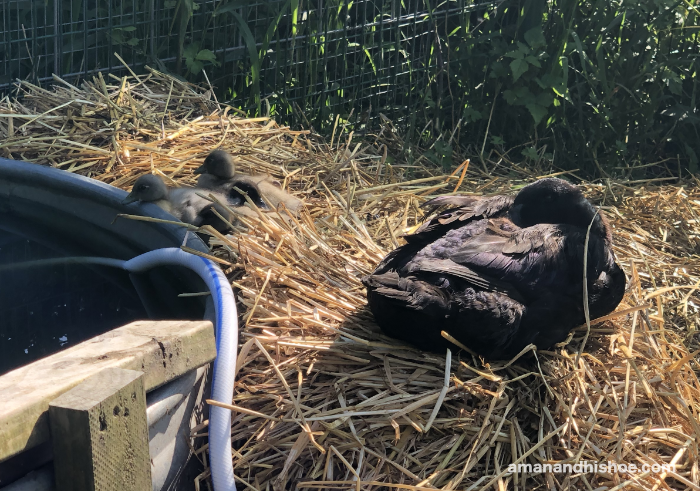
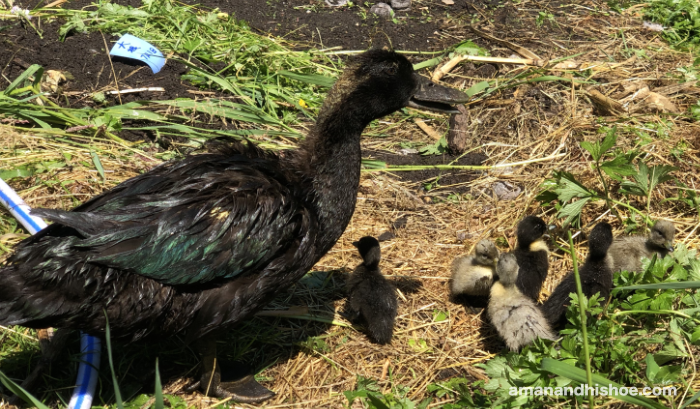
    Ema has picked the soft straw next to the duck’s swimming tank as her nest for her ducklings. When they aren’t foraging through the potatoes and garlic rows, Ema and her ducklings are either swimming in the water tank or preening and resting on the straw by the tank.


    All it takes is spending an afternoon watching a mother duck with her ducklings, or a hen carrying for her chicks, to understand that ducklings and chicks are much happier being raised by a mother.


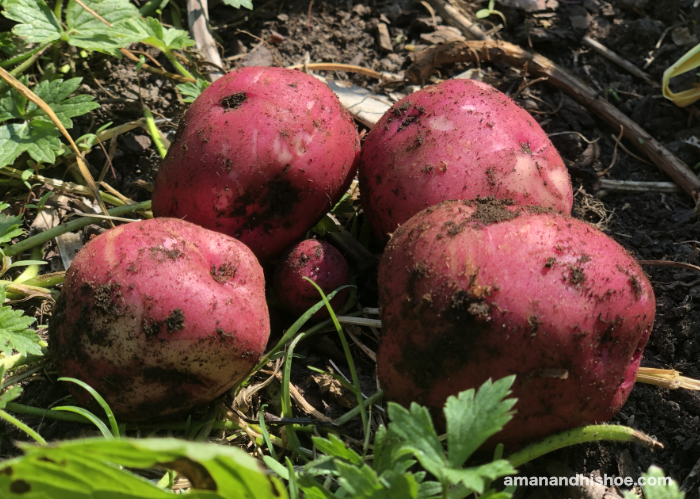
    The Upstate Abundant potatoes are looking very good this year. A few more weeks and I will have some for the Mount Vernon Farmers Market, or will I end up eating them all?

  • New Ducklings, New Potatoes


    When I went to put the ducks to bed last night I heard peeping. Emma’s eggs had hatched. Today was their first full day outside, and she took them all over the garden. The row of komatsuna and rows of baby radishes are now gone, no doubt devoured by the little ducklings. Now I know that I need to protect baby greens from ducklings.


    Emma is very protective of her ducklings. Get too close and she’ll charge. She even nipped my leg at one point.


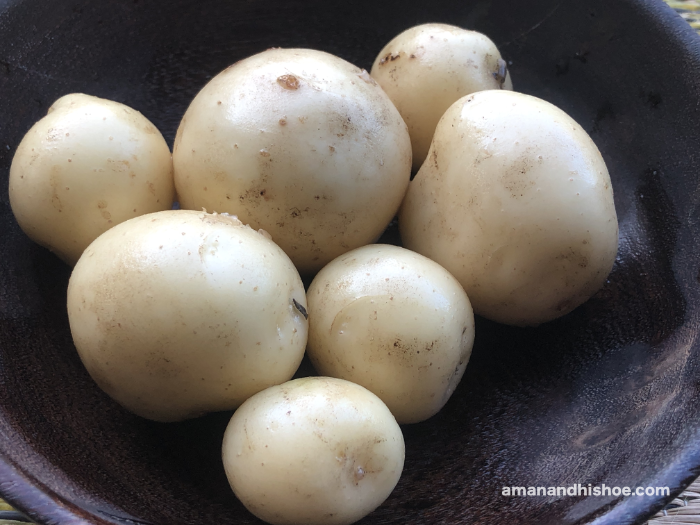
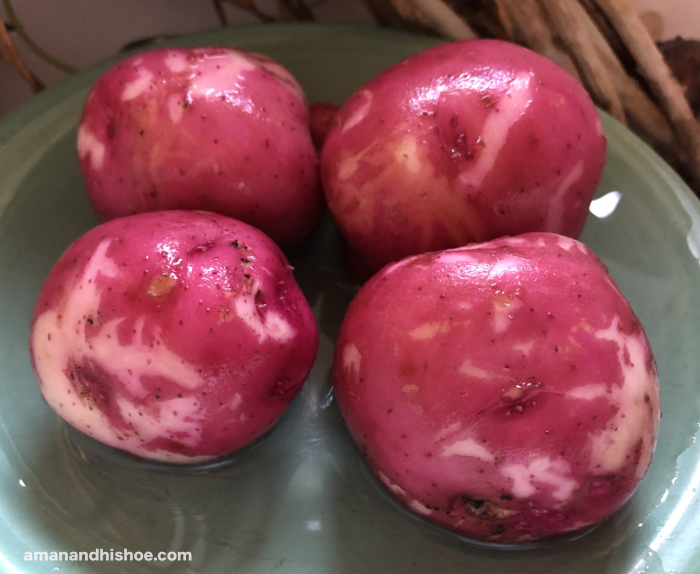
    Today was all new potato day, the first picking of the season, a handful of potatoes dug up from underneath a few potato plants. There is nothing to compare to the taste of potatoes fresh out of the ground, their skins so thin and delicate, you have to carry them as carefully as eggs to keep the skins from rubbing off. Potatoes like these are too good to sell.

  • Babies Galore


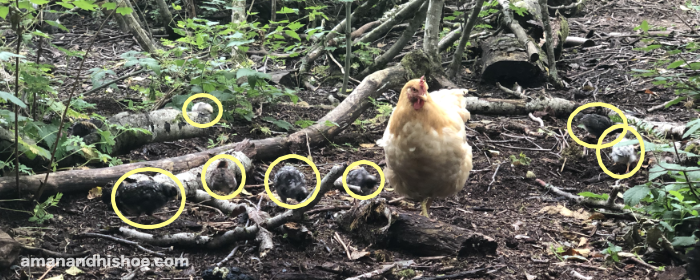
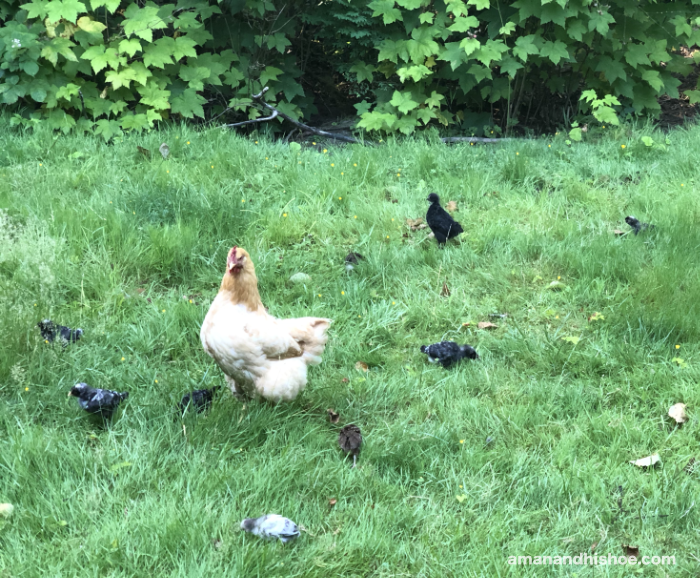
    There are four hens raising nearly 50 chicks. Three of the hens are raising chicks I purchased from a hatchery. A broody hen is a chance to rear a new variety of hen to increase the variety of eggs. I order the chicks so they ship on a Monday, which means I can be at our local Post Office at six Wednesday morning, to get the chicks home as soon as they get unloaded off the truck.

    In the past, I’ve waited for the post master’s early morning call before leaving to get them. This Wednesday, I knew from the texts I was getting from the US Postal Service, that the chicks were on their way to the Bow Post Office before I woke up Wednesday morning. I got to the Post Office before the truck pulled in to deliver Wednesday’s mail. When the post master called to let me know my chicks were in, I was knocking on her door in less than minute.


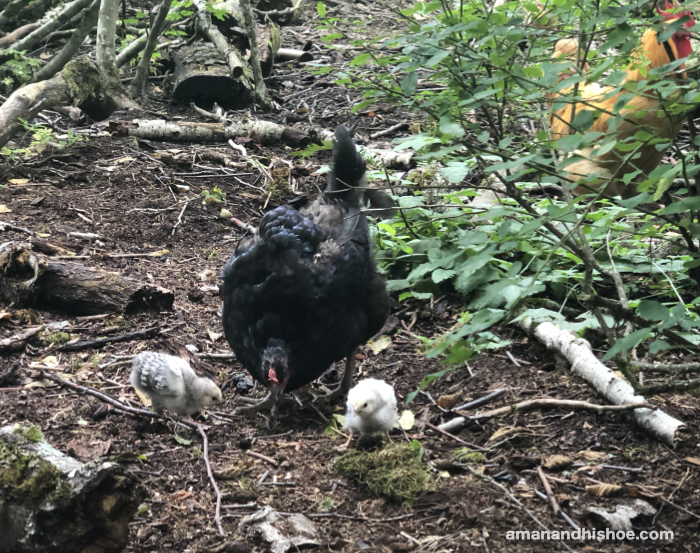
    So how does it work putting hatchery chicks under a broody hen? Pretty well, provided you have more than one hen to use, in case a hen doesn’t take to the chicks. The first day can be pandemonium. Two day old chicks can walk a long way, and it works best if the broody hens are in an enclosure so the chicks can’t go too far. I find I may have to show the chicks a few times that there is a warm, secure place underneath their new mother.


    I had four broody hens to try, and two of them took to the chicks I received Wednesday morning.


    When the sun sets and gets cool, the chicks gravitate under their new mother’s warm feathers, and after one peaceful night resting underneath her warmth, the bond between the chicks and their new mother is set, and the following day, it’s as if the chicks were hatched by her. I kept the two hens and their chicks in enclosures until Friday afternoon, when they were bonded enough to let them out.


    Having mother hens to raise chicks sure makes it easy. No heat lamps to fuss with. No checking on the chicks every hour to make sure they are OK. And a mother hen will carefully take the chicks outdoors so they can learn how to dig for earthworms, catch bugs, and enjoy the sunshine.

    A downside to mother hen reared chicks is that they are on the wild side. She raises them to be chickens and not pets. “Watch out for that one,” she tells them if I get too close. But hearing their happy chirps at having a mother is worth it.

    This year I’ve added Welsummer, Columbian Wyandoote, Cuckoo Maran, and Speckled Sussex chicks to the flock.