Where do tulips go when they die? They fall onto their tombstones and slowly vanish.
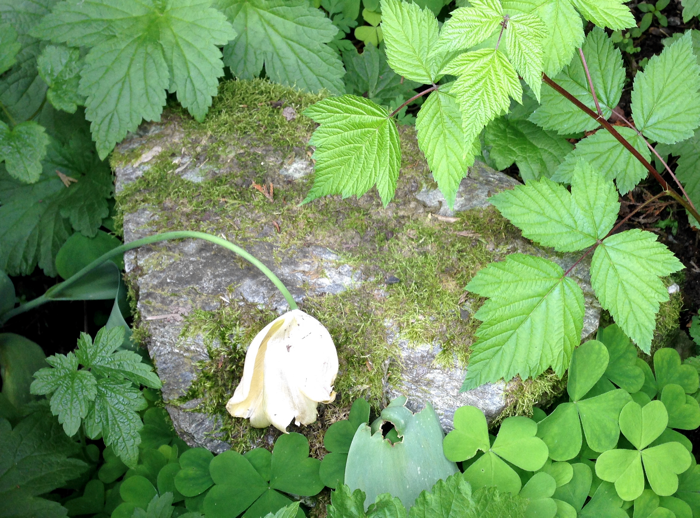
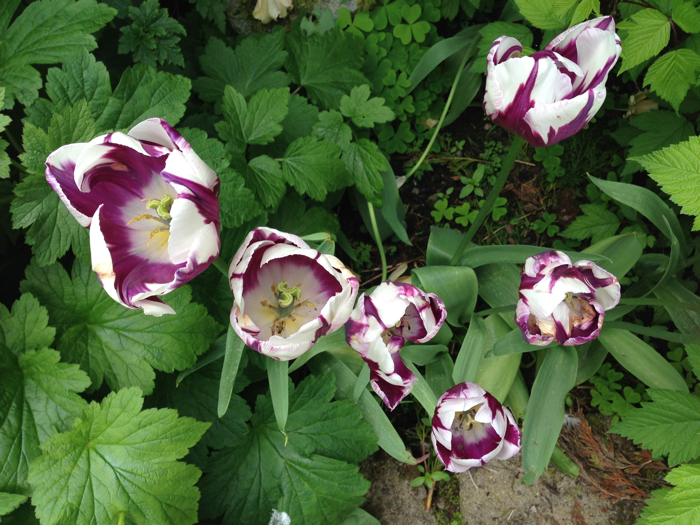
And these geriatric tulips are nearing their end. They are still beautiful, just like old people with all their wrinkles. At the beginning of the month, they were so fresh. Now, they are losing their shape, getting wobbly, and gracefully showing their age. But their beauty endures to the end.

Category: Reflections
-
Reuse, Recycle
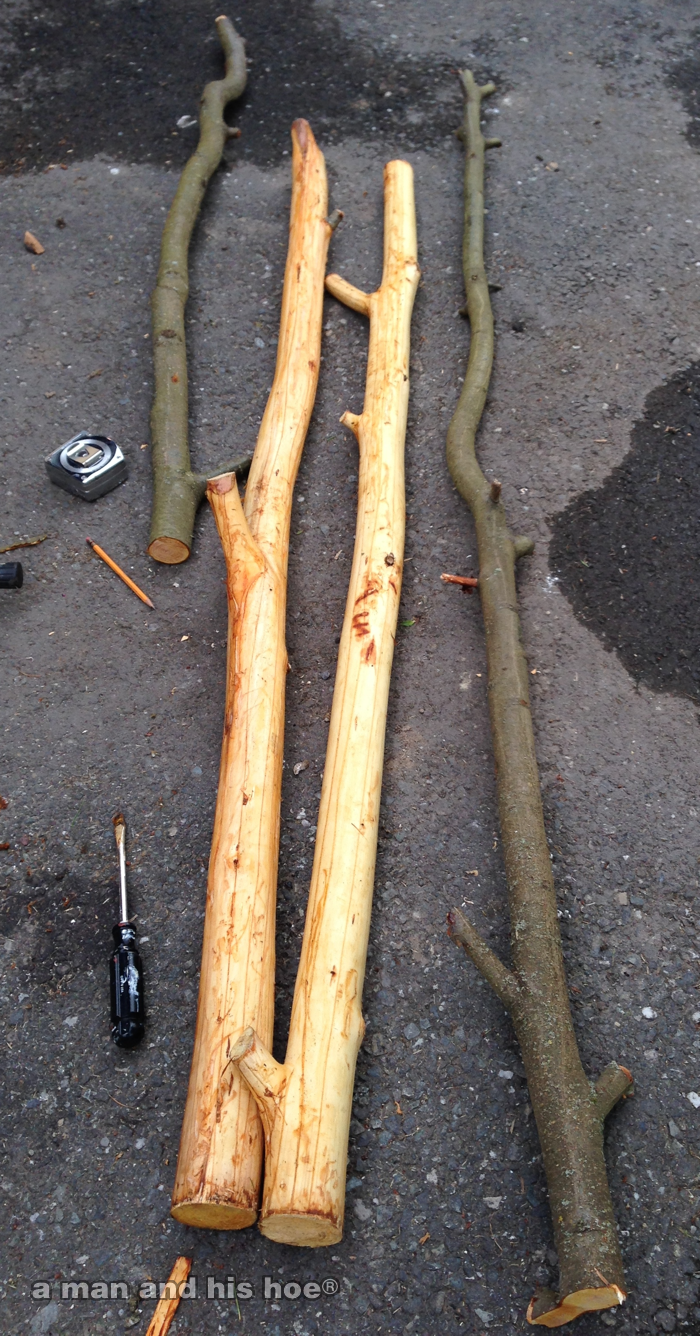
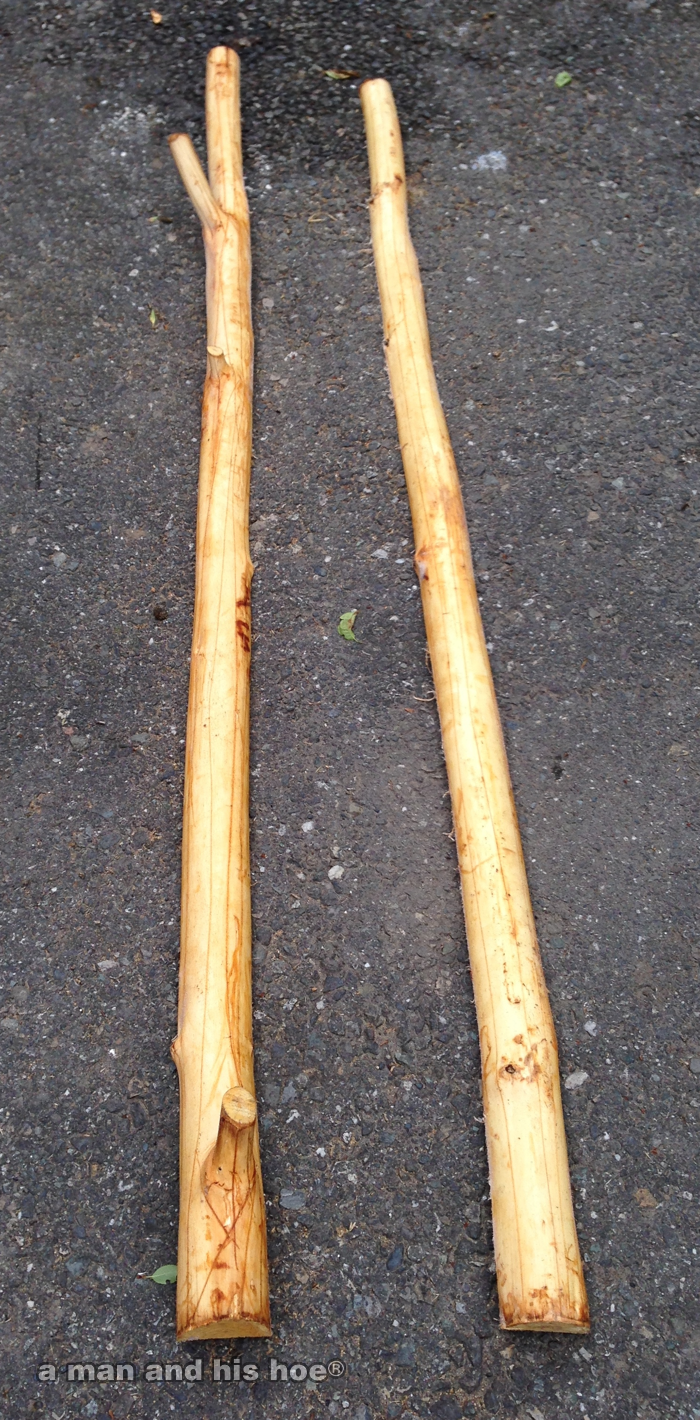
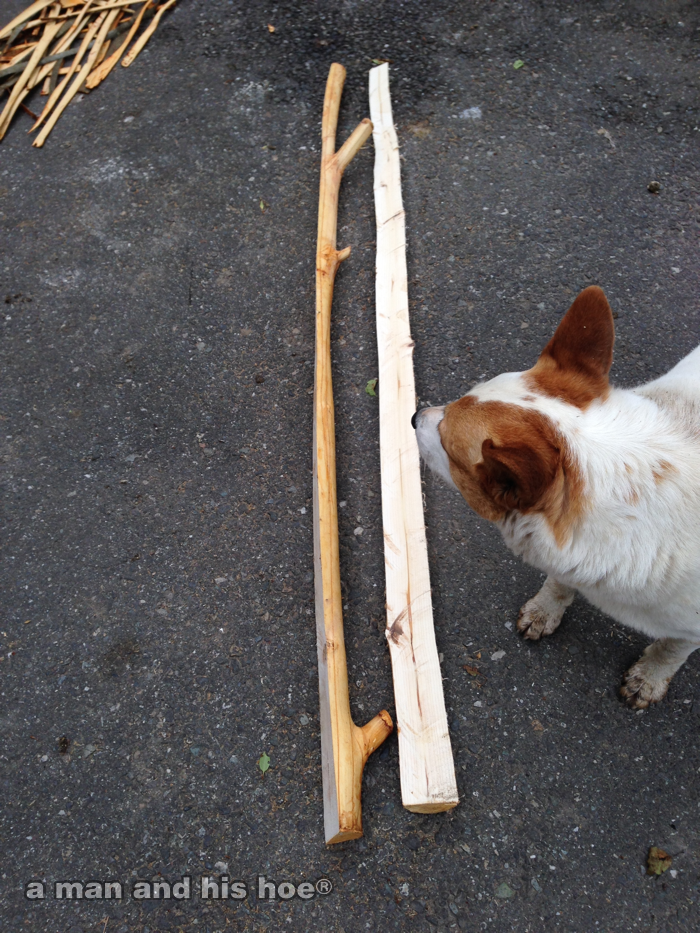
I needed a weeding platform for the hoop houses so I could weed the vegetable beds without stepping in them. I had ten foot alder branches, so I cut some down to five and a half feet, stripped them and ripped one in two.
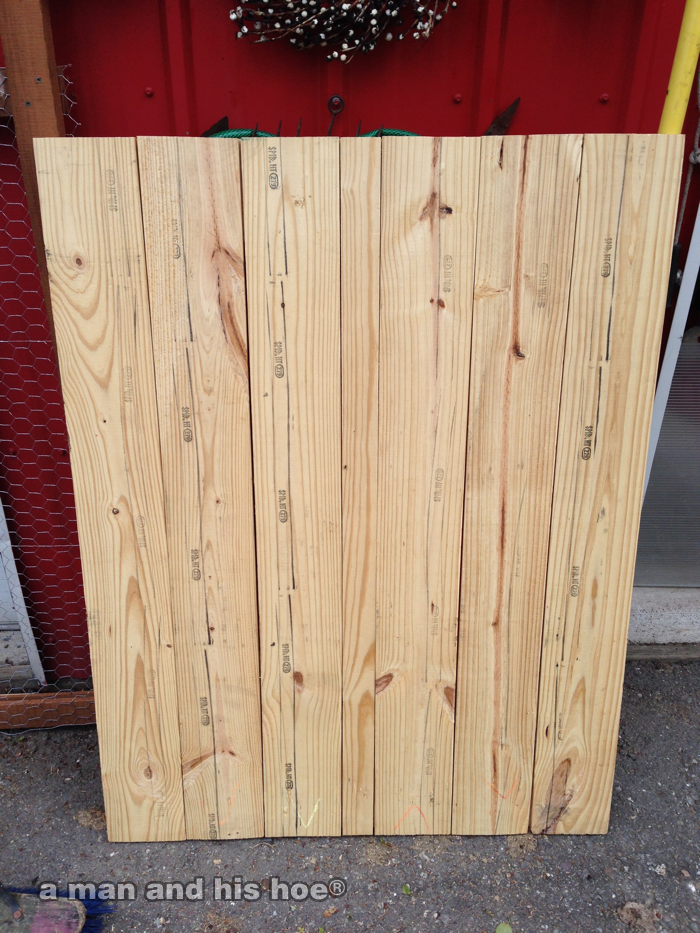
I also had a pallet lid with decent planks. I took the lid apart and used the blanks to make the platform.
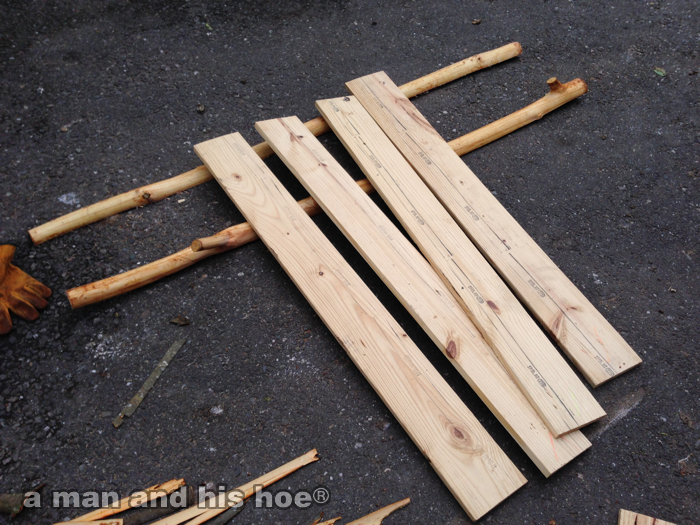
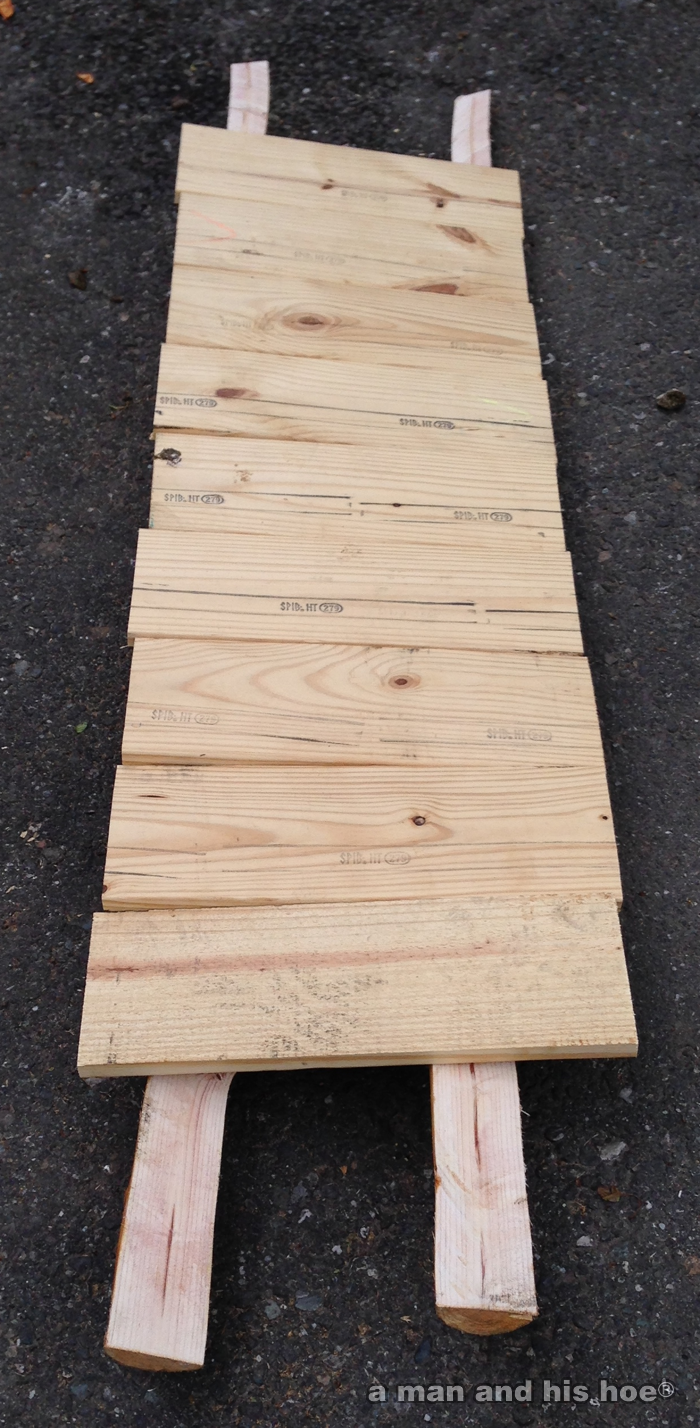
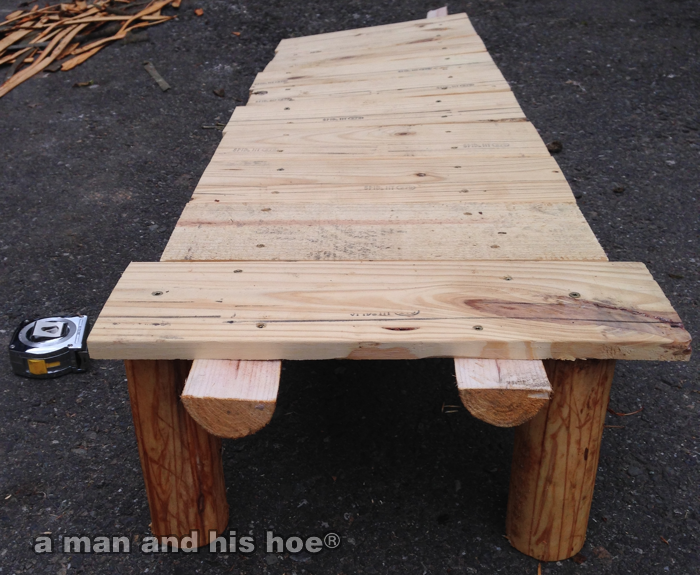
I used sections of the alder branches to make the legs for one side of the weeding platform.
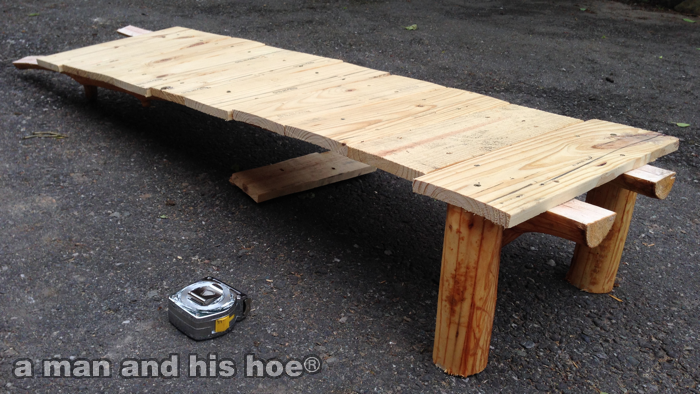
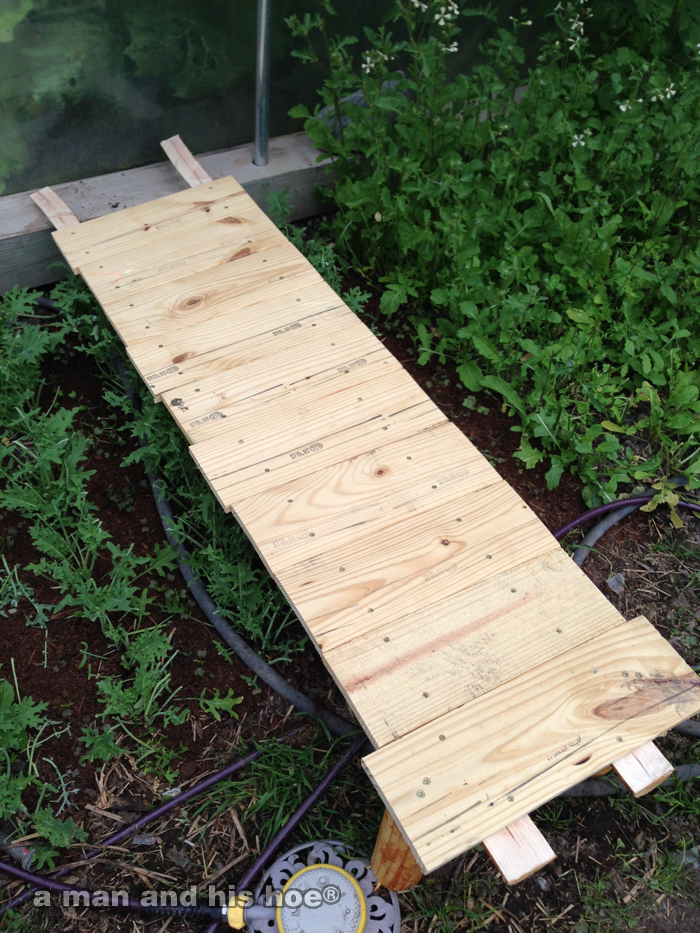
Here is how the weeding platform works. The end without the legs rests on the frame of the hoop house. The end with the legs sits out in the middle of the hoop house. And I use the platform to kneel on to weed the vegetable rows. The weeding platform is easy to move and now I can tend to the rows of vegetables without having to step on the soft dirt and compacting it or stepping on the plants.
-
Harvard Study Linking Bee Colony Collapse Disorder to Neonicotinoid Pesticides
In this article of the Bulletin of Insectology, Chensheng Lu, Associate Professor of Environmental Exposure Biology at Harvard, describes a study he conducted testing the effect of neonicotinoid pesticides on bee colonies.
In the study, they compared bee colonies which were given exposure to neonicotinoid pesticides to bee colonies which were not exposed. The study started in July and after a winter, the colonies treated with neonicotinoid pesticides had significant colony collapse disorder, while the non-treated colonies did not.
Upon close examination of colonies in early April 2013, we found that the majority of bees in all neonicotinoid-treated colonies, regardless of whether they survived or not, had abandoned their hives during the course of winter. However, we observed a complete opposite phenomenon in the control colonies in which instead of abandonment, hives were repopulated quickly with new emerging bees.
Neonicotinoids are banned in Europe. Hopefully, with more studies like this, showing the dangers of these pesticides, they will be banner in the US as well.
- Scientists May Have Finally Pinpointed What’s Killing All The Honeybees ~ Dina Spector, Business Insider
- Honeybees abandoning hives and dying due to insecticide use, research finds ~ Damian Carrington, The Guardian
- The Cause Of Colony Collapse Disorder, Disappearing Bees Becoming More Clear
~ Eric Mack, Forbes
-
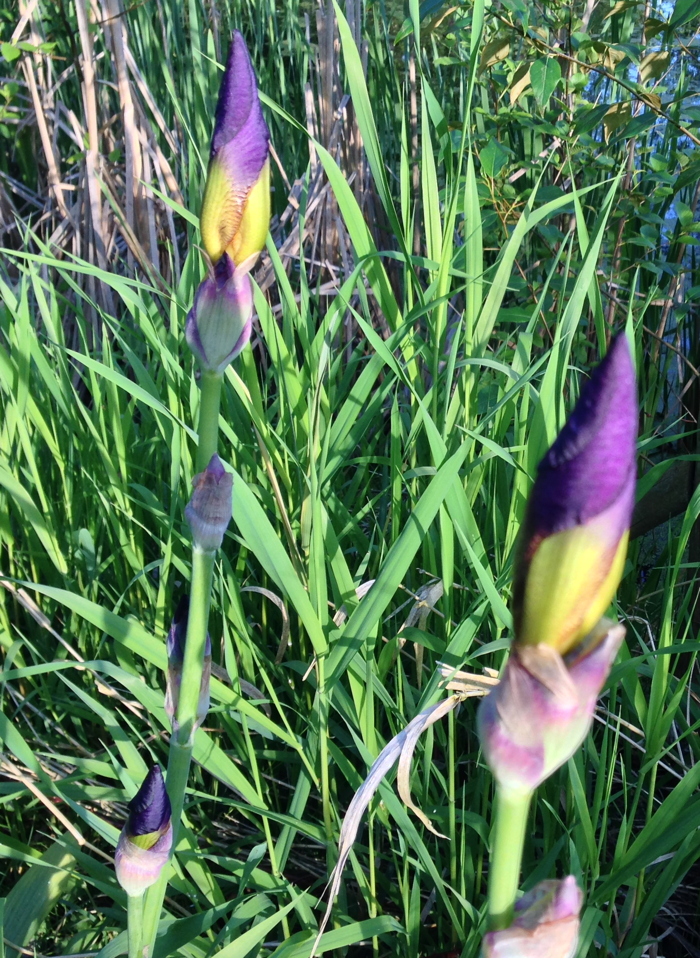
Iris on the Verge
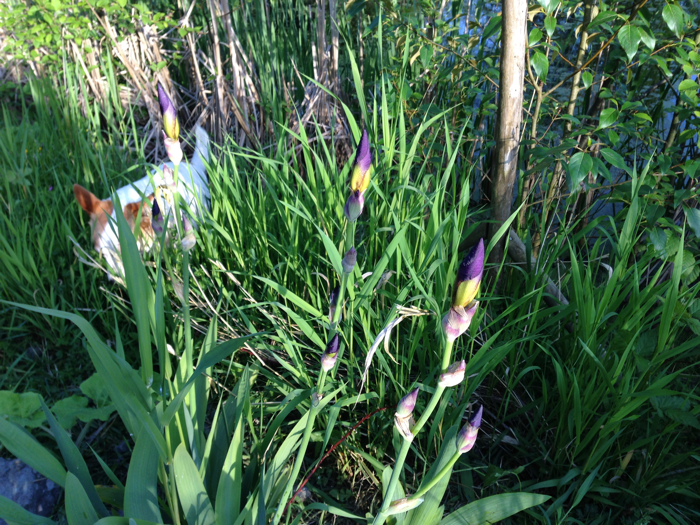
The iris by the pond are on the verge of unfolding. The thick vegetation along the banks of the pond is a perfect home for garden snakes, a playground for the dogs, and a foraging garden for the chickens.
-
Bring Out the Cannon to Shoot the Sparrows
Curious as to the sculptor and the actual sculpture I saw at the Hakone Open-Air Museum back in my college days, I sent a query to the museum describing the sculpture. A short time ago I got a reply from the museum. The sculpture is now at their sister open-air museum, The Utuskushigahara Open-Air Museum in Nagano prefecture in Japan. The links are in Japanese, but they have plenty of pictures to give you an idea of the beautiful, mountainous area. Below is a picture of that sculpture.
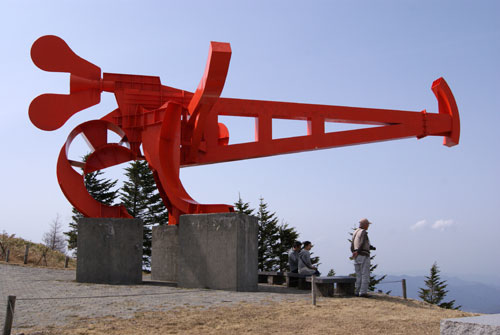
The sculpture is by the Swiss artist Bernhard Luginbühl and is titled スズメヲウツノニタイホウヲモチダス Suzume wo utsu noni taihou wo mochidasu, which translates to Bring out the cannon to shoot the sparrow. He created many huge, fantastical pieces. Take a look at the Iron Giants’ Garden, a park in Mötschwil, canton Bern, Switzerland, that has a collection of his work. And below are images of some of his works. The world has an endless supply of interesting, creative people.