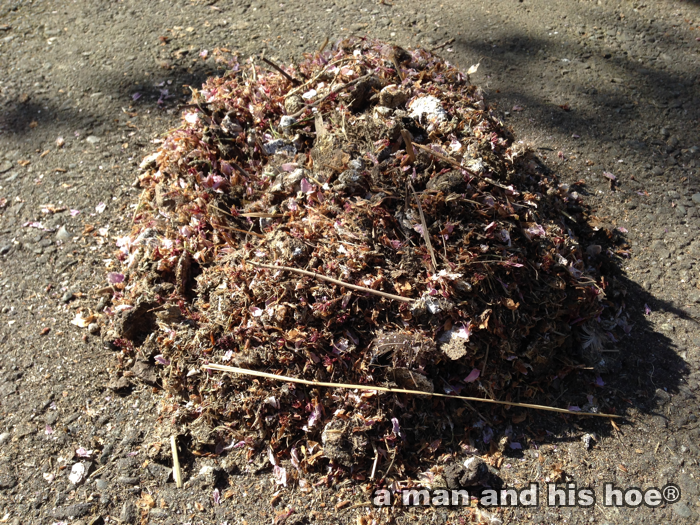
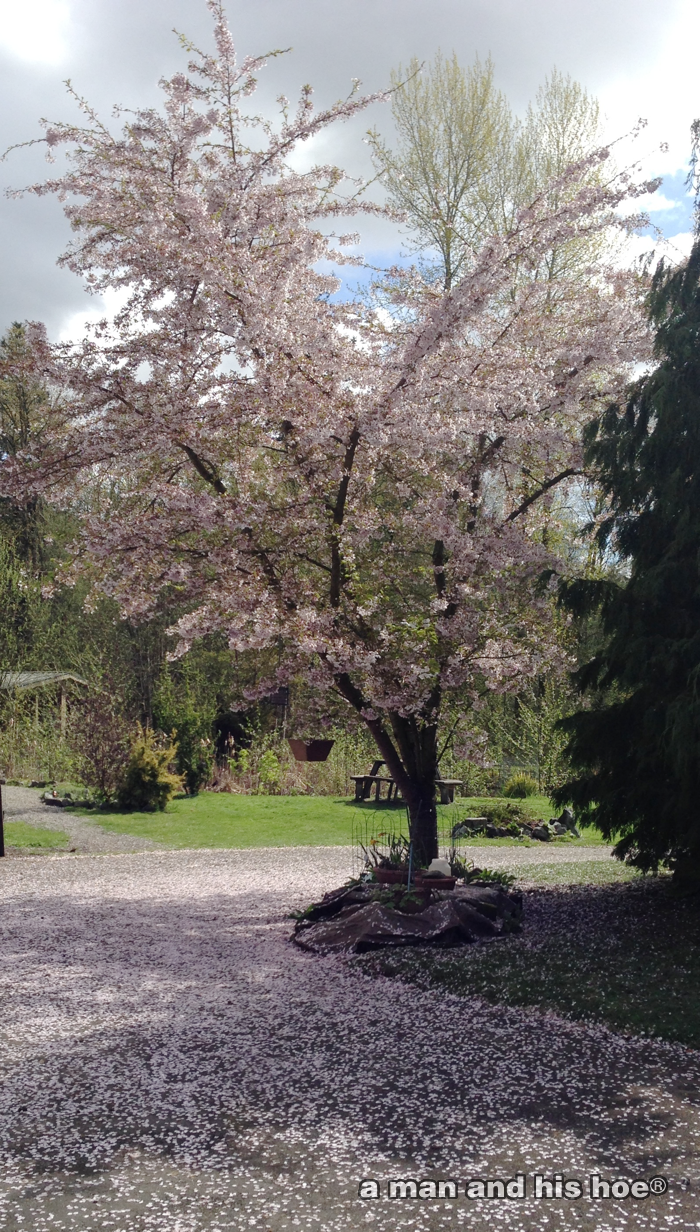
What is this? It’s what cherry blossoms become. All those beautiful blossoms which drifted down, covering the ground like fresh snow. Now they will slowly decompose into the garden and turn into other flowers and vegetables. They don’t look like much now, but what is amazing about them is that much of their matter came out of thin air. Plants have this incredible ability to eat the air. Through photosynthesis, they can trap the carbon molecules in the air, and turn that carbon into stems, leaves and flowers. Like magic, plants can take what is invisible and turn it into exquisite things of beauty, and eventually into rich matter that nourishes all of us. Some of this matter will even end up being chicken and eggs and vegetables, and eventually us. Then as we breathe, we exhale carbon dioxide and at some point, the plants will eat that carbon dioxide, extract the carbon, and the whole cycle continues round and round.
Category: Reflections
-
Transformation – or Where Did the Cherry Blossoms Go?
-
Tsuneko Sasamoto – Almost 100 and Still Going Strong
Yesterday I saw a reporter interview Tsuneko Sasamoto, a renowned Japanese photographer, who will turn 100 years old this September. In honor of her upcoming 100th birthday, there is an exhibit of her photographs at the Japan Newspaper Museum titled
100 Years of Japan’s First Female Photo Journalist Tsuneko Sasamoto. The exhibit runs through June 1, 2014.As I watched the interview, it was hard to believe that the vivacious woman being interviewed had turned 99 more than half a year earlier. It made me wonder what I would be still doing at that age. Would I still be raising chickens and working the soil with a hoe? In the interview, she credited her long life to always have something more to do, to never giving up.
Below is a video of her made October 2013 when she was 99. Even though the interview is in Japanese, you get a good idea of how active she is. It is her voice narrating the video. She was just as vivacious in the interview I saw yesterday.
[youtube https://www.youtube.com/watch?v=8wXohfgZKVk?feature=player_detailpage&w=640&h=360]
About Tsuneko Sasamoto in Japanese and that page translated into English -
New Pullet Egg and Cherry Blossom Snow
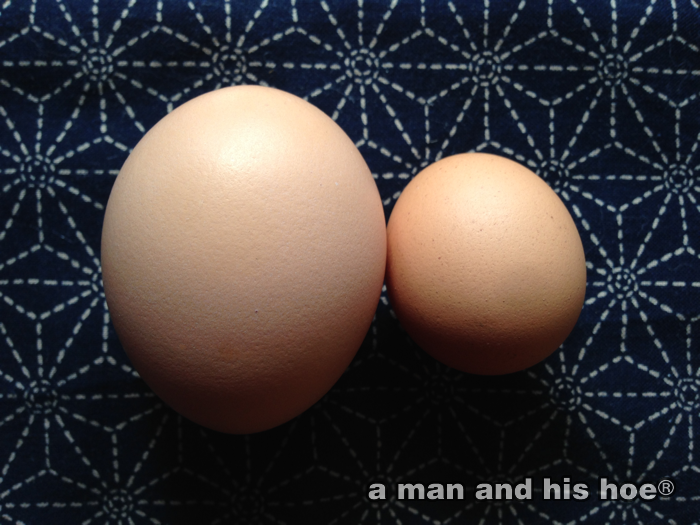
This time of year, every day is full of surprises. This morning I discovered a pullet egg. When hens first start laying eggs, they lay tiny eggs. You’ll rarely, if ever, find them in a store, but they are beautiful and make very cute fried eggs.
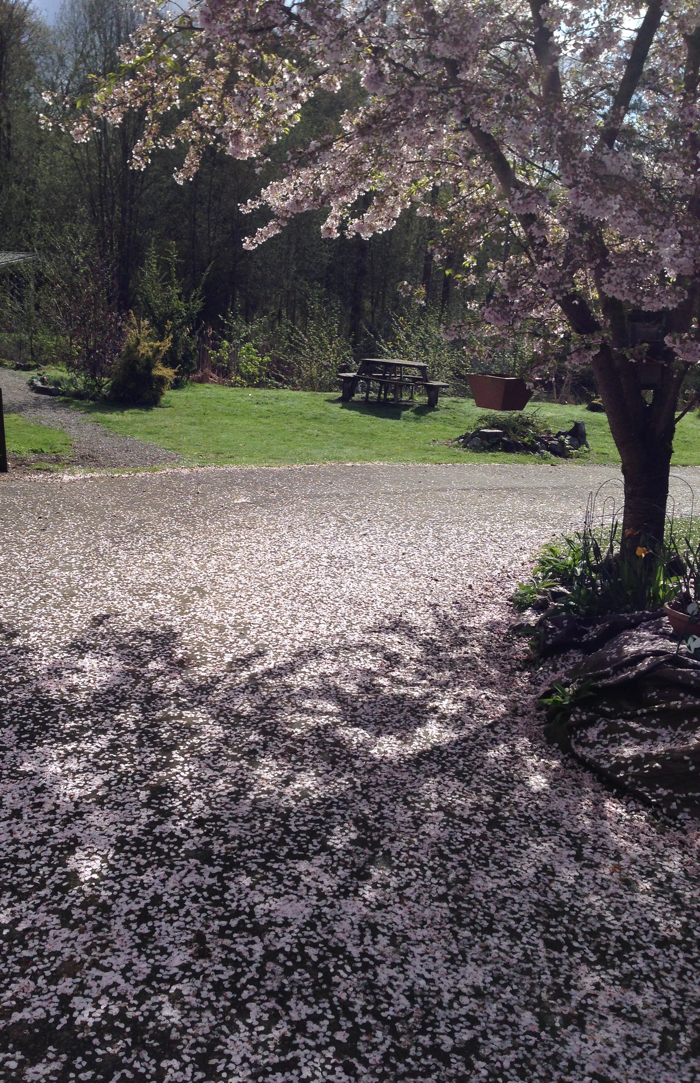
The flowers are still drifting off the cherry tree and blanketing the ground like snow. There are more petals than the chickens can possibly eat.
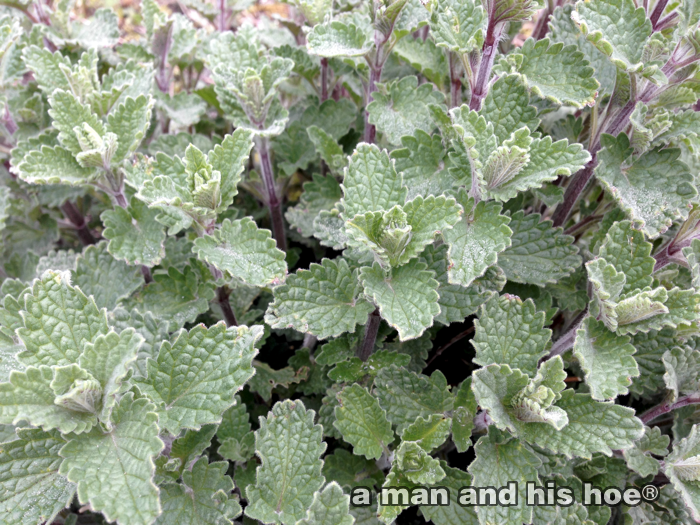
The mint is now growing vigorously.
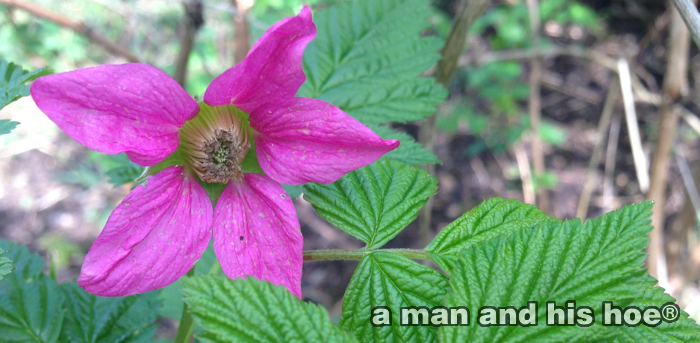
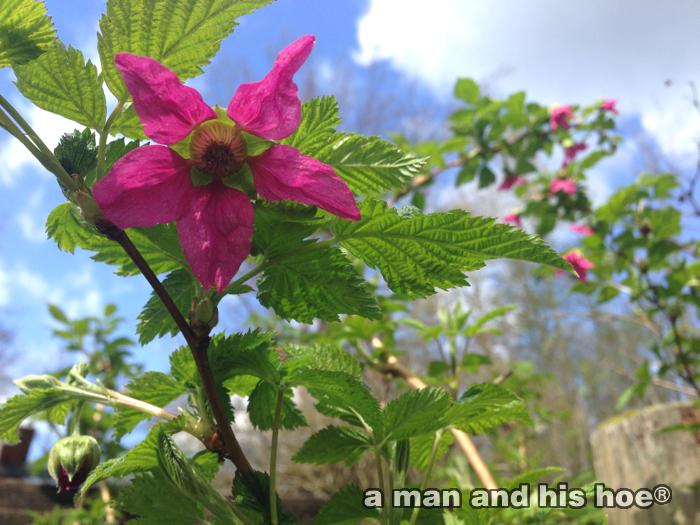
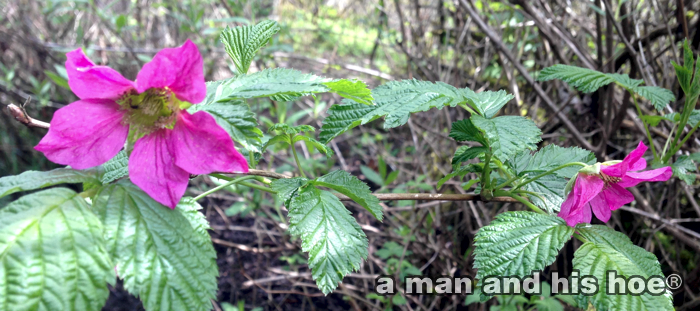
And the salmon berries are in full bloom. Come late June and early July, the orange-salmon colored berries will be ready to eat. They are best eaten in the afternoon on sunny days, after the sun has warmed the berries to perfection.
-
On a Wet April Day
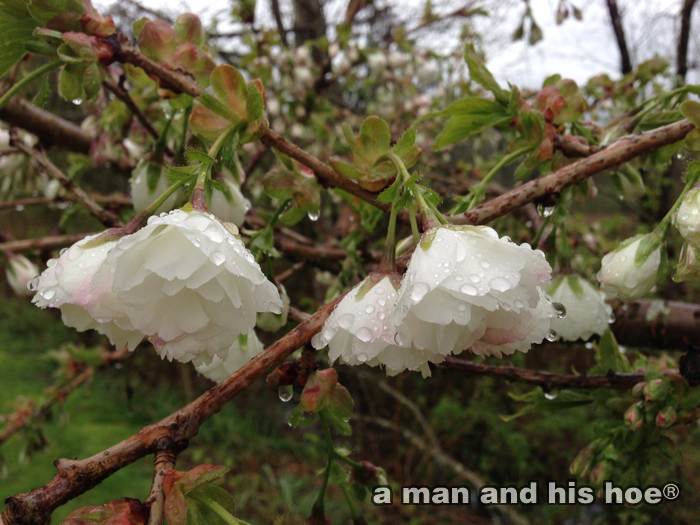
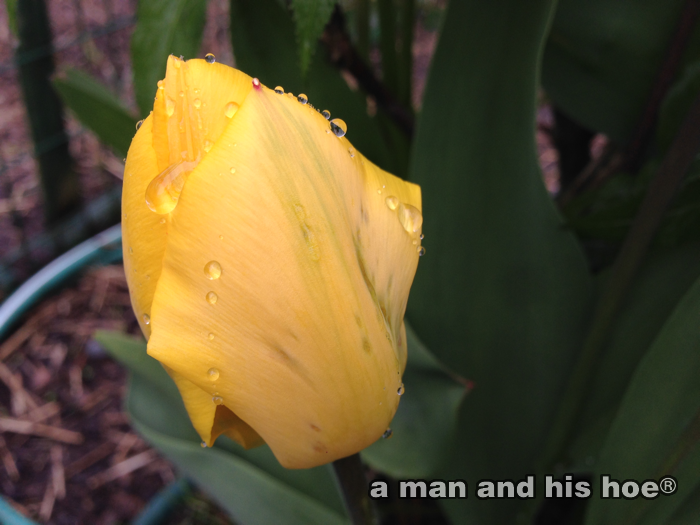
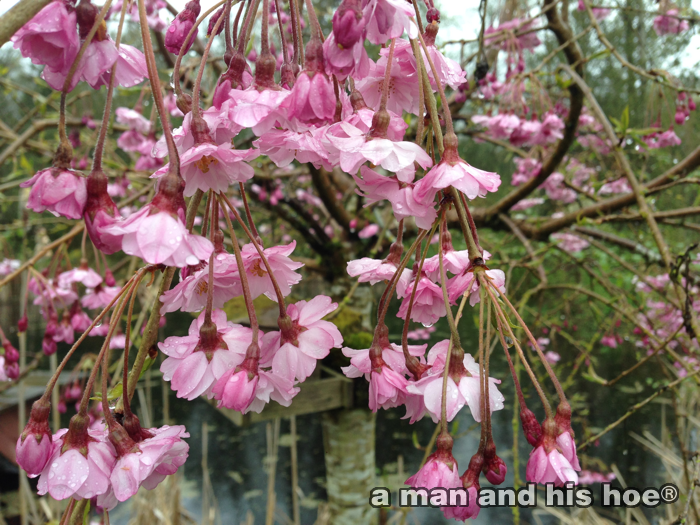
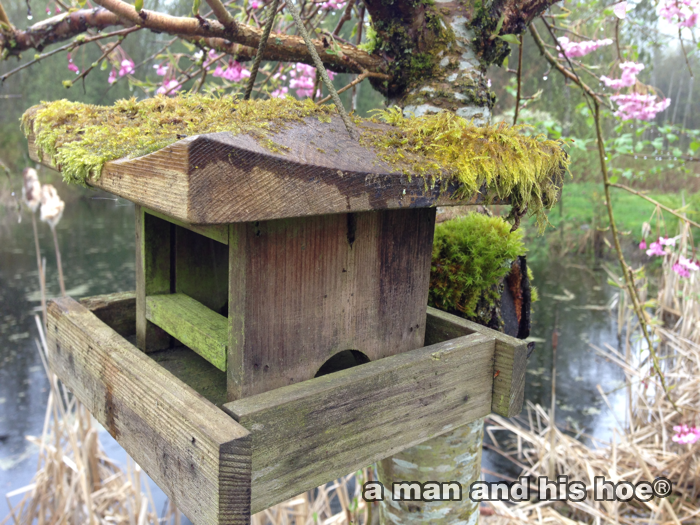
On a day like today, it’s easy to imagine this place is high in a mountain valley. The clouds are rolling in off the ocean and hanging low. The air is misty, with big drops of cool water collecting on the leaves and flowers.
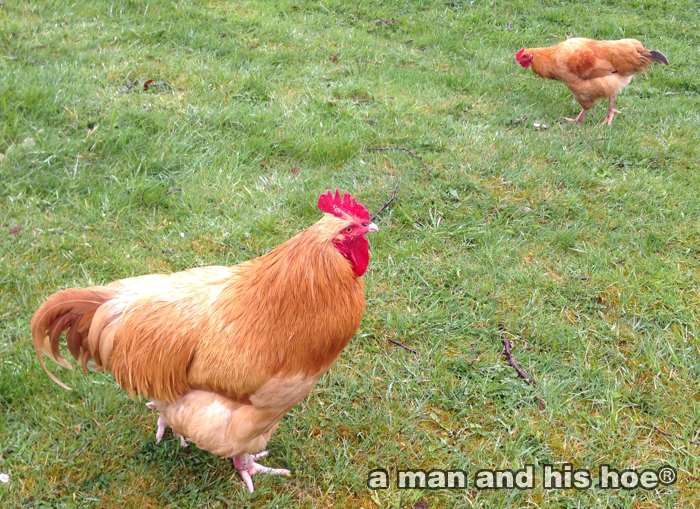
Young roosters often like to hang around older roosters. Lately, young Daisuke has been spending a lot of time near Billy. Roosters don’t start competing with each other until they get closer to being a year old. After their mother is done rearing them, if the roosters have brothers, they will stick together. And those that don’t have brothers, may seek out the company of an older rooster.
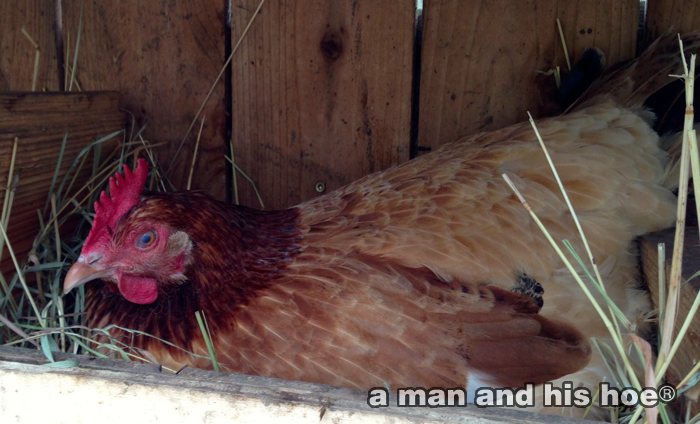
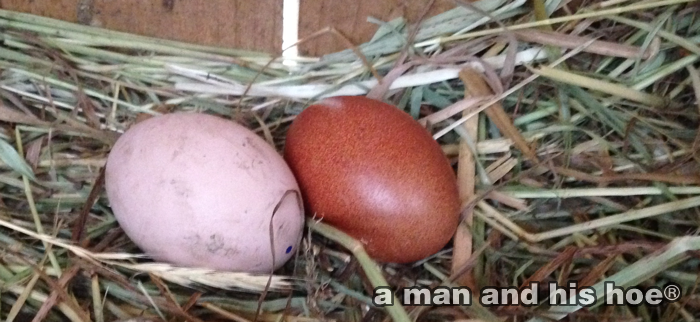
This is Cognac, a Wheaten Maran, one of my special hens. Marans lay some of the darkest eggs of all. You can see the dark egg she laid below.
-
Spring Deepens – The Lovage Has Sprouted
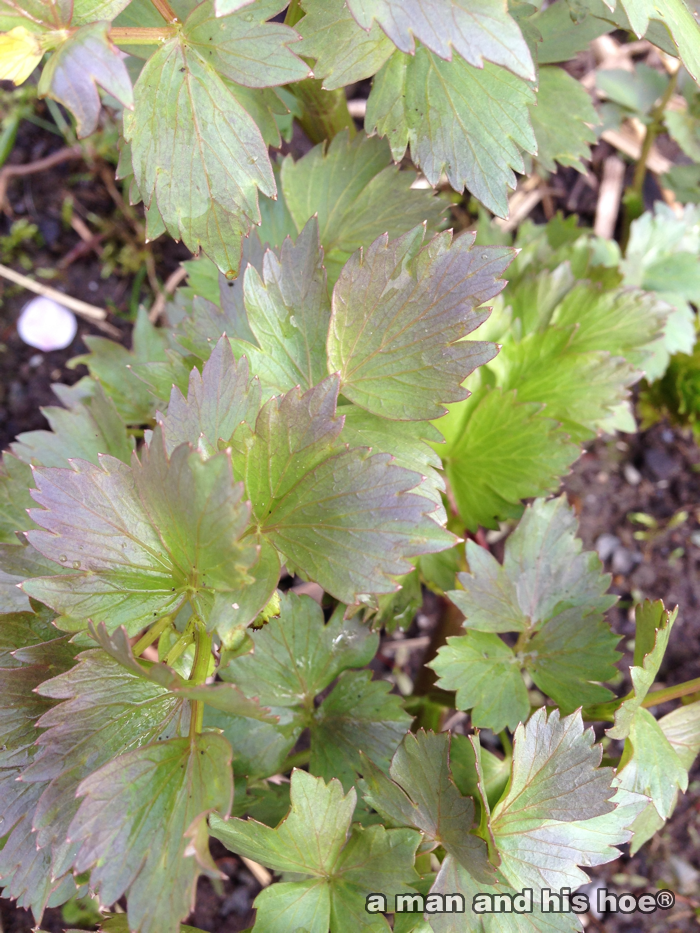
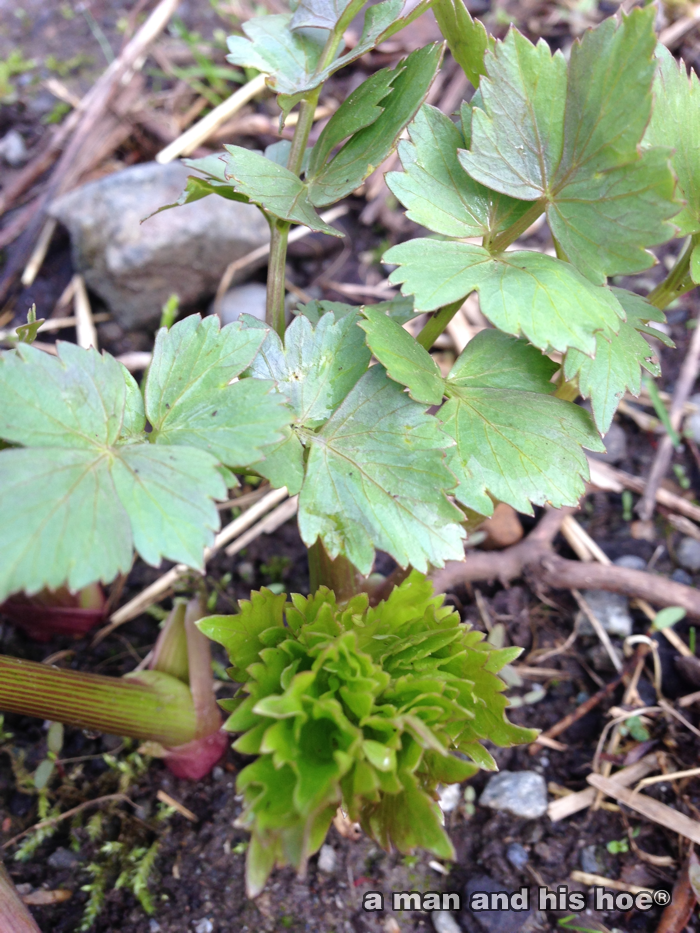
This morning I noticed that our lovage has sprouted. Potato soup isn’t potato soup without lovage. A few leaves of lovage brighten up any salad. Not only is the plant delicious, it has a celery like taste, with many medicinal uses, it is beautiful and grows easily. Since it is a perennial, it comes up every year so once you have it, you have it forever.This is one of those many, incredible vegetables that you never see in a supermarket. One of the downsides of our modern food distribution system is that it is based on handling huge volumes of products. The big box stores will only handle things that are produced on a vast scale, will travel great distances well, and keep on the shelves for a long time. This drastically limits the variety of produce they carry. This is why cities need to have hundreds of neighborhood food gardens, so that everyone can savor the full gamut of fruits and vegetables that nature provides. Imagine being within walking distance of a garden where you could stop, on your way home from work, to pick the vegetables and herbs you need for supper. So many vegetables taste best when eaten within an hour of being picked.
Hugh Fearnley-Whittingstall of The Guardian posted a number of lovage recipes here.
According to Wikipedia:The leaves can be used in salads, or to make soup or season broths, and the roots can be eaten as a vegetable or grated for use in salads. Its flavor and smell is somewhat similar to celery. Lovage tea can be applied to wounds as an antiseptic, or drunk to stimulate digestion. The seeds can be used as a spice, similar to fennel seeds.
- Lovage on Wikipedia
- Lovage on Botanical.com
- Washington Post – Lovage: A big plant with an even bigger flavor